Click & Collect or 24hr Dispatch*

15% Off Sitewide & Clearance*

EOFY15
Open-Ended Play Guide

The Magic Was Never In The Logo

Grimms has become one of the most recognised and admired names in open-ended play.

But when parents ask whether Grimms toys are worth the money, they're often asking a much deeper question.

Will this create a better play experience for my child?

After years spent developing open-ended toys, visiting factories, working with educators and helping families build collections, we've come to believe that is exactly the right question to ask.

8 minute read Updated 2026 By My Happy Helpers
Adults notice brands.

Children notice possibilities.

Are Grimms Toys Worth The Money?

There are very few toy brands that inspire the kind of admiration that Grimms does. Mention Grimms in a parenting group and you'll often see the same response.

Beautiful photographs, Carefully curated collections, Parents sharing the rainbow they've wanted for years. Families proudly displaying block sets that have become part of everyday play.

For many people, Grimms represents far more than a toy. It represents a philosophy. A way of thinking about childhood. A belief that children don't need toys that entertain them. They need materials that invite them to create.

At My Happy Helpers, we've spent years immersed in that same world. We've worked alongside educators, explored open-ended play principles, visited factories, developed our own collections and spent countless hours talking with families trying to create meaningful play spaces at home.

One question comes up again and again. And it's an interesting question because we don't think parents are really asking about the expense. What they're actually asking is something deeper.

Will this make me feel like a better parent and will this create a better play experience for my child?

And after years spent exploring open-ended play from every angle we could, we've come to believe that is exactly the right question to ask. Because whether Grimms is worth the money depends entirely on what you believe you're buying.

Why Grimms Holds Such A Special Place In Open-Ended Play

Before discussing value, it's important to acknowledge something. Grimms has earned its reputation. Long before open-ended play became mainstream, Grimms was helping families think differently about toys.

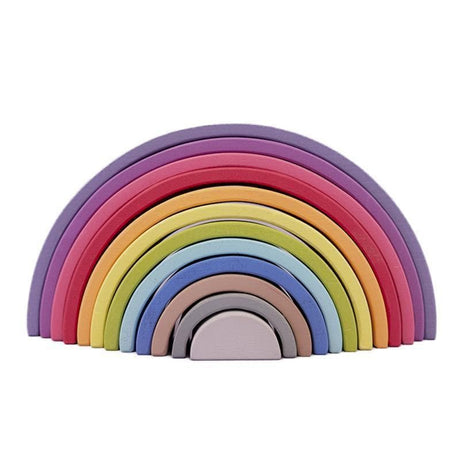
At a time when many products were becoming louder, brighter and increasingly electronic, Grimms took a different path. Their toys weren't designed to perform for children. They were designed to be transformed by children. A rainbow could become a bridge, A mountain, A tunnel, A castle wall, A racetrack, A home for imaginary creatures.

The toy itself wasn't the destination. It was simply the starting point. That idea resonated with families because it reflected something many parents had already observed. Children are remarkably good at creating their own play when given the opportunity.

In many ways, Grimms helped bring that observation back into the spotlight. Their influence on the open-ended play movement is undeniable. It's one of the reasons so many families feel drawn to the brand. They're not simply purchasing a toy. They're connecting with a philosophy that has shaped the way countless families think about play. And for many people, that has genuine value.

The Question We Think Parents Are Really Asking

At My Happy Helpers, we've spoken with countless parents who are considering their first Grimms purchase.

What's interesting is that very few are actually focused on the toy itself. They're trying to understand whether the investment will create something meaningful. Will my child play with it? Will it hold their attention? Will it grow with them? Will it justify the cost?

These are reasonable questions.

But they also reveal something important. Once we move beyond the timber, colours and craftsmanship, we're no longer discussing products. We're discussing play. And that's where the conversation becomes far more interesting.

Because while brands create products, children create play.

And those are not always the same thing.

What Are Families Actually Buying?

One of the things we've learned through years of working in the open-ended play space is that value means different things to different families. For some people, value comes Heritage. For others, it's about design. For others, it's Collectability. Resale value. Consistency. Trust.

Many Grimms families genuinely enjoy owning pieces from a brand that has become iconic within the category. There is absolutely nothing wrong with that. In fact, we think it's important to acknowledge. Not every purchase is purely functional. Sometimes people buy products because they appreciate the story behind them. Sometimes they value the history. Sometimes they simply enjoy owning something beautifully made.

Those things have value. Real value.

But over the years, we've also discovered that there is another side to the conversation. Because while adults often focus on brands, children tend to focus on something entirely different.

What We've Learned Watching Children Play

One of the unexpected benefits of developing our own open-ended play collection has been the opportunity to observe how children interact with toys.

Not how adults think they will interact with them. How they actually do. And one observation continues to stand out. Adults and children often value completely different things. Adults notice brands. Children notice possibilities.

Adults see a rainbow. Children see a bridge.

Adults see loose parts . Children see treasure.

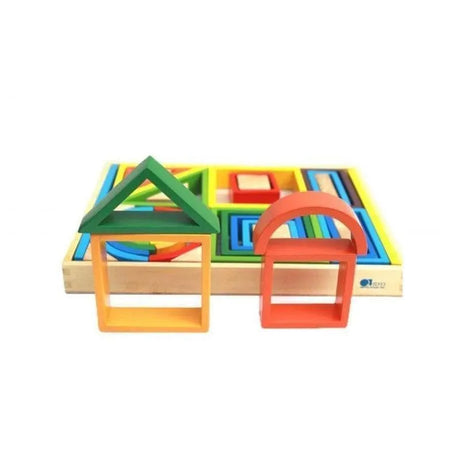
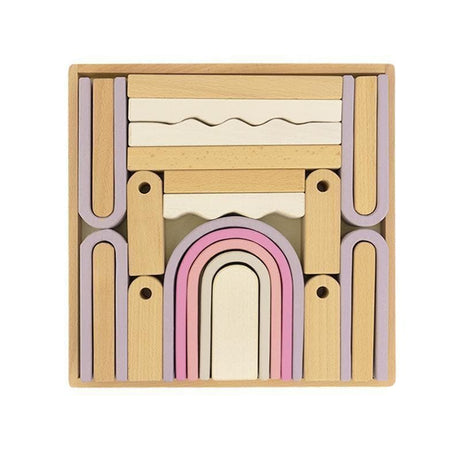
Adults see a block set. Children see a city.

Adults discuss collectability. Children invent stories.

The longer we've spent watching children engage with open-ended materials, the more obvious this distinction has become. Children rarely care about the conversations adults are having. They don't know which pieces are considered iconic. They don't know which collections are highly sought after. They don't know which products have strong resale value. What they care about is what a toy allows them to do. Can it become something else? Can it support their ideas? Can it help bring an imaginary world to life?

Those are the questions children seem to ask instinctively. And perhaps that's why open-ended play remains so powerful.

What Actually Creates The Play Experience?

This is a question we've spent years exploring at My Happy Helpers. Not because we wanted to replicate another brand. But because we wanted to understand what children were actually responding to. We've spent time discussing timber species with production teams. We've compared finishes. Tested weights. Reviewed safety standards. Explored different manufacturing techniques. Worked with educators. Observed children interact with materials. And after all those conversations, one thing became increasingly clear.

The play experience is rarely driven by a logo.

Children respond to possibility. The opportunity to build. Balance. Create. Experiment. Transform. Imagine. The toy provides the invitation. The child provides everything else. That doesn't mean design is unimportant.

Far from it.

In fact, we've learned that seemingly small details can significantly influence how a toy feels and functions. Shape matters. Weight matters. Scale matters. Colour matters. Material matters. The way a piece balances in a child's hand matters. The way it stacks matters. The way it invites exploration matters.

These qualities influence the play experience in ways many adults never consciously notice. Yet children seem to recognise them immediately.

What We've Learned Building Our Own Open-Ended Play Collection

One of the most valuable parts of developing our own open-ended play range has been discovering just how much we didn't know when we started.

Before visiting factories, we assumed certain materials were automatically better. Before observing children play, we assumed certain features would matter more than they ultimately did. Before speaking with educators, we assumed play value was primarily about the toy itself. We were wrong about some of those assumptions.

The deeper we explored open-ended play, the more nuanced the conversation became. Quality matters. Safety matters. Materials matter. Craftsmanship matters. But quality and play value are not identical concepts. One supports the other. Neither replaces the child.

That lesson has influenced every decision we've made when developing products. Not because we're trying to recreate another brand. But because we're trying to create toys that genuinely support meaningful play.

The Question Many Parents Are Almost Afraid To Ask

Eventually, many families arrive at a question that feels slightly uncomfortable. If open-ended play is driven by imagination...

If children care more about possibilities than logos...

Why can one toy cost significantly more than another?

It's a fair question. And we don't think parents should feel guilty for asking it. Discussing value is not the same as criticising quality. They're different conversations. Some of what you're paying for is craftsmanship. Some of it is heritage. Some of it is collectability. Some of it is reputation. Some of it is trust.

Those things all matter.

But they aren't necessarily the same thing as play. And recognising that distinction often helps families make decisions that feel right for them. Every Family Has A Different Definition Of Value. One of the things we love about the open-ended play community is that there is no single correct approach. Some families love collecting Grimms. They appreciate the history, design philosophy and craftsmanship.

Others are primarily interested in creating opportunities for imaginative play. Most sit somewhere in between.

None of those perspectives are wrong. They're simply different. Value is personal. And perhaps that's why conversations about Grimms often become so passionate. People are not just discussing toys. They're discussing what they value.

So, Are Grimms Toys Worth The Money?

For many families, absolutely.

If you appreciate the heritage, craftsmanship, collectability and philosophy behind Grimms, there is every chance you'll consider them money well spent. The brand has earned its place within the open-ended play world.

At My Happy Helpers, we have enormous respect for what Grimms has contributed to the category. They helped many families discover the power of open-ended play. But after years spent developing products and watching children play, we've also come to believe something else. The most meaningful part of the play experience has never belonged to any brand.

Not Grimms. Not My Happy Helpers. Not anyone. It belongs to the child.

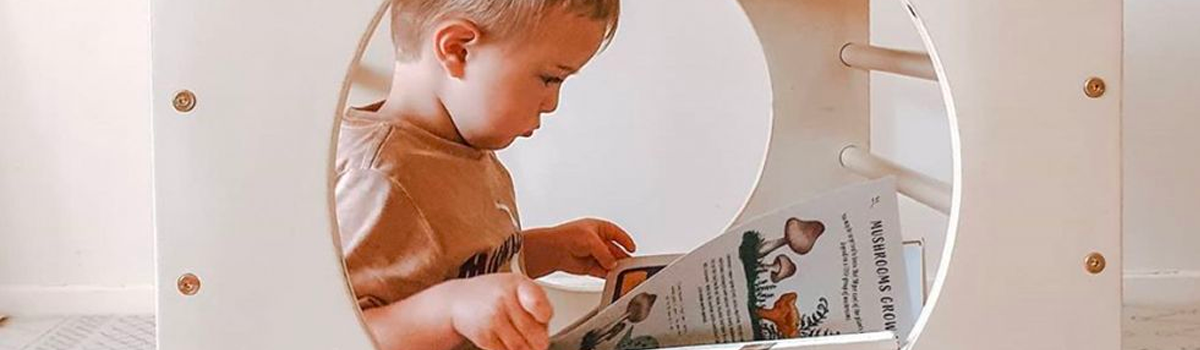
The child building a city from blocks. The child turning a rainbow into a mountain range. The child inventing stories no adult could have predicted. Because long after children forget the name of a toy, they often remember what they created with it. The worlds they built. The confidence they gained. The ideas they explored. The afternoons spent completely absorbed in their own imagination. And in the end, that's where the real value of open-ended play has always been found.

Not in the logo.

But in what happens after the toy reaches a child's hands. Because the magic was never in the logo. It was always in the hands of the child.

Explore

Open-Ended Play

}