
Click & Collect or 24hr Dispatch*

15% Off Sitewide & Clearance*

EOFY15
Early Maths Concepts

Abacus & Counting Frames


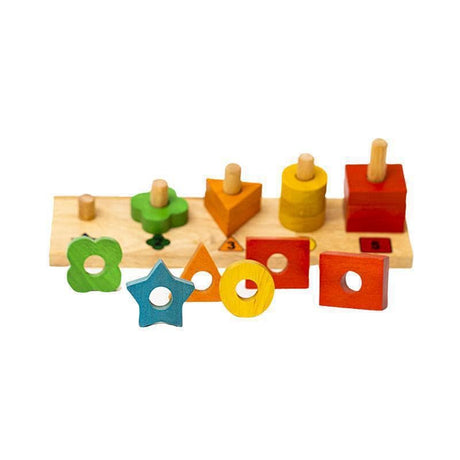
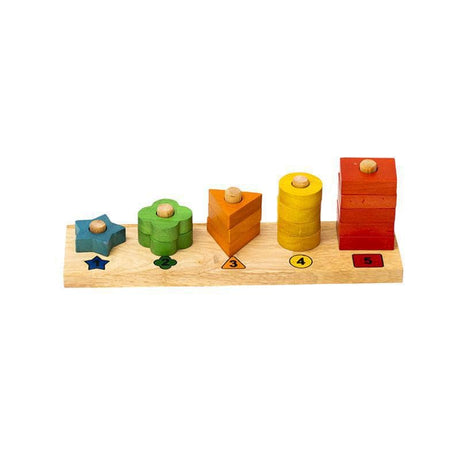
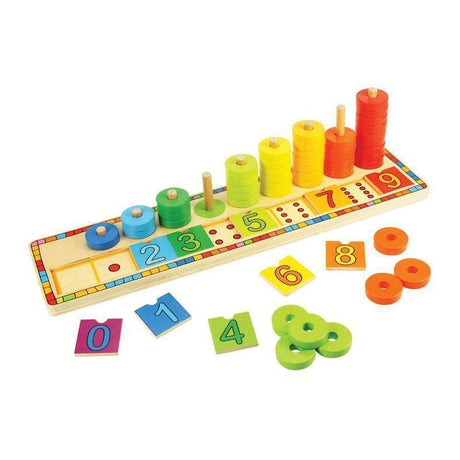
Help little ones move beyond simply reciting numbers and start understanding what numbers actually mean. Discover wooden abacuses and counting frames that make counting, quantity recognition and early maths concepts visible, hands-on and easier to understand.


How An Abacus Helps Children Understand Quantity Instead Of Memorising Numbers

Why Children Learn Maths Better When They Can See Numbers

Many children learn to count long before they truly understand numbers. They can recite number sequences confidently, yet still struggle to recognise quantities, compare groups or understand why one number is larger than another. This is where a wooden abacus or counting frame can become an incredibly valuable learning tool.

Unlike flashcards or worksheets, an abacus allows children to physically move, group and compare quantities. They can see numbers, touch numbers and manipulate numbers. This hands-on approach helps children build stronger number sense while developing confidence with counting, addition, subtraction and early mathematical thinking.

Whether your child is just beginning to count objects consistently or is ready to explore simple calculations, wooden abacuses and counting frames provide a visual bridge between abstract numbers and real understanding.

Number Confidence Hands-On Learning Maths Readiness Early Addition

Transforms Counting Into Understanding

Many children can count objects without understanding the relationship between numbers and quantities. An abacus helps children visualise numbers, compare groups and develop a stronger understanding of mathematical concepts through hands-on exploration

Builds Strong Number Foundations

Number recognition is only the beginning. Counting frames and abacuses help children explore sequencing, quantity, patterns and simple calculations while building confidence with early maths concepts that support future learning.

Makes Maths More Concrete


Young children often struggle with abstract concepts. Moving beads, grouping quantities and physically manipulating numbers helps make mathematical ideas easier to understand and far more engaging than passive learning methods.

Choosing The Right Maths Learning Tool

Is Your Child Learning To Count Or Learning To Calculate?

Children move through maths stages at very different speeds. Some are still building confidence with counting and quantity recognition, while others are ready to explore addition, subtraction and number relationships. Choosing the right abacus or counting frame depends on what your child is trying to understand next.

Choose A Traditional Abacus If Your Child

  • Is learning number recognition Is practising counting objects Needs help understanding quantities Is developing one-to-one correspondence Learns best through movement and repetition Is building confidence with early maths concepts

Choose A Counting Frame If Your Child

  • Understands basic counting already Is beginning simple addition Is exploring subtraction concepts Enjoys comparing quantities Is interested in number patterns Is ready for more structured maths learning
The best abacus for kids isn't necessarily the most advanced option. Children learn most effectively when mathematical concepts feel achievable, visible and engaging. Matching the resource to their current understanding helps build confidence while creating a strong foundation for future learning.

Why Parents Choose Wooden Abacuses And Counting Frames

Helps children understand quantities rather than simply memorising numbers

Encourages hands-on maths learning without screens or worksheets

Builds confidence with counting, addition, subtraction and number relationships

What Should Parents Look For In A Quality Abacus?

Not all abacuses are created equally. A high-quality wooden abacus should be durable, easy for little hands to manipulate and visually clear enough for children to recognise groups and quantities easily. Large, smooth-moving beads help children focus on mathematical concepts rather than becoming frustrated by the resource itself.

Parents should also consider how the abacus will be used. Some children are learning basic counting, while others are ready to explore addition, subtraction and number relationships. Choosing an abacus that can grow alongside a child's understanding often provides greater long-term value than resources designed around a single learning outcome.

The most effective abacuses encourage active exploration rather than passive instruction. Children should be able to move beads independently, experiment with quantities and discover mathematical relationships through hands-on learning experiences.

When An Abacus May Not Be The Right Choice

Abacuses and counting frames are powerful tools for developing number sense, but they are most effective when children are interested in exploring quantities and mathematical relationships. Families looking primarily for imaginative play, literacy development or open-ended creative activities may be better served by resources designed specifically for those goals.

Similarly, children who already have strong number understanding and confidently perform calculations may benefit more from advanced maths games, logic challenges or problem-solving activities. An abacus works best as a bridge between counting and genuine mathematical understanding rather than as an advanced mathematics resource.

Building Strong Number Foundations Through Hands-On Learning
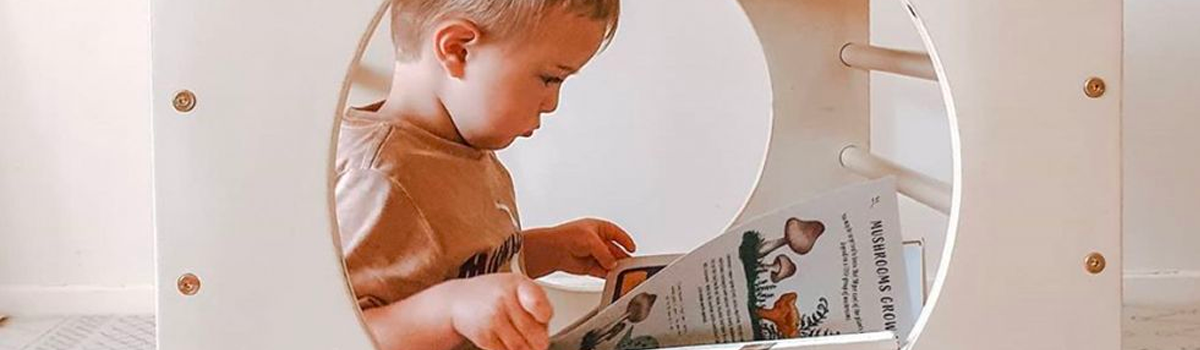

Mathematical confidence begins with understanding, not memorisation. Wooden abacuses and counting frames help children visualise quantities, explore number relationships and develop stronger number sense through meaningful hands-on experiences. Whether your child is learning to count, beginning simple calculations or building confidence with early maths concepts, an abacus provides a practical and engaging way to transform numbers from abstract symbols into concepts they can truly understand.

Frequently asked questions
How do I choose the best abacus for my child?

The best abacus depends on your child's current stage of learning. Children who are just beginning to count often benefit from simple wooden abacuses with large beads that are easy to move and visually clear. These resources help develop number recognition, counting confidence and quantity understanding.

Children who already understand basic counting may be ready for counting frames or more advanced abacuses that support addition, subtraction and number relationships. Consider how your child currently engages with numbers and choose a resource that provides enough challenge without becoming overwhelming.

Quality also matters. A durable wooden abacus with smooth-moving beads, sturdy construction and clear visual organisation is more likely to remain useful over time. The goal is to choose a resource that supports learning today while continuing to grow with your child's understanding tomorrow.

Can an abacus help prepare children for school?

Yes. Many parents choose an abacus because it supports foundational maths skills that contribute to school readiness. Before children can confidently solve maths problems, they need to understand numbers, quantities and how mathematical relationships work. An abacus provides opportunities to develop these skills through play and exploration.

Children can practise counting, recognising quantities, comparing numbers and exploring simple calculations while building confidence and concentration. These experiences help create a strong foundation for formal maths learning when children begin school.

Importantly, an abacus also encourages independent problem solving and active participation. Rather than memorising answers, children learn to explore mathematical concepts for themselves, helping them become more confident and capable learners.

What's the difference between an abacus and a counting frame?

An abacus and a counting frame are very similar learning tools. Both use movable beads to help children understand quantities, counting and number relationships. The terms are often used interchangeably, although some counting frames are designed specifically for early counting and simple calculations.

Traditional abacuses may include multiple rows of beads and can be used for a wider range of mathematical activities as children grow. Counting frames are often simpler and focus on helping children visualise quantities, compare numbers and explore basic addition and subtraction.

For most young learners, both resources provide the same core benefit. They help transform numbers from abstract symbols into visible quantities that children can move, compare and understand through hands-on learning.

What skills can children learn from using an abacus?

A wooden abacus supports far more than counting. While counting is often the starting point, children can also develop number recognition, quantity understanding, pattern recognition, sequencing, addition, subtraction and problem-solving skills. As children become more confident, an abacus can help them explore increasingly complex mathematical concepts.

Using an abacus also encourages concentration, persistence and independent learning. Children learn to work through challenges, test ideas and discover solutions through active exploration. These learning behaviours are valuable not only for maths but for broader educational success.

Because abacuses provide immediate visual feedback, children can often recognise mistakes and correct them independently. This helps build confidence while encouraging deeper understanding of mathematical concepts.

Are abacuses still relevant for children today?

Absolutely. While technology has changed how children access information, the way young children learn mathematical concepts remains remarkably consistent. Children continue to learn best when they can see, touch and manipulate materials themselves. An abacus provides a hands-on learning experience that helps make numbers meaningful and understandable.

Modern educational research continues to support the use of manipulatives, including abacuses, counting beads and number frames, because they help children build strong number sense. These resources allow children to explore mathematical relationships in a visual and physical way before moving towards more abstract calculations.

Many parents choose a wooden abacus because it offers a screen-free, engaging and developmentally appropriate way to support early maths learning. Far from being outdated, an abacus remains one of the most effective tools for helping children understand how numbers work.

Are wooden abacuses better than maths worksheets?

Wooden abacuses and worksheets serve different purposes, but many young children benefit from hands-on learning before moving to written activities. Worksheets often require children to understand mathematical concepts that may still feel abstract. An abacus helps bridge this gap by allowing children to explore numbers physically before recording answers on paper.

When children can see and manipulate quantities, they often develop stronger understanding and greater confidence. This can make later worksheet activities easier because the underlying concepts have already been established through experience.

Many parents and educators use abacuses alongside worksheets rather than replacing them entirely. The combination of hands-on learning and written practice often provides a balanced approach to developing early maths skills.

Can an abacus help children who struggle with maths?

Many children who find maths difficult benefit from learning through visual and hands-on methods. An abacus provides a concrete representation of numbers that can make mathematical concepts easier to understand. Instead of relying on memory alone, children can see quantities and physically manipulate them while solving problems.

For children who become frustrated by worksheets or abstract calculations, an abacus can make learning feel more accessible and engaging. Moving beads creates immediate visual feedback, helping children understand how numbers change when quantities are added, removed or compared.

While an abacus is not a replacement for broader maths learning, it can be a valuable tool for building confidence, strengthening number sense and helping children develop a more positive relationship with mathematics.

What's the difference between counting and number sense?

Counting and number sense are closely connected, but they are not the same thing. Counting involves reciting numbers in sequence and identifying how many objects are present. Number sense goes much deeper. It involves understanding what numbers actually represent and how they relate to one another.

For example, a child may be able to count from one to twenty yet still struggle to recognise that eight is larger than five or that five and three make eight. Number sense helps children understand quantities, comparisons, patterns and simple calculations.

An abacus supports number sense because children can physically see quantities represented by beads. Rather than simply hearing number names, they can compare groups, move quantities and observe mathematical relationships. This helps build a stronger understanding of numbers that supports future success in maths.

Why is an abacus good for learning maths?

An abacus helps children learn maths because it makes abstract concepts visible and concrete. Young children often struggle to understand numbers because numbers themselves cannot be touched or seen. An abacus provides a visual representation of quantity that children can manipulate with their hands.

Moving beads allows children to see groups forming, quantities increasing and numbers changing. This helps develop number sense, which is the ability to understand how numbers relate to one another. Children begin to recognise patterns, compare quantities and explore mathematical concepts through active learning rather than memorisation.

Research consistently shows that children learn more effectively when they can engage with physical materials. A wooden abacus encourages exploration, experimentation and discovery while helping children develop stronger foundations in counting, addition, subtraction and mathematical thinking.

What age should a child start using an abacus?

Most children can begin exploring a wooden abacus from around 3 years of age, although readiness is often more important than age alone. Children who enjoy counting objects, sorting items into groups or recognising basic numbers are often ready to begin using an abacus. At this stage, the goal is not formal maths instruction but helping children connect numbers with quantities through hands-on exploration.

A wooden abacus allows children to physically move beads while counting, making numbers visible and tangible. This helps strengthen one-to-one correspondence, which is the understanding that each object counted represents a single quantity. As confidence grows, children can begin exploring larger numbers, simple addition and subtraction, and number relationships.

Because abacuses grow with a child's understanding, many families continue using them throughout preschool and the early years of primary school. They remain valuable long after children have learned to count because they support deeper mathematical understanding rather than simple memorisation.