
Click & Collect or 24hr Dispatch*

Build & Construct · Building Blocks

Stacking Blocks for Kids

Building blocks ask "what can I create?" Stacking blocks ask a different question: "how far can I go?" Parents don't really buy stacking blocks to build towers — they buy them for that moment their child balances five blocks, then six, then seven, and looks up with the biggest smile because they did it themselves. Every extra block feels like a personal victory.


What Children Are Really Chasing With Stacking Blocks

Most shops say stacking blocks "develop fine motor skills." True, but no parent buys fine motor skills. What they're really after is the emotional payoff: that visible moment of "I did that myself." Watch closely and you'll see children aren't building a tower so much as chasing one more block — "careful… slowly… I nearly did it…" — whispered to themselves as the stack climbs. Every successful block changes the challenge, and because rushing makes the whole thing topple, stacking quietly teaches patience and delayed gratification without anyone having to mention either.

That's the real difference between stacking blocks and general wooden blocks. Building blocks are about what you can make — houses, bridges, whole towns. Stacking blocks are about how far you can push your own balance and steadiness, one block higher than last time. It's why the crash is half the fun for toddlers (build, watch, crash, laugh, repeat) and why parents love that progress is so visible — three blocks last week, eight this week, twenty next month. You can actually see the confidence growing rather than wondering whether learning is happening.

Stacking Blocks Balance & Height One More Block Natural & Coloured

Why "One More Block" Is the Whole Game

Adults see a child building a tower; the child is really chasing a single question — can I add just one more? Each block that stays changes the challenge and raises the stakes, which is why you'll overhear children coaching themselves through it: "big one first," "that one's too wobbly," "I need the flat one." They're developing their own internal problem-solving language, unprompted. And because speed makes a stacking tower collapse, even children who usually rush everything slow themselves down — they discover that fast doesn't work and gentle does, turning self-regulation into part of the game rather than something a parent keeps reminding them about.

The collapse is genuinely part of the fun, not a failure. Toddlers often laugh harder when the tower falls than when it stands, and the cycle of build-watch-crash-laugh-repeat is doing real work: each fall is feedback about which bases were strong and which weren't. Adults sometimes worry a child is "ruining" their effort, but the child simply sees another chance to start again — and that cheerful willingness to rebuild after something falls is one of the most valuable habits stacking quietly builds.

The "Stacking Silence": Where Busy Children Slow Down

Parents describe something they half-jokingly call the stacking silence — the room going quiet as a child becomes intensely focused, carefully lining up edges, making tiny adjustments, almost holding their breath as they place the next block. It's one of the few activities where many energetic, hard-to-settle children naturally become deeply absorbed, because the feedback is instant and entirely theirs: the tower itself tells them whether it worked, no adult needed. That kind of self-directed concentration is exactly what parents hope for and rarely get from a toy that does the entertaining for them.

Every tower also tends to have its own personality, because children invent their own challenges rather than chasing the same outcome. Some days it's the tallest tower, some days the widest, some days the strangest — and through all that experimenting they discover, well before they could explain the science, that bigger isn't always better. A huge block on top topples; a wide, balanced base succeeds. As one parent put it, "he stopped trying to build the tallest tower and started trying to build the strongest" — which is a far bigger lesson than stacking itself.

When Stacking Blocks Become Lighthouses, Rockets and Castle Towers

There's a point where the tower stops being the goal and becomes something else entirely — a lighthouse, an apartment building, a castle tower, a rocket, a tree, a dinosaur lookout. This is where stacking blocks quietly cross over into imaginative play, the careful balance challenge becoming the setting for a story. Children also start reading the materials as they go, noticing the small differences that matter: "this one's heavier," "this one's slippery," "this one wobbles." They're becoming genuinely sensitive to how things behave through repeated, hands-on experimentation.

It's also wonderfully social without any prompting from the toy. Siblings invent their own competitions — who can build tallest, who can build fastest, who can stack using one hand, who can build without making a sound — and a quiet game becomes a shared one. Pair stacking blocks with wooden blocks, wooden rainbows and peg dolls and the careful towers become part of a much bigger world your child is building, balancing and re-imagining.

Shop by need
Nesting & Stacking Blocks

Large or Small Stacking Blocks — Where to Start

Experienced parents usually suggest starting larger than you'd think. Bigger stacking blocks bring success earlier: they're easier to grip, towers become impressive quickly, and frustration stays low — and for younger children, that early success is exactly what builds the confidence to keep going. If you're choosing a first set for a toddler, larger blocks are almost always the gentler, more rewarding place to begin, and large block sets are well suited to those first triumphant stacks.

Smaller stacking blocks change the challenge completely. Now a child needs more precision, steadier hands and slower movements to succeed, which is why parents often say smaller sets become far more appealing as children approach preschool age and start actively seeking a harder challenge. Many families build up a collection that spans both — large blocks for early confidence and big, fast towers; smaller blocks for the precision and focus that come later. The right choice simply depends on where your child is now and how much challenge they're ready to enjoy rather than be defeated by.

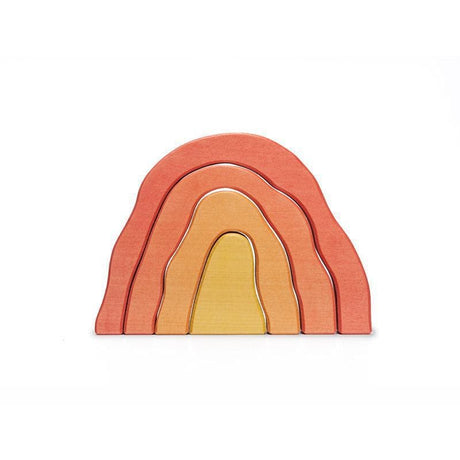
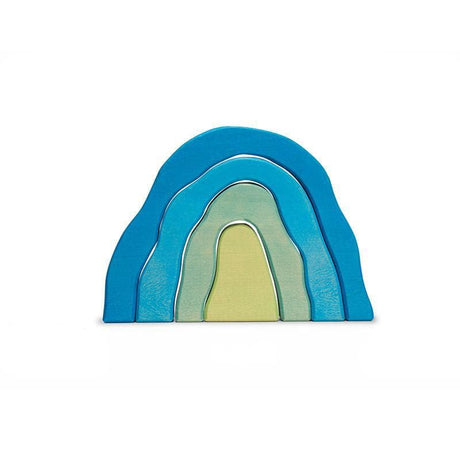
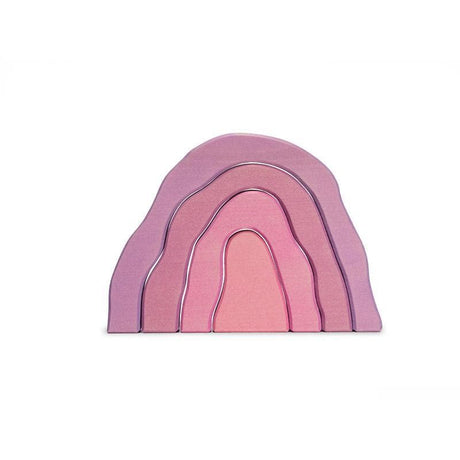
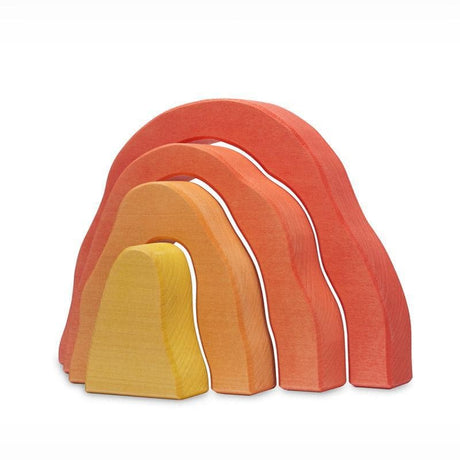
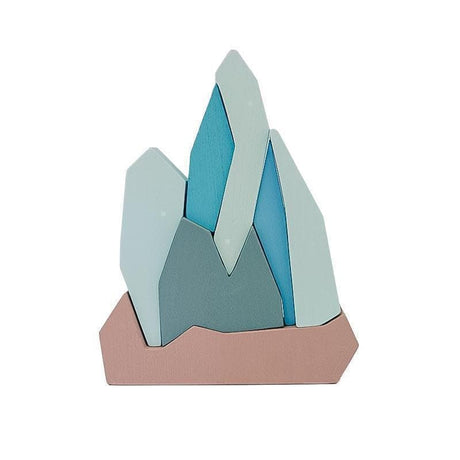
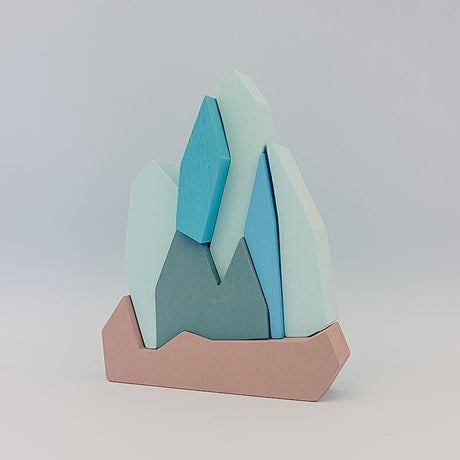
Stacking Coral Reef

Natural, Coloured or Other Materials — Choosing Stacking Blocks

Stacking blocks come in a few different materials and finishes, and each shifts the play slightly. Plain natural-timber stacking blocks are often described as calming, timeless and less visually distracting, letting a child concentrate on the pure challenge — balance, shape and structure — with nothing competing for attention. For a child who's all about the balancing puzzle, natural wooden blocks keep the spotlight exactly where they want it.

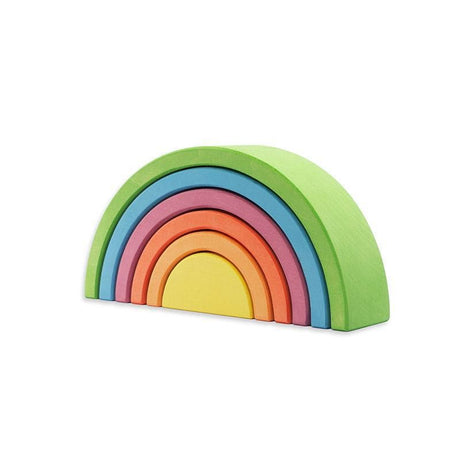
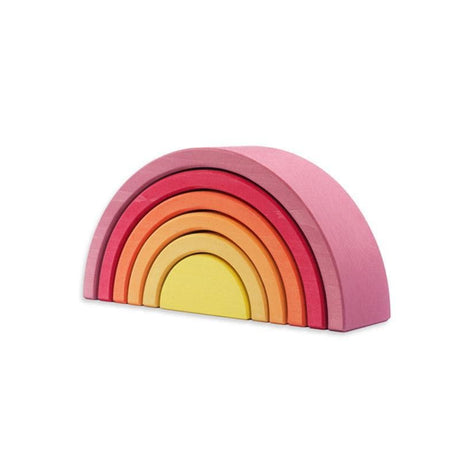
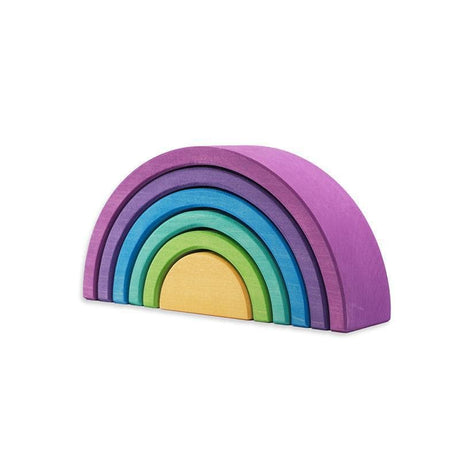
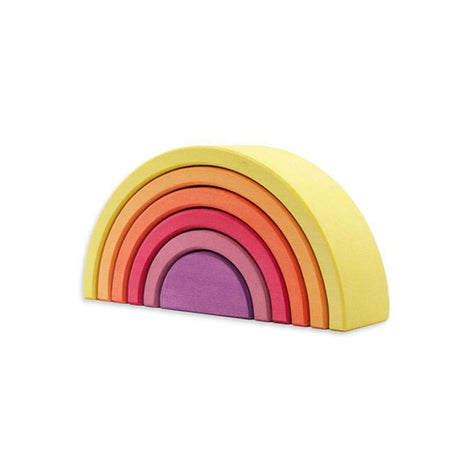
Coloured stacking blocks — whether timber or other materials — add a second layer of play on top of the balancing: children naturally create patterns, gradients, rainbow towers and alternating colours, so the colour becomes another challenge to solve rather than just decoration. Some sets also use materials like soft silicone or foam, which grip a little differently and suit the very youngest builders. Neither approach is better; it depends whether your child is drawn to the pure balance or enjoys a colour and pattern element too. Our range spans natural and coloured options across different materials, so you can pick whatever suits your child — and each product page lists exactly what a set is made from.

Start here

Choosing the Right Stacking Blocks

Start larger than you think — early success is what builds the confidence to keep stacking.

Start with larger blocks if:

It's a first set for a toddler
You want early, frustration-free success
Little hands need blocks that are easy to grip

Step up to smaller blocks if:

Your child is approaching preschool age
They actively want a harder balance challenge
Fine motor skills and patience are growing
Whatever the size, look for flat well-finished surfaces, a pleasant weight, varied shapes and enough pieces to keep the challenge growing — that's what keeps stacking blocks engaging well beyond the first few towers.

Why Families Choose Our Stacking Blocks

Flat, well-finished surfaces — so balancing is the challenge, not the cutting

Wooden & other materials, natural & coloured, large & small — for every stage

Own-brand sets come with our 2-year warranty & 30-day guarantee

Dispatched from Melbourne — NDIS registered provider

What Makes a Great Set of Stacking Blocks?

After hundreds of reviews, a few things consistently separate a great set of stacking blocks from a frustrating one. Flat, well-finished surfaces come first — when you're balancing a tall tower, tiny imperfections become big frustrations, so smooth, true surfaces matter more than they sound. Different shapes matter too: not just cubes, but rectangles, columns, arches and triangles, because varied shapes push a child to experiment with stability rather than rebuilding the same tower over and over.

Enough pieces to grow is the one parents most often wish they'd got right — sets of only ten or twelve blocks run out of challenge too quickly, while a larger set lets a child keep inventing new goals as their skill develops. And a pleasant weight is surprisingly important: too light and the blocks feel unstable and topple at a breath; too heavy and young children can't manipulate them well. A good stacking block has enough heft to feel stable without being cumbersome. These are exactly the qualities we look for in the sets we stock.

The Real Reason Parents Buy Stacking Blocks

Here's the thing the "motor skills" marketing misses entirely: parents aren't really buying towers, they're buying evidence. Evidence that their child can slow down, concentrate, solve a problem, keep trying, and recover after something falls. Every extra block becomes proof that they're growing — which is why parents talk about stacking blocks with such warmth. The towers rarely survive more than a few seconds, but the confidence a child builds while making them tends to last far, far longer.

It's worth remembering what parents actually tell each other, too — never "it developed her fine motor skills," but "she was so determined to get one more block on top," "he rebuilt the same tower six times until it finally stayed up," "the whole family held our breath as she placed the last block," "when it fell, he laughed and said let's do it again." Those moments are the real product. If you're building a wider building blocks collection, stacking blocks are where a lot of that early persistence and confidence quietly begins.

Stacking Blocks: Small Towers, Lasting Confidence
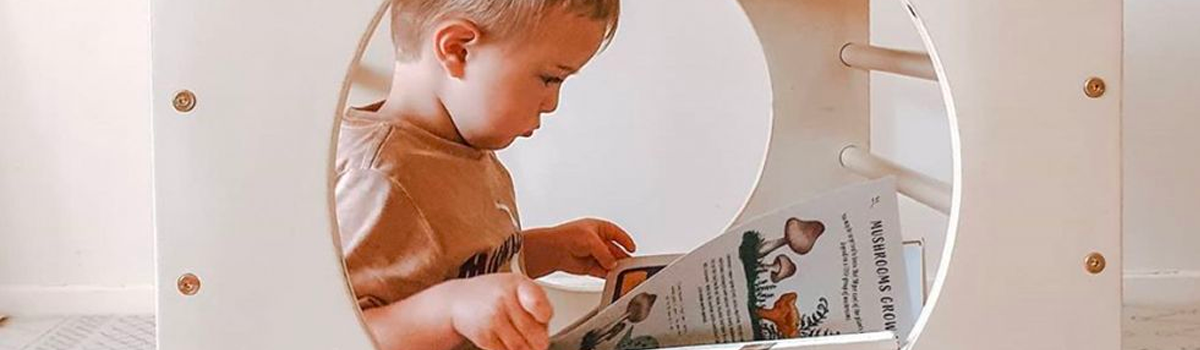
A stacking-block tower rarely lasts more than a few seconds — but that was never really the point. The point is the child who slowed down, concentrated, kept trying, and grinned when the last block stayed. That confidence outlasts every tower, and it's why parents recommend stacking blocks with such affection generation after generation.

Explore the range above — natural or coloured, large or small — and pair them with wooden blocks, wooden rainbows and peg dolls as your child's building grows. For the wider family, our building blocks range brings it all together.

Frequently asked questions
Do stacking blocks come with a warranty?

Our stacking blocks are a mix of our own-brand sets and carefully chosen third-party ones. Our own-brand stacking blocks come with our 2-year warranty and 30-day satisfaction guarantee; third-party sets carry their own brand's terms, listed on the product page. Whichever you choose, we select for the qualities that matter in stacking — flat well-finished surfaces, varied shapes, a good weight and enough pieces to keep the challenge growing.

Why are stacking blocks so good for development?

Because the learning is invisible and entirely child-led. Stacking quietly teaches patience and delayed gratification (rushing makes towers fall), self-regulation (children slow themselves down because gentle works and fast doesn't), and resilience (the crash is feedback, and they cheerfully rebuild). Children also discover balance and material properties through experience rather than instruction — that wide and balanced beats tall, that some blocks are heavier or slippier. And every successful block delivers a real hit of 'I did that myself.'

What makes a great set of stacking blocks?

Flat, well-finished surfaces first — tiny imperfections become big frustrations when balancing tall towers, so smooth, true blocks matter. Then varied shapes (not just cubes, but rectangles, columns, arches, triangles) to encourage experimenting with stability; enough pieces that the challenge keeps growing rather than running out at ten or twelve blocks; and a pleasant weight — heavy enough to feel stable, light enough for small hands. These are the qualities we look for in the stacking blocks we stock.

Are plain or coloured stacking blocks better?

Neither is better; they shift the focus slightly. Plain timber is calming and less distracting, letting a child concentrate purely on balance, shape and structure. Coloured blocks add a second layer of play — children create patterns, gradients and rainbow towers, so the colour becomes another challenge to solve rather than just decoration. It comes down to whether your child is drawn to the pure balance puzzle or enjoys a pattern element too. Our range includes both.

Should I start with large or small stacking blocks?

Start larger than you think. Bigger stacking blocks are easier to grip and bring success earlier, which keeps frustration low and builds confidence — exactly what a young child needs to keep trying. Smaller blocks demand more precision and steadier hands, so they tend to become more appealing as children approach preschool age and actively want a harder challenge. Many families end up with both: large for early wins, small for growing skill.

What age are stacking blocks for?

Stacking blocks suit a wide range, starting from around 10–18 months when toddlers love stacking a few blocks and gleefully knocking them down, through the preschool years when children chase taller, more precise towers. Because the child sets their own height challenge, the same set keeps being rewarding as their balance and patience grow. Start with larger blocks for the youngest children, and always check the recommended age and supervise little ones with smaller pieces.

What's the difference between stacking blocks and building blocks?

They answer different questions. Building blocks ask 'what can I create?' — houses, bridges, whole towns. Stacking blocks ask 'how far can I go?' — they're about the balance-and-height challenge of placing one more block without it all toppling. General wooden blocks are about making things; stacking blocks are about pushing a child's own steadiness and patience a little further each time. Many families have both, because they build different skills and kinds of play.