
Click & Collect or 24hr Dispatch*

Build & Construct · Open-Ended Play

Open-Ended Play Toys

The toys children keep coming back to are almost never the ones that do the most — they're the ones that do the least. A wooden rainbow, a basket of pebbles, a length of silk: these have no instructions, no batteries and no single right way to play, which is precisely why a child can return to them a hundred times and invent something new each time. That's open-ended play, and it's the kind of play most associated with deep, sustained, imaginative engagement. This is the home for those toys — and a guide to what open-ended play actually is and how to choose toys that genuinely grow with your child.

Start here

Open-ended toys are different doorways into the same play: rainbows and loose parts for building and arranging, silks for dramatic play, peg dolls for characters, boards for small-world scenes. Most children end up with a mix, because they combine beautifully.

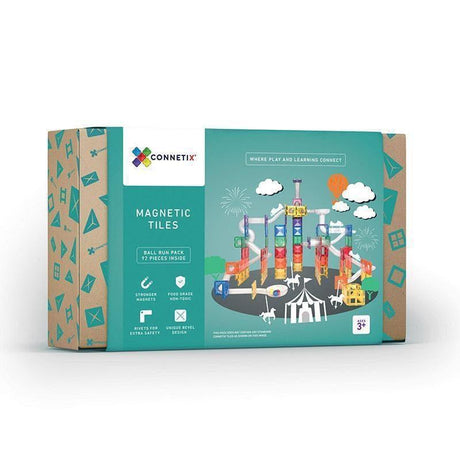
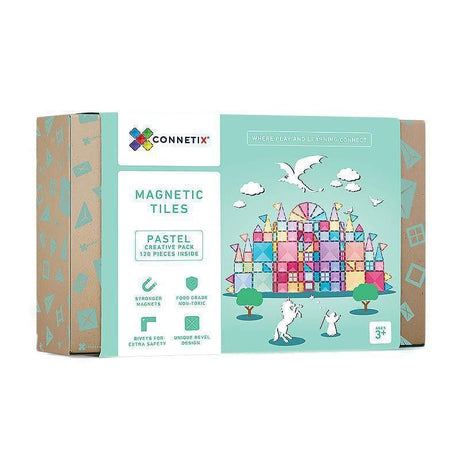
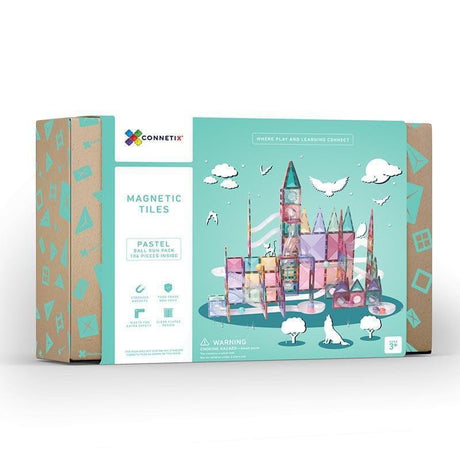
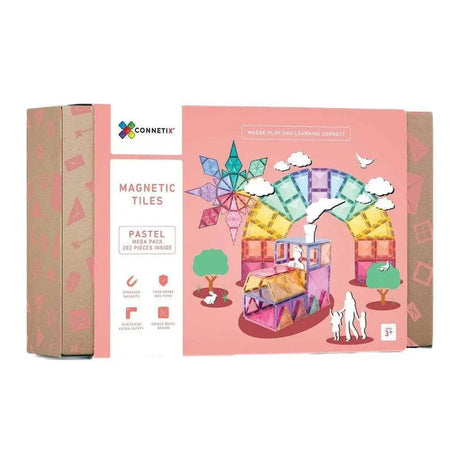
Love the invent-it-yourself nature of open-ended toys? The wider Build & Construct range — blocks, magnetic building and STEM — rewards the same child-led instinct in a more structural form.

View as

What Is Open-Ended Play?

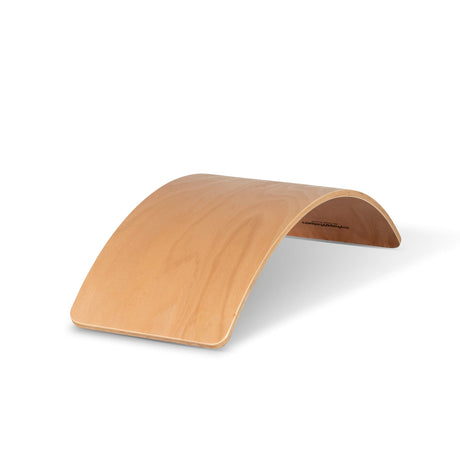
Open-ended play is play that has no fixed outcome and no instructions — the child, not the toy, decides what happens. A toy is open-ended when it can be used in many different ways and become many different things: a wooden arch is a bridge, a tunnel, a rocker for a peg doll, a ramp, a hill in a small world. The opposite is a close-ended toy, which has one job and one correct result — a shape sorter, a puzzle, a battery-operated toy with a button that does one thing. Close-ended toys aren't bad; they teach specific skills. But once a child has mastered the single outcome, the play is essentially over.

Open-ended toys work the other way around: the more a child grows, the more they can do with them, so the play deepens instead of ending. Educators often describe this through the idea of "loose parts" — the principle that the more open and movable the materials in an environment, the more inventive and engaged children become. It's why a cardboard box famously beats the toy it came in. The practical signs of genuine open-ended play are easy to spot: the child is in charge of the story, there's no way to do it "wrong," and the same toy looks completely different from one day to the next.

What Is Open-Ended Play? Why It Matters Loose Parts Grows With the Child
Beyond Open-Ended Play

The Wider World of Building & Construction

Open-ended play and construction are two sides of the same coin — both put the child in charge of what gets made. If your child loves the invent-it-yourself nature of open-ended toys, they'll often love building too. The wider Build & Construct range covers blocks, magnetic building and STEM play, all of which reward the same imaginative, child-led instinct in a more structural form.

Open-Ended Play: Less Toy, More Imagination

The best open-ended toys do almost nothing on their own — and that's exactly why children do so much with them. Simple, beautiful and endlessly reusable, they hand the imagining back to the child, grow across years instead of being outgrown, and quietly build creativity, problem-solving and confidence along the way.

Explore the range: wooden rainbows, loose parts, play silks, peg dolls, building boards and creative play packs. New to it all? Start with our guide to what open-ended play is.

Frequently asked questions

Questions parents often ask

Which open-ended toy should I start with?

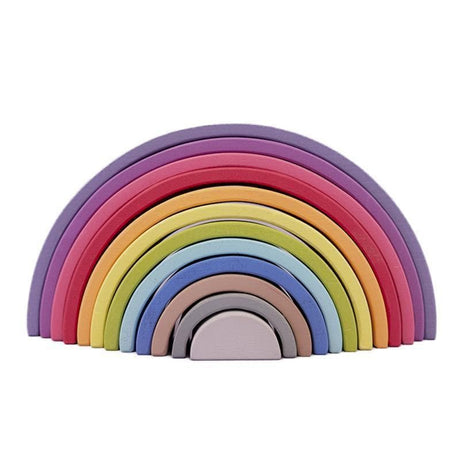
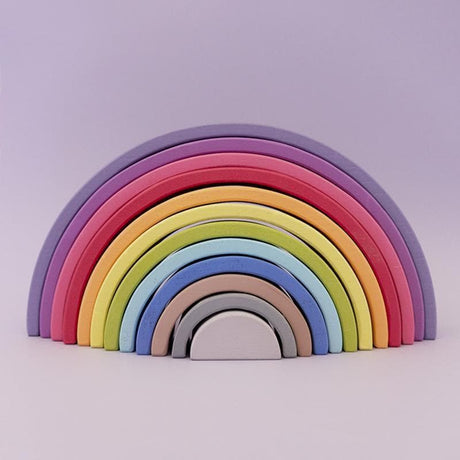
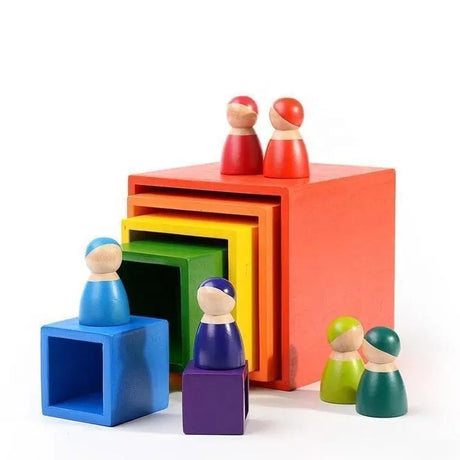
If you're not sure where to begin, a set of wooden rainbows or a basket of natural loose parts is the most versatile first step — both suit a wide age range and combine with almost everything else. From there, play silks add movement and dramatic play, peg dolls add characters, and building boards give a surface for small-world scenes. Most children end up with a mix because these toys work together: peg dolls live in rainbow houses, loose parts become their food, silks become the landscape.

What age is open-ended play for?

All ages — that's much of the point. The same open-ended toy grows with the child: a wooden rainbow is a stacker a toddler topples, a bridge and tunnel for a preschooler's cars, then part of an elaborate landscape for an older child, with no upgrade needed. Open-ended toys are among the few you genuinely don't outgrow, because the child's growing imagination does the work. That makes them excellent value and a reason to choose simple, durable, beautiful materials early.

How do I know if a toy is really open-ended?

Ask three questions. Can it be used in lots of different ways, or does it have one obvious purpose? Does the child decide what it becomes, or does the toy dictate the play — lights, sounds and a single button usually mean the toy is in charge? And will it still be interesting in two years, used a completely different way? A genuinely open-ended toy passes all three. Simplicity is the usual giveaway: the more a toy does, the less the child has to, so the most open-ended toys often look almost too plain on the shelf.

What are some examples of open-ended toys?

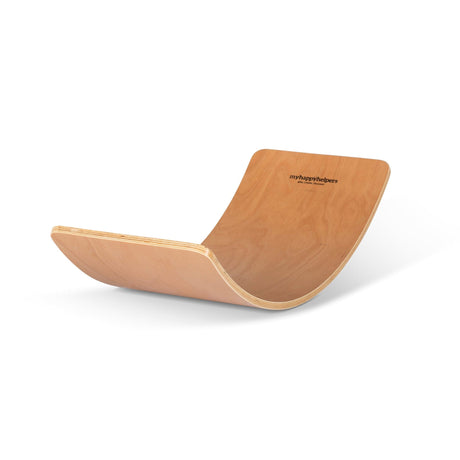
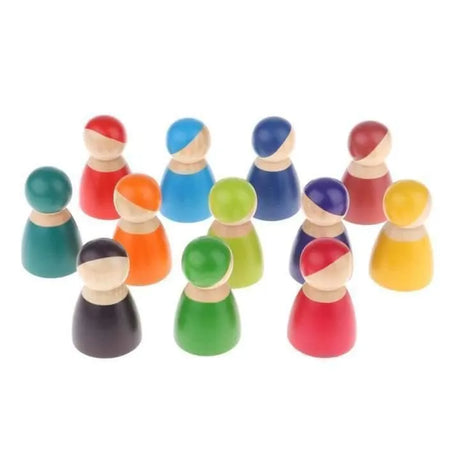
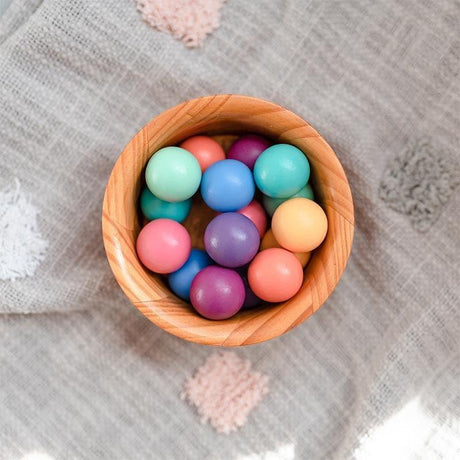
The classics endure because they're genuinely open-ended: wooden blocks, balls, play silks, natural loose parts (rings, pebbles, discs), wooden rainbows and simple wooden figures like peg dolls. In this range that means wooden rainbows (stacker, bridge, landscape), loose parts (endlessly combinable natural materials), play silks (capes, rivers, roofs), peg dolls (characters for any world), building boards (small-world surfaces) and creative play packs. They all combine beautifully, which is part of what makes them so open-ended.

Why is open-ended play important?

Because the child has to decide what to do, open-ended play puts the imagination in charge — and that's where a lot of development happens. It's consistently linked with stronger creativity and divergent thinking, problem-solving, and language as children narrate the worlds they invent. There's an emotional benefit too: with no right answer there's no way to fail, so it's a low-pressure space that builds confidence, independence and longer attention spans. The satisfaction comes entirely from the child's own choices.

What is open-ended play?

Open-ended play is play with no fixed outcome and no instructions — the child decides what happens, not the toy. An open-ended toy can be used many ways and become many things: a wooden arch is a bridge, a tunnel, a ramp, a rocker. The opposite is a close-ended toy with one correct result, like a puzzle or a single-button electronic toy. The signs of genuine open-ended play are simple: the child is in charge of the story, there's no way to do it 'wrong', and the same toy looks completely different from one day to the next.