Click & Collect or 24hr Dispatch*

15% Off Sitewide & Clearance*

EOFY15
Threading Toys for Skill Development

Threading & Lacing Toys


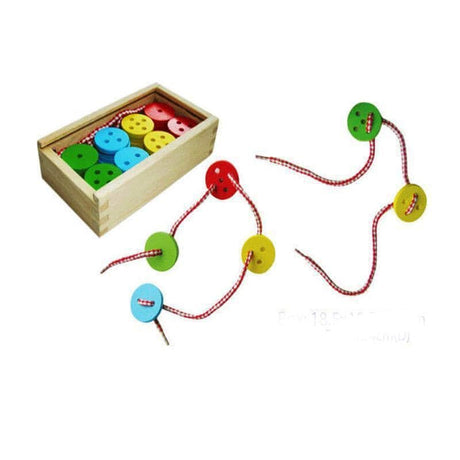
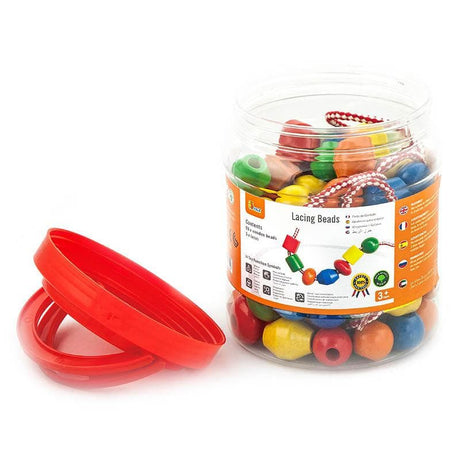
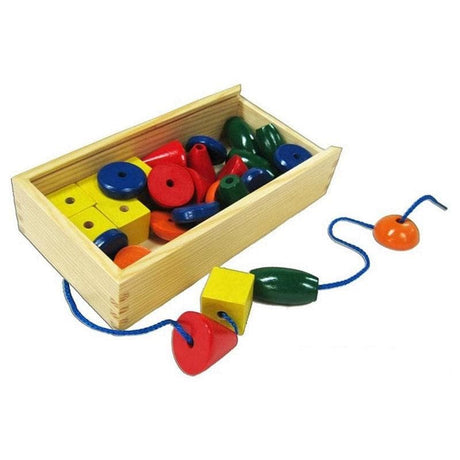
Threading toys and lacing toys help little ones develop the coordination, concentration and hand control needed for increasingly precise fine motor skills. Explore wooden threading toys, lacing beads and Montessori-inspired activities designed to encourage independent learning through purposeful, hands-on play.


Threading Toys For Toddlers Learning Bilateral Coordination

Why Threading Toys Challenge Growing Fine Motor Skills

Once children master simple posting activities, many are ready for a more complex challenge. Threading toys and lacing toys encourage little ones to coordinate both hands together while guiding strings, laces or beads through openings with increasing accuracy. This combination of movement, planning and precision makes threading activities one of the most effective ways to strengthen fine motor development.

Unlike posting toys, which focus on releasing objects into a target, threading activities require children to control movement throughout the entire process. They must position the lace, guide it through an opening and pull it through successfully. This creates a richer fine motor challenge that supports hand strength, bilateral coordination and concentration.

Whether children are exploring wooden threading toys, lacing beads or Montessori-inspired threading activities, these resources provide meaningful opportunities to practise persistence, coordination and independent problem solving through play.

Bilateral Coordination Hand Strength Concentration Fine Motor Precision

Develop Bilateral Coordination

Threading toys encourage children to use both hands together in a coordinated way. This important skill supports dressing, drawing, cutting, writing and many everyday tasks.

Strengthen Hand Control And Dexterity


Guiding laces through openings requires precision, finger control and careful movement. These repeated actions help build the small hand muscles used in future fine motor activities

Encourage Focus And Persistence

hreading activities naturally encourage children to slow down, concentrate and work through challenges independently while developing confidence through mastery.

Choosing The Right Fine Motor Challenge

Is Your Child Ready For Threading And Lacing Activities?

Threading toys sit between beginner fine motor activities and more advanced precision tasks. They are ideal for children who have mastered simple posting activities and are ready to coordinate both hands together while solving increasingly complex movement challenges.

Choose Threading & Lacing Toys If Your Child

  • Has mastered simple posting toys Enjoys repetitive fine motor activities Can hold and manipulate small objects confidently Is beginning to use both hands together Enjoys puzzles, matching and sequencing activities Can focus on a task for several minutes Is ready for greater precision challenges

Consider Posting Toys Or Peg Boards If Your Child

  • Is still learning controlled release Becomes frustrated when tasks require multiple steps Struggles coordinating both hands together Needs simpler cause-and-effect activities Seeks very quick success Has not yet mastered object placement activities Is either much younger or ready for more advanced precision placement
Threading toys often represent the next natural step after posting toys. They encourage children to guide, position and manipulate materials using both hands together, helping build the foundations for increasingly advanced fine motor skills.

Why Families Choose Threading Toys

Encourages both hands to work together through purposeful play

Strengthens finger muscles through repeated movement

Builds fine motor precision needed for increasingly complex tasks

What Makes A High Quality Threading Toy?

The best threading toys balance challenge with success. A well-designed threading activity should encourage children to practise coordination and precision without becoming overwhelming or frustrating. Features such as large threading holes, sturdy wooden pieces and easy-to-grip laces often help children experience success while still developing important skills.

As children gain confidence, more advanced threading toys can introduce smaller openings, greater precision and sequencing challenges. This gradual progression allows children to continue building hand strength, dexterity and concentration while maintaining engagement. High-quality threading toys also encourage repeated use because children naturally enjoy improving their speed, control and accuracy over time.

When Threading Toys May Not Be The Right Choice

Threading toys may not be suitable for children who are still developing basic grasping and object placement skills. If your child struggles to intentionally release objects, posting toys may provide a more appropriate starting point. Similarly, children seeking highly imaginative role-play experiences may not immediately engage with threading activities because the focus is skill-building rather than storytelling.

For children who already demonstrate excellent precision and coordination, peg boards or more advanced construction-based fine motor activities may offer a greater challenge. Choosing activities that match a child's current abilities helps maintain confidence while encouraging ongoing skill development.

The Fine Motor Skill That Connects Coordination And Precision

Threading toys occupy an important place in a child's fine motor development journey. They bridge the gap between simple object placement activities and more advanced precision tasks by encouraging children to guide, control and manipulate materials with increasing accuracy.

Whether your child is exploring lacing toys, threading beads or wooden threading activities, each successful movement strengthens coordination, concentration and confidence. Children learn to use both hands together, solve small challenges independently and persist through increasingly complex tasks.

For many families, threading toys become a favourite because they combine learning, repetition and achievement in a way that feels engaging rather than instructional. As confidence grows, the skills developed through threading activities often support later writing readiness, dressing skills, creative projects and a wide range of everyday fine motor tasks.

Frequently asked questions

Everything You Need to Know About Threading Toys Before You Buy

Do children continue using threading toys once they have mastered them?

Many children return to threading toys long after they have mastered the basic skill because the activity continues to offer opportunities for creativity, challenge and personal achievement. As confidence grows, children often find new ways to use the same resources, experimenting with patterns, sequences, colour combinations and increasingly complex designs.

Unlike some toys that have a single fixed outcome, threading activities can evolve alongside a child's abilities. A child who initially focuses on simply threading a bead may later create patterns, count objects, sort colours or challenge themselves to complete the activity more efficiently. This flexibility helps extend the lifespan of many threading toys well beyond the beginner stage.

For families seeking toys that provide lasting value, threading activities are often a strong choice. Their combination of skill development, creativity and open-ended exploration encourages repeat engagement while supporting fine motor growth across multiple developmental stages.

Are Montessori threading toys different from traditional lacing toys?

Montessori threading toys often share many similarities with traditional lacing toys, but the overall philosophy behind their design may differ. Montessori-inspired resources typically focus on simplicity, independence and purposeful skill development. Rather than relying on bright lights, sounds or entertainment features, they encourage children to engage deeply with the activity itself.

Many Montessori threading toys use natural materials such as wood and present a single clear objective. This helps children concentrate on the movement and challenge without unnecessary distractions. The emphasis is often on repetition, mastery and self-directed learning rather than achieving a specific outcome quickly.

Traditional lacing toys can also provide excellent developmental benefits, particularly when they encourage hands-on exploration and active participation. Ultimately, the most important factor is not whether a toy is labelled Montessori, but whether it provides an engaging challenge that matches the child's developmental stage and encourages meaningful fine motor practice.

How do threading toys compare to peg boards for fine motor development?

Both threading toys and peg boards support fine motor development, but they challenge children in different ways. Threading toys focus heavily on bilateral coordination, requiring both hands to work together throughout the activity. Children must guide, position and pull materials through openings while coordinating multiple movements at the same time.

Peg boards place greater emphasis on precision placement and visual accuracy. Rather than guiding a lace through a path, children position individual pieces into exact locations. This often requires careful control and increasingly refined hand-eye coordination. While both activities strengthen fine motor skills, the type of movement involved is different.

For many children, threading toys provide a natural progression after posting toys and before more advanced precision tasks. Once bilateral coordination becomes more automatic, peg boards can introduce a new level of challenge. Together, these activities form a valuable fine motor pathway that supports increasingly sophisticated hand control and problem-solving abilities.

What is the difference between threading toys for 2 year olds and threading toys for older children?

The biggest difference is usually the level of precision required. Threading toys for 2 year olds are typically designed with larger pieces, thicker laces and more forgiving openings that allow children to experience success while developing basic bilateral coordination. At this stage, the goal is not speed or accuracy. Instead, children are learning how both hands work together while building confidence through repetition.

As children grow older, threading toys often become more detailed and challenging. Openings may become smaller, laces thinner and patterns more complex. Older preschoolers may also begin following sequences, creating designs or threading beads in specific orders. These additional challenges encourage greater concentration, planning and fine motor precision.

Choosing the right threading toy depends less on age and more on skill level. A confident younger child may enjoy more advanced threading activities, while an older child who is still developing coordination may benefit from simpler resources. Matching the challenge to the child helps maintain engagement and encourages continued progress.

Are threading toys suitable for children who become frustrated easily?

They can be, provided the activity matches the child's current abilities. Threading toys are most successful when children experience a balance between challenge and success. If the task is too difficult, frustration can occur quickly. If it is too easy, children may lose interest before meaningful skill development takes place.

For children who become frustrated easily, beginner threading toys with large holes, thick laces and simple designs often provide the best starting point. These activities allow children to experience success early while gradually developing the coordination and confidence needed for more advanced challenges. Adult support during the initial stages can also help children understand the process without feeling overwhelmed.

Many children who initially struggle with threading become highly engaged once they experience success. Because threading activities naturally reward persistence and practice, they often help children develop resilience alongside fine motor skills, making them a valuable addition to a well-rounded play environment.

What should parents look for in a high-quality wooden threading toy?

A high-quality wooden threading toy should be durable, age-appropriate and designed to support successful learning experiences. The size of the pieces, thickness of the laces and complexity of the threading challenge should all match a child's developmental stage. Toys that are too difficult can create frustration, while activities that are too simple may fail to maintain interest.

For younger children, larger wooden pieces and thicker laces often provide the best introduction because they are easier to manipulate. Older children may benefit from more detailed threading challenges that require greater precision and planning. Smooth finishes, comfortable handling and durable materials are also important considerations because threading toys are typically used repeatedly over long periods of time.

The best wooden threading toys encourage progression. As children become more confident, they should be able to use the same resource in increasingly sophisticated ways, helping maximise both learning opportunities and long-term value for families.

Why do some children become deeply absorbed in threading beads and lacing activities?

Many children are naturally drawn to activities that combine repetition, challenge and visible progress. Threading beads and lacing toys provide all three. Each successful movement creates a sense of achievement, while the repetitive nature of the activity allows children to refine their skills and gain confidence through practice.

Unlike toys that provide instant entertainment, threading activities require active participation. Children must focus on what they are doing, adjust their movements and solve small problems as they work. This often creates a state of deep engagement where distractions fade into the background and children become fully immersed in the task.

Parents frequently describe threading activities as calming because they encourage slower, more deliberate movement. For children who enjoy hands-on learning, the process of guiding, threading and completing a sequence can feel highly satisfying. This combination of concentration, repetition and achievement is one reason threading toys often remain popular long after many novelty toys have lost their appeal.

How do threading toys help prepare children for writing and drawing?

Before children learn to hold a pencil confidently, they first need to develop the strength, coordination and control required to manage small, precise movements. Threading toys help build these foundations by encouraging children to manipulate laces, guide objects through openings and coordinate both hands together during play.

While threading activities do not teach writing directly, they strengthen many of the underlying skills associated with writing readiness. Children practise controlling hand movements, stabilising objects with one hand while working with the other and maintaining focus on detailed tasks. These experiences help develop the small muscles of the hands and fingers that later contribute to pencil control, drawing and other classroom activities.

Threading toys are particularly valuable because they encourage purposeful movement without feeling like formal learning. Children engage because they enjoy the challenge, while quietly developing skills that support future fine motor confidence. For this reason, threading activities are often included in preschool environments and early learning programs that focus on school readiness.

What is the difference between threading toys and lacing toys?

The terms threading toys and lacing toys are often used interchangeably, and both involve guiding a lace, string or cord through openings. However, there can be subtle differences depending on the design of the activity. Threading toys frequently focus on beads, shapes or objects that children thread onto a lace, while lacing toys often involve following a path around the edge of a board or shape.

From a developmental perspective, both activities support similar skills. Children practise bilateral coordination, hand-eye coordination, concentration and fine motor precision while manipulating materials with increasing accuracy. The choice often comes down to a child's interests and current skill level rather than one option being inherently better than the other.

Many families find value in offering both types of activities because they provide slightly different challenges while supporting the same underlying developmental foundations.

Are threading toys good for children who struggle with concentration?

Many children who struggle with concentration respond surprisingly well to threading toys because the activity provides a clear goal, immediate feedback and a manageable level of challenge. Unlike fast-paced toys that constantly change direction, threading activities encourage children to focus on one movement at a time while working towards a visible outcome.

The repetitive nature of threading can also be calming. Children often become deeply engaged as they guide a lace through a sequence of openings, particularly when the activity is matched to their developmental stage. Success is easy to recognise, which helps maintain motivation and encourages persistence.

Threading toys are not a guaranteed solution for every child, but they often appeal to children who enjoy hands-on learning and purposeful movement. Many families find that threading activities provide a valuable screen-free opportunity for children to practise patience, concentration and independent problem solving without feeling pressured or overwhelmed.

Why do threading toys require both hands to work together?

Threading toys are one of the few fine motor activities that naturally encourage bilateral coordination, which means both hands working together to complete a task. One hand typically stabilises the toy or bead while the other guides the lace through an opening. This coordinated movement requires communication between both sides of the body and the brain.

Bilateral coordination is an important skill because it supports many everyday tasks children encounter as they grow. Activities such as dressing, using cutlery, drawing, cutting with scissors and writing all rely on the ability to use both hands effectively. Threading activities provide repeated opportunities to practise this skill in a playful and engaging way.

Many parents focus primarily on finger strength when choosing fine motor toys, but bilateral coordination is often equally important. By encouraging both hands to work together, threading toys help children develop the coordination, planning and body awareness needed for increasingly complex tasks throughout childhood.

How can parents tell if their child is ready for threading toys?

Many children show clear signs when they are ready for threading toys and lacing activities. One of the strongest indicators is mastery of simpler fine motor tasks such as posting toys, placing objects accurately into containers or completing basic shape sorting activities. Children who enjoy manipulating small objects, concentrating on repetitive tasks and using both hands together are often ready for the additional challenge threading toys provide.

Readiness is less about age and more about coordination. Some children may be ready for beginner threading toys around two years of age, while others benefit from waiting until they have developed greater hand control. Large wooden threading toys and lacing activities with thick laces are often excellent starting points because they provide early success while still encouraging skill development.

Parents should also consider interest level. Children who enjoy solving small challenges, matching activities or construction play often engage particularly well with threading toys because the activity combines movement, precision and problem solving in a satisfying and achievable way.