
Click & Collect or 24hr Dispatch*


What Parents Are Really Buying When They Buy a Marble Run

Almost every shop sells a marble run as a STEM toy, and the gravity-and-engineering angle is true enough. But ask parents why they actually bought one and the answers are different: they hoped their child would spend more than ten minutes on a single activity, build something themselves, feel proud of making it work, have a toy siblings could build together — and, quietly, learn to keep going when something didn't work the first time. One parent put it perfectly: "It was the first toy where my son didn't ask me to fix it. He just kept changing it until it worked."

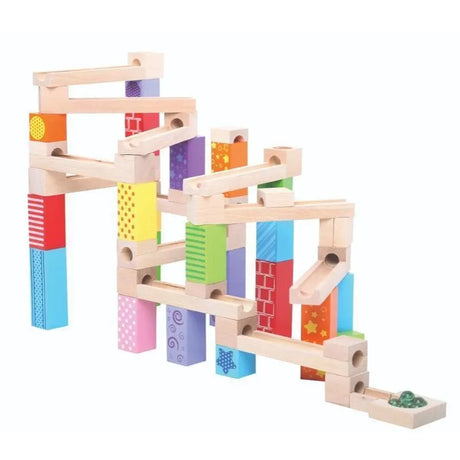
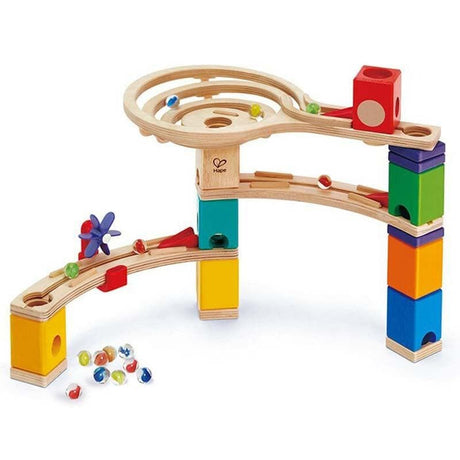
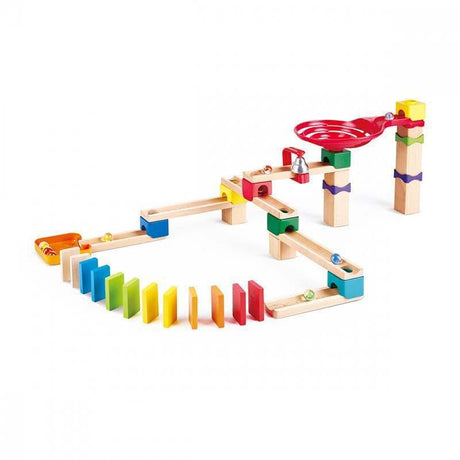
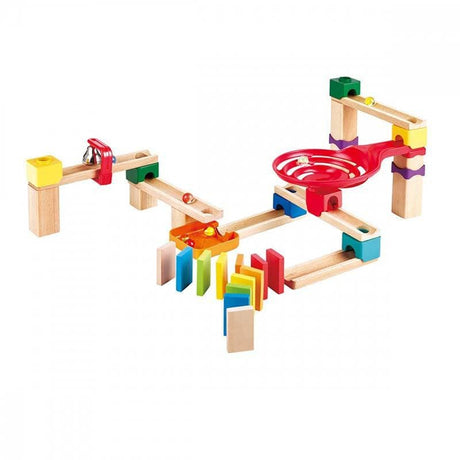
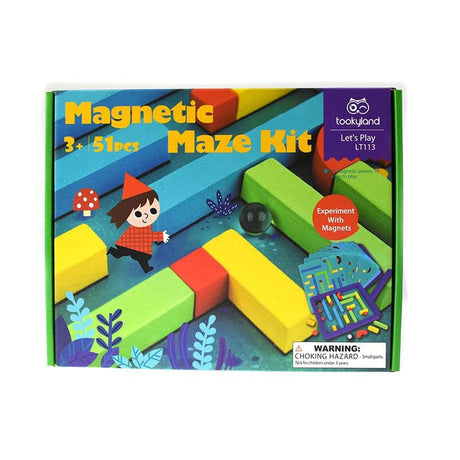
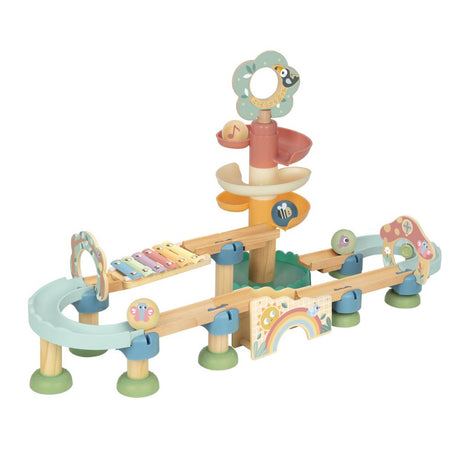
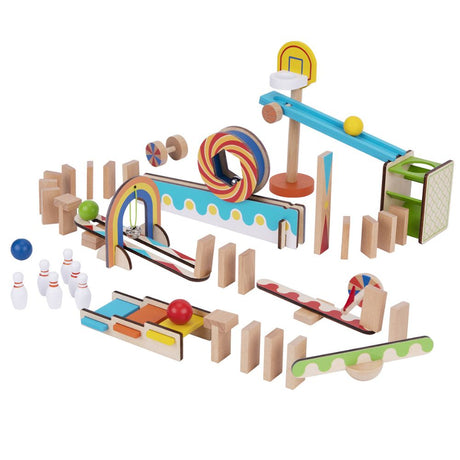
That's the real story of a marble run. Unlike a puzzle that's solved once, or a building set with a finished model on the box, a marble run invites constant tweaking — the run almost works, the marble jumps the track, one adjustment and suddenly it flows. Parents think they're buying a marble run; what they're really buying is persistence, and the marble run just happens to be the vehicle. Our range is mostly wooden, with some magnetic and Connetix-compatible ball runs too, so there's an open-ended set whether your child loves classic timber tracks or wants their run to click together with tiles they already own. If you'd like the bigger picture first, read why marble runs are one of the few toys where failure is the fun part.

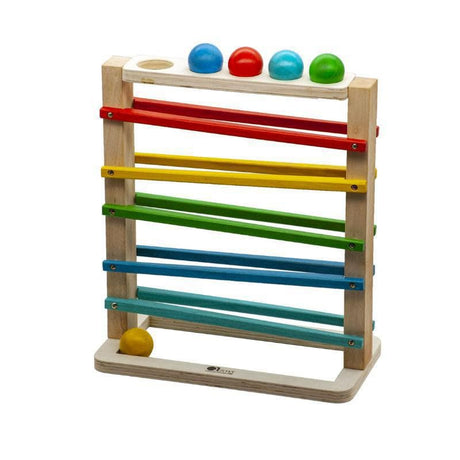
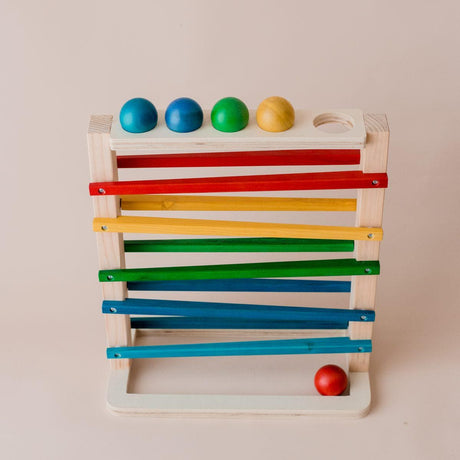
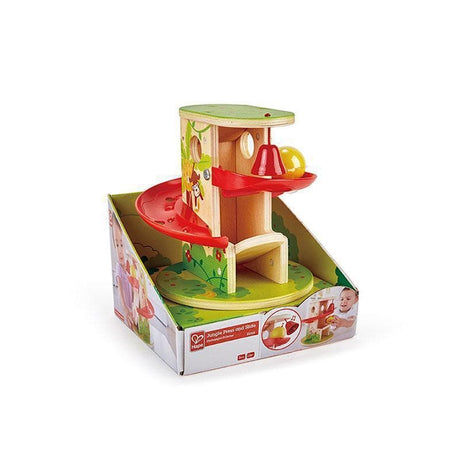
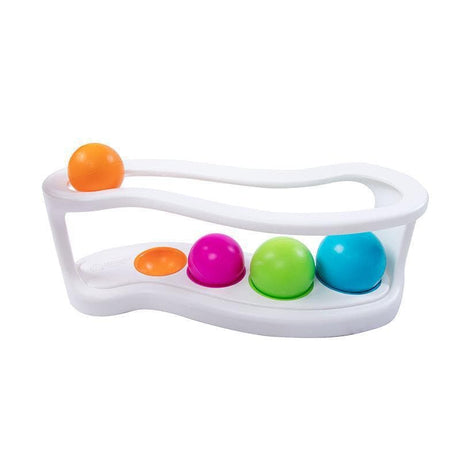
Wooden Marble Runs Ball Runs Build, Test & Improve Open-Ended Construction

Why the First Marble Run Never Works (and Why That's Good)

This is the most universal marble run experience there is: the child builds, drops the marble, and it falls off, stops halfway, or gets stuck. What happens next is the whole reason these toys earn their place. Instead of giving up, the child changes one piece and tries again. Moves another. Tries again. That cycle can run for an hour. The adult watching often thinks the toy isn't working; the child thinks "I'm getting closer" — and that difference is everything.

It's why one educator called a marble run "one of the safest places for children to fail." Nothing dramatic happens when it doesn't work — the marble simply rolls off, so failure becomes information rather than disappointment, and the child tries again immediately. Over time you'll hear them start to predict: "that corner's too sharp," "the marble will jump there," "this needs to be steeper." They're running the track in their head before the marble ever moves. That's a genuinely different skill from following an instruction sheet, and a marble run builds it without anyone teaching a thing.

The Marble Run Where the Goal Keeps Moving

Children rarely stop once the marble reaches the bottom. Almost immediately the challenge evolves: can it go faster? slower? can two marbles race and arrive together? can we make it louder, or build it higher? A marble run is one of the few toys where the child keeps inventing harder versions of the problem for themselves — which is exactly why it holds attention long after a one-solution toy has been abandoned. The sound matters more than adults expect, too; many children rebuild the same section repeatedly just for the click or the chime it makes, building for the sound as much as the movement.

And as with the best open-ended toys, the building takes far longer than the watching. The marble might run for five seconds; the build took forty-five minutes — and the child doesn't mind in the least, because building is the real game and the marble simply tells them whether their design worked. That's the loop parents describe again and again: design, test, adjust, test again. It's deeply satisfying in its own right, with no points, no lights and no prize at the end — just the honest feedback of a marble that either makes it or doesn't.

When a Marble Run Stops Being a Marble Run

One of the most telling things parents describe is that an open-ended marble run never stays just a marble run. Children start pulling in other toys — wooden rainbows, building boards, blocks, peg people and animals — and suddenly the marble isn't just rolling. It's delivering supplies to a village, escaping a volcano, travelling through a dinosaur park or crossing a whole city. The marble becomes a character in a much bigger story, and the run becomes the infrastructure that story travels along.

That's also why a marble run is such a good toy for siblings and even whole families. Because there's no single correct answer, children naturally divide the jobs without being asked — one builds, one tests, one collects the marbles, one suggests improvements. Parents often describe a run becoming a weekend project that everyone contributes ideas to. And it spreads: when the run "needs to be taller," children recruit books, dining chairs, coffee tables and crates, until — as one parent laughed — "it started on the dining table and finished under the couch."

Quadrilla Basic Coding Set

The Marble Run That Holds a Restless Child's Attention

If you have a child who flits from toy to toy, this is the pattern worth knowing about. Many parents describe the marble run as one of the few things that holds their child's attention for long stretches — not because it's flashy, but because success always feels one adjustment away. The marble nearly made it. Just one more change. That "almost" is what keeps a child returning, and it's how children who "can't sit still" end up spending forty-five focused minutes on a single build.

It won't be every child — nothing is — but it's a pattern families recognise again and again, and it's a very different kind of attention from the passive sort a screen produces. Here the child is actively solving a problem they care about, getting immediate honest feedback, and choosing to keep going. That's also why experienced parents learn to hold back rather than jumping in to fix the track: the child almost always solves it themselves, and a quiet "what do you think would happen if…" does far more than moving the piece for them.

Closed vs Open-Ended Marble Runs: Which to Choose

It's worth understanding the two kinds, because they offer genuinely different experiences. A fixed plastic marble run, where every piece has one correct location, gives a child the real satisfaction of assembling a known design — there's a right answer and they reach it. An open-ended construction marble run asks a different question entirely: "what kind of journey do you want the marble to take today?" There's no single solution, hundreds of possible layouts, and it's rarely built the same way twice.

Neither is inherently better, but they build different habits. With a closed run, success means completing the model; with an open-ended one, success means solving your own design problem — and that's the kind we focus on here, because it's what keeps children experimenting for months rather than completing once and moving on. Most of our sets are wooden, with some that click together with magnetic tiles and Connetix, so an open-ended run can connect into the wider construction system a child already plays with.

Start here

Choosing the Right Marble Run

The best marble run isn't the biggest — it's the one that leaves your child thinking "I almost got it."

Start with a smaller set if:

It's a first marble run or for a younger child
You want stable, easy-to-build tracks to begin
You'd like to add more pieces as confidence grows

Choose a larger / varied set if:

They already love building and want bigger challenges
You want variety — curves, splitters, drops, bells, spirals
They'll combine it with blocks, tiles or building boards
Look for stability and variety over sheer piece count — tracks that stay put when a marble rolls through, and enough different pieces to keep changing the design.

Why Families Choose Our Marble Runs

Open-ended marble & ball runs — build, test and improve, not one fixed model

Mostly wooden, with magnetic & Connetix-compatible options

Stable tracks and varied pieces — curves, drops, bells and spirals

Dispatched from Melbourne — NDIS registered provider

What Makes a Great Marble Run?

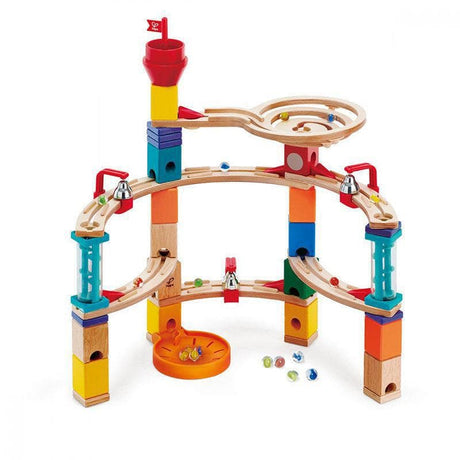
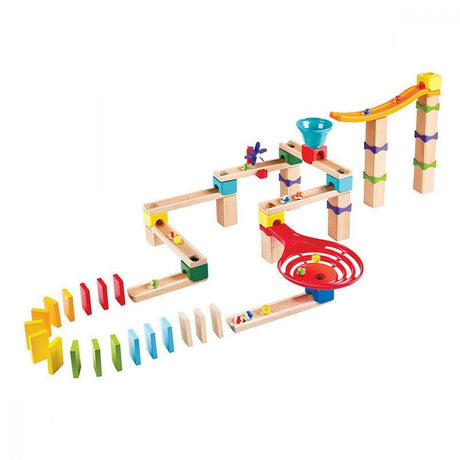
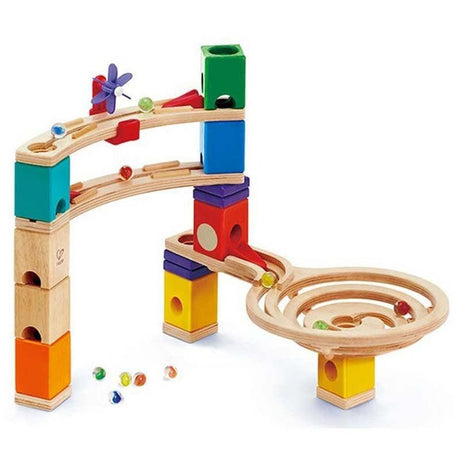
After reading dozens of parent reviews, the same features come up far more than "how many pieces." Stability is first: nothing kills the experience faster than tracks that shift every time a marble rolls through, so pieces that stay together matter more than having hundreds of them. Variety is next — children quickly outgrow endless straight tracks, and the most engaging sets include curves, splitters, funnels, drops, bridges, bells and spirals, because every new piece changes what's possible.

Just as important is being easy to rebuild: if a child fears the whole thing collapsing when they change one section, they stop experimenting — and experimenting is the entire point. Finally, compatibility with other toys is a quiet winner. Marble runs that work alongside blocks, building boards, wooden rainbows and magnetic tiles stop being a single toy and become part of a much larger construction system — which is how a marble run earns years of play rather than weeks.

Marble Runs and the Skill That Outlasts the Toy

Here's the thing we think matters most, and it's not on most marble run listings. When the marble falls off, children very rarely say "I failed." They say "wait — I know what to change." That small reframe, practised over and over through ordinary play, is a genuinely powerful habit to build in childhood: the belief that improvement usually comes from one small adjustment at a time, and that a setback is just information about what to try next.

The marble run teaches it precisely because it doesn't praise, score or flash lights. It just gives honest feedback — the marble either makes it or it doesn't — and lets the child draw the conclusion. That's why we'd gently push back on the idea that a marble run is mainly a physics toy. The physics is real, but the persistence is the gift. If that idea interests you, our article on why failure is the fun part of a marble run goes deeper into what parents actually notice.

A Marble Run That Grows With Every New Idea
The best marble runs aren't finished when the marble reaches the bottom — that's just where the next idea starts. Faster, higher, two marbles racing, a loop around the teddy, a finish that rings a bell or knocks over a tower. A good open-ended run keeps offering the next challenge, which is how it stays in play long after one-solution toys are forgotten.

Explore the range above and choose for stability and variety, then combine it with wooden blocks, building boards and wooden rainbows so the runs can grow as ambitious as your child's ideas. For more challenging builds, our STEM & advanced building range is the natural next step.

Frequently asked questions
Are marbles a choking hazard?

Marbles are a small part and a choking hazard for young children, so marble runs need supervision and age-appropriate choices — for the youngest children, larger balls and ball-run style sets are safer than small marbles. Always follow the recommended age on each product and supervise play. If you have very young children in the home, choose sets designed with larger pieces and keep loose marbles stored safely out of reach between play sessions.

Do marble runs work with other toys?

The open-ended ones do, and it's a big part of their appeal. Children naturally combine marble runs with wooden blocks, building boards, wooden rainbows, peg people and magnetic tiles — and once they do, the marble stops just rolling and starts delivering supplies, escaping volcanoes or crossing cities. Marble runs that integrate with other construction toys stop being a single toy and become part of a much larger building system, which is how they earn years of play.

Are marble runs good for children who can't sit still?

Many parents of children who usually flit between toys describe the marble run as one of the few things that holds their attention — because success always feels one adjustment away, and that 'almost' keeps them returning. It won't be every child, but it's a widely recognised pattern. The attention is active and self-directed (solving a problem they care about), which is very different from the passive attention a screen produces.

Why does my child keep rebuilding the same marble run?

Because for a marble run, building is the game — not just the setup before it. The marble might run for five seconds; the building took forty-five minutes, and that's where the real play and thinking happen. Children also keep moving the goal themselves (faster, higher, two marbles racing, a louder finish), and some rebuild a section purely for the sound it makes. Constant rebuilding is a sign the toy is working exactly as it should.

What should I look for in a good marble run?

Stability first — tracks that stay put when a marble rolls through, because nothing frustrates a child faster than a run that shifts every time. Then variety: curves, splitters, funnels, drops, bridges, bells and spirals all change what's possible, and children quickly outgrow endless straight tracks. It should be easy to rebuild (so they're not afraid to experiment) and ideally compatible with blocks, tiles or building boards. The biggest set isn't the best — the one that leaves them thinking 'I almost got it' is.

What's the difference between a wooden marble run and other types?

Wooden marble runs are the classic, durable, open-ended kind — warm to handle, pleasant-sounding, and built to be rearranged endlessly. Some marble and ball runs are magnetic or click together with tiles like Connetix, which lets the run connect into a wider building system a child may already own. Our range is mostly wooden with some magnetic and Connetix-compatible options, so you can choose based on what your child loves to build with.

Are marble runs educational?

Yes, though the best part isn't the physics. Children do explore gravity, speed, angles and momentum hands-on — every run is a small experiment with instant feedback. But what parents value most is the persistence: when the marble falls off, children learn to change one thing and try again, turning failure into information rather than disappointment. They also develop planning, prediction and problem-solving, and because there's no single right answer, they experiment freely.

What age is a marble run for?

Marble runs suit a wide age range. Younger children (with larger pieces and supervision, since marbles are a small-parts choking hazard) enjoy simple ball runs and the cause-and-effect of dropping a ball and watching it travel. Older children build increasingly elaborate, multi-level tracks and invent their own challenges. Because the child sets the complexity, the same open-ended set keeps being useful for years. Always check the recommended age on each product, especially for the youngest children.

What is a marble run?

A marble run is an open-ended construction toy where children build a track — using curves, drops, funnels, bridges, spirals and supports — for a marble or ball to travel down. Unlike a puzzle with one solution or a set with a finished model, a marble run invites constant tweaking: build, test, adjust, test again. That build-test-improve loop is what makes them so absorbing, and why children return to them far longer than to single-solution toys.