Click & Collect or 24hr Dispatch*

15% Off Sitewide & Clearance*

EOFY15
Open-Ended Play Without Limits

Magnetic Tiles

Magnetic Tiles are one of the few toys that evolve alongside a child's imagination. One day they become castles, roads and towers. The next they become ball runs, small worlds, animal habitats, rockets or colourful patterns on a light table. Designed for open-ended play, magnetic tile sets encourage children to create, experiment and imagine in hundreds of different ways while providing years of engaging, screen-free play.


Why Magnetic Tiles Continue To Captivate Children Year After Year

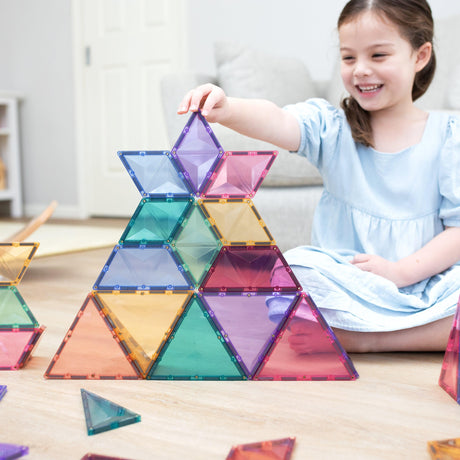
Many toys offer a single way to play. Magnetic Tiles offer hundreds. What makes magnetic tile sets different is their ability to adapt to the child's imagination. A toddler may begin by stacking colours and connecting shapes. A preschooler may build houses, roads and imaginative worlds. Older children often create increasingly complex structures, ball runs, marble runs and architectural designs that evolve over time.

This versatility is one reason Magnetic Tiles remain a favourite in homes, classrooms and play spaces around the world. Rather than telling children what to build, they provide the freedom to explore ideas, test possibilities and create something entirely their own. For families looking for an open-ended toy that supports creativity across multiple ages and stages, Magnetic Tiles continue to offer exceptional play value long after many other toys have been forgotten.

Open-Ended Play Creative Building Imaginative Play Years Of Possibilities

Magnetic Tiles Adapt To Different Styles Of Play


Some children love building. Others love storytelling, pattern creation, colour exploration or small world play. Magnetic Tiles support all of these interests because they can be used in countless ways. The same set may become a castle one day and a rocket ship the next, allowing children to follow their own interests rather than a fixed set of instructions.

The Best Magnetic Tile Sets Grow Alongside Your Child


Many toys become less engaging once children have mastered the activity. Magnetic Tiles often become more engaging over time because the possibilities continue expanding. As children develop new skills and interests, they naturally discover more complex ways to use the same pieces, creating greater longevity and stronger long-term value.

Magnetic Tile Play Encourages Creativity Without Pressure


Open-ended play works differently because there is no right or wrong outcome. Children can build, experiment and create at their own pace without worrying about following instructions perfectly. This freedom often encourages greater confidence, independence and creativity while making play feel more enjoyable and less structured.

Shop by need

Magnetic Tile Ideas That Keep Play Fresh Long After The First Build

One reason magnetic tiles remain popular for years is that children rarely use them the same way twice. What begins as simple building often evolves into increasingly creative magnetic tile activities as children's confidence and imagination grow.

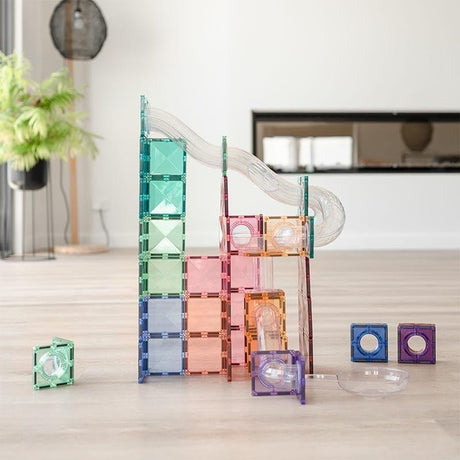
Some children enjoy creating houses, castles and cities. Others design roads, bridges and transport networks. Many families discover that magnetic tiles become part of small world play, animal habitats, pretend shops, marble runs or light table activities. The same collection can support hundreds of different ideas without requiring additional instructions or equipment.

Parents searching for magnetic tile ideas are often looking for toys that can adapt to changing interests. Magnetic tiles excel because they allow children to move naturally between building, storytelling, problem solving and imaginative play. Instead of directing the experience, the tiles provide the tools while the child provides the creativity.

This flexibility is one reason many families continue reaching for magnetic tiles long after other toys have lost their appeal.

Why Creative Children Often Return To Magnetic Tiles Again And Again

Some toys provide entertainment. Open-ended toys provide possibilities.

Children who enjoy imaginative play are often drawn to magnetic tiles because there is no fixed outcome. A structure can become anything the child wants it to become. A simple collection of shapes can transform into a rocket ship, a castle, a zoo, a race track or an entirely imagined world.

This freedom is particularly valuable for children who enjoy creating stories, inventing characters and building environments for their ideas to unfold. Unlike toys built around a single activity, magnetic tiles adapt to the child's imagination rather than limiting it.

Many parents looking for the best magnetic tiles for imaginative play are not simply looking for a building toy. They are looking for a resource that supports creativity across multiple stages of childhood. Magnetic tiles often achieve this because the play experience evolves alongside the child's interests, making each play session feel different from the one before.

Not Sure Which Set To Choose?

How To Choose The Right Magnetic Tiles

The best magnetic tile set depends less on age and more on how your child likes to play. Some children are natural builders who enjoy creating structures, while others are drawn to imaginative worlds, storytelling, colour exploration and open-ended creative play. Choosing a set that matches their interests often creates a more rewarding experience than simply choosing the largest box.

Choose A Starter Magnetic Tile Set If...

  • This is your child's first magnetic tile set You are unsure how many pieces you need Your child is still exploring magnetic play You want a versatile gift with broad appeal You prefer to expand gradually over time You want enough pieces to create satisfying builds immediately

Choose An Expansion Or Larger Set If...

  • Your child already uses magnetic tiles regularly They often create large structures and imaginative worlds They become frustrated by limited piece counts Multiple children build together You want greater building flexibility Your child enjoys increasingly complex creations
Most families are happiest beginning with a well-balanced starter set and expanding as their child's interests develop. Magnetic Tiles naturally grow alongside children's creativity, making it easy to add new possibilities over time without replacing the collection they already love.

What Should Parents Look For In A High Quality Magnetic Tile Set?

Strong magnetic connections that support stable and satisfying builds

Compatibility with future expansion sets and growing collections

Durable pieces designed for repeated building, rebuilding and imaginative play

What Makes Some Magnetic Tile Sets More Engaging Than Others?

Parents often compare magnetic tile sets by piece count alone, but long-term engagement usually comes from variety rather than quantity.

A well-designed magnetic tile collection encourages multiple styles of play. Children may use the same pieces to build structures, create roads, design patterns, build ball runs or invent imaginative worlds. The more ways a set can be used, the more likely children are to return to it repeatedly.

It is also worth considering how the collection may grow over time. Many families achieve better value by choosing a magnetic tile system that allows future expansion rather than focusing entirely on the largest set available today.

The most successful magnetic tile sets are often the ones that continue inspiring new ideas months or even years after the initial purchase.

When Magnetic Tiles May Not Be The Best Fit

Magnetic Tiles are designed for children who enjoy creating, experimenting and directing their own play. They are most rewarding when children have the freedom to explore ideas, test possibilities and build according to their imagination.

Families seeking highly structured activities with fixed outcomes may find other toy categories better suited to their needs. While many children naturally enjoy magnetic play, the strongest engagement usually occurs when a child enjoys creating rather than simply following instructions.

For children who love open-ended play, storytelling, building and imaginative exploration, magnetic tiles often become one of the most frequently used toys in the playroom.

Magnetic Tiles That Grow With Your Child's Imagination

Few toys offer the flexibility, creativity and long-term play value of magnetic tiles. From first builds and simple structures through to imaginative worlds, ball runs and complex creations, magnetic tile sets continue evolving alongside the child using them. Whether your child loves storytelling, creative exploration, building or open-ended play, magnetic tiles provide a versatile foundation that encourages new ideas every time they are used.

Frequently asked questions
Why do so many parents consider magnetic tiles one of the best long-term toys they have purchased?

Most toys are purchased for who a child is today.

The strongest open-ended toys remain relevant because they continue adapting to who the child becomes tomorrow.

This is one of the reasons magnetic tiles are frequently described as a long-term favourite. A toddler may use them for colour exploration and simple structures. A preschooler may build houses, roads and imaginative worlds. An older child may create marble runs, engineering-inspired projects and increasingly complex designs.

The materials remain the same, but the play experience evolves continuously.

Many families find that magnetic tiles move through multiple stages of childhood without losing relevance because there is no single way to use them. Each new interest creates a new opportunity for play.

For parents looking for toys that support creativity, imagination and independent thinking over many years, magnetic tiles often deliver value far beyond the initial purchase because the possibilities continue growing alongside the child.

How many magnetic tiles do children actually need?

How many magnetic tiles do children actually need?

What makes premium magnetic tiles different from low-cost marketplace alternatives?

At first glance, many magnetic tile sets appear remarkably similar. The differences often become more noticeable after months or years of play rather than during the first few days.

Premium magnetic tile collections are typically designed around the quality of the play experience rather than simply the number of pieces included. Factors such as magnetic strength, durability, compatibility, versatility and thoughtful piece selection all influence how children interact with the collection over time.

A well-designed magnetic tile set encourages children to move seamlessly between building, storytelling, ball runs, imaginative play and creative exploration. The collection feels flexible rather than limiting.

Long-term durability also matters. Children rarely use magnetic tiles gently. Pieces are stacked, connected, rebuilt and incorporated into countless creations. Families looking for lasting value often benefit from choosing collections designed to withstand years of repeated play.

Ultimately, the difference is not simply the product itself. It is the number of meaningful play experiences the collection continues to create as the child grows.

Can magnetic tiles help children who become overwhelmed by noisy or overstimulating toys?

Every child responds differently to sensory input, but many families are drawn to magnetic tiles because they offer a calmer style of play than toys built around flashing lights, loud sounds or fast-paced interactions.

Magnetic tiles tend to encourage focused, self-directed play. Children can work at their own pace, follow their own ideas and create without the pressure of keeping up with a toy that constantly demands attention.

For some children, this slower and more intentional style of play feels easier to engage with. The experience is open-ended rather than overwhelming. There is no timer, no score and no requirement to achieve a specific outcome.

Many parents notice that magnetic tile play naturally creates moments of concentration and flow, where children become absorbed in building, experimenting and creating. While every child is different, this ability to support calm, creative engagement is one reason magnetic tiles have become a popular choice in homes, classrooms and play-based learning environments.

Why are magnetic tiles often recommended as a screen-free alternative for children?

Many parents looking for screen-free activities are not necessarily trying to eliminate technology altogether. More often, they are searching for activities that provide the same level of engagement without relying on passive entertainment.

Magnetic tiles often succeed because they place children at the centre of the experience. Rather than consuming content created by someone else, children become the creators. They make decisions, solve problems, test ideas and direct the play according to their own interests.

What makes this particularly powerful is that magnetic tiles rarely feel like a learning activity. Children are simply building, creating and imagining. Yet they often remain deeply engaged because every decision leads to another possibility.

A road becomes a city. A city becomes an airport. An airport becomes an entire imaginary world.

For many families, magnetic tiles become a valuable screen-free resource because they encourage creativity, independence and sustained engagement without requiring batteries, instructions or constant adult involvement. The child drives the experience, which is often what keeps them returning to it again and again.

How do magnetic tiles continue supporting play as children move beyond the toddler years?

One of the most remarkable qualities of magnetic tiles is their ability to evolve alongside the child using them.

Toddlers often begin with simple stacking, colour exploration and shape recognition. Preschoolers typically move into imaginative structures, small world environments and storytelling. Older children frequently explore architectural designs, marble runs, engineering-inspired projects and increasingly ambitious creations.

The materials remain the same, but the complexity of the play changes dramatically.

This progression is one reason many families consider magnetic tiles a long-term investment in play rather than a toy tied to a specific age. The pieces continue offering new opportunities because children's ideas continue becoming more sophisticated.

A magnetic tile collection that begins as a toddler's first building resource may eventually become the foundation for years of creativity, experimentation and imaginative exploration, making it one of the rare toys that genuinely grows with the child.

Why do some children build the same magnetic tile creations over and over again?

Parents sometimes worry that repeated builds indicate a lack of creativity. In reality, repetition is often a sign that important learning and exploration are taking place.

Children frequently revisit familiar structures because they are refining ideas, testing new possibilities and gaining confidence in their abilities. The airport built today may look similar to the airport built last week, but the child may be experimenting with new layouts, adding details or creating more complex stories around the structure.

Repeated building also creates a sense of mastery. Children enjoy returning to creations that feel meaningful, particularly when those creations become part of ongoing imaginative worlds.

Many adults see repetition. Children often see improvement.

Magnetic tiles support this process beautifully because they allow children to revisit favourite ideas while still leaving room for new discoveries and creative changes.

How are magnetic tiles different from traditional wooden blocks?

While both encourage open-ended play, the experience can feel surprisingly different.

Traditional wooden blocks rely entirely on balance, stacking and structural stability. They are excellent for exploring cause and effect, spatial awareness and early construction concepts.

Magnetic tiles introduce an additional layer of flexibility. Children can create enclosed spaces, vertical surfaces, geometric shapes and larger structures more easily, allowing ideas to take shape with less frustration.

The difference becomes particularly noticeable during imaginative play. A wooden block tower is usually a tower. A magnetic tile structure can quickly become a house, zoo, castle, airport or shop because the translucent shapes naturally lend themselves to world building and storytelling.

Neither resource is objectively better. Many families enjoy using both together. However, magnetic tiles often appeal to children who want greater creative freedom and more opportunities to transform a single idea into something entirely new.

Why do imaginative children often use magnetic tiles differently from construction-focused children?

Parents sometimes assume magnetic tiles are primarily a building toy, but many imaginative children use them in ways that have very little to do with construction.

A construction-focused child may spend hours creating towers, bridges, roads and architectural designs. An imaginative child is often more interested in what the structure represents than how it was built.

A simple arrangement of magnetic tiles might become a castle, a veterinary clinic, a fairy house, a pirate ship or an entire fantasy world. The building itself becomes a backdrop for storytelling rather than the main activity.

This is one reason magnetic tiles appeal to such a broad range of children. They support both builders and storytellers. Some children are fascinated by design and engineering. Others are fascinated by characters, adventures and imaginative narratives.

The strongest open-ended toys accommodate both approaches, allowing children to engage according to their own interests rather than forcing a single style of play.

Why do magnetic tiles work so well for siblings with different ages and interests?

One of the challenges many families face is finding toys that genuinely appeal to more than one child. What excites a toddler may feel too simple for an older sibling, while activities designed for older children can quickly become frustrating for younger ones.

Magnetic tiles often bridge this gap because the same collection can be used in completely different ways at the same time.

A younger child may focus on connecting shapes, sorting colours and building simple structures. An older child might be creating an airport, designing a marble run or building an entire imaginary city around the same pieces. Neither child is playing incorrectly. They are simply engaging with the materials at their own developmental stage.

This flexibility is one reason magnetic tiles are often described as a family toy rather than a single-child toy. They adapt naturally to different abilities, interests and play styles without requiring separate rules or instructions.

For households with multiple children, this ability to support collaborative play without limiting individual creativity is one of the strongest reasons magnetic tiles remain a long-term favourite.

What makes premium magnetic tiles different from cheaper magnetic tile sets?

Most parents initially compare magnetic tiles based on piece count. While quantity matters, it rarely determines whether a child enjoys the collection long term.

The real difference often lies in versatility.

Premium magnetic tile sets are typically designed to support multiple styles of play rather than a single building outcome. Children can move naturally between construction, storytelling, imaginative play, pattern creation and small world exploration using the same collection.

The quality of the building experience also matters. Stable structures, reliable connections and thoughtful piece selection all influence how freely children can create.

Perhaps most importantly, premium magnetic tiles tend to remain relevant for longer because they support evolving interests. A set that works beautifully for a three-year-old may still feel engaging years later because the possibilities continue expanding.

For many families, the value of magnetic tiles is not measured by how many pieces arrive in the box, but by how many years of play those pieces inspire.

What types of magnetic tile activities do children return to most often?

Interestingly, the magnetic tile activities children return to most often are rarely the most complicated.

While elaborate castles and impressive structures attract attention online, many children repeatedly return to activities that allow them to tell stories, create worlds and explore ideas.

Road systems are particularly popular because they evolve endlessly. Animal habitats often become ongoing projects. Shops, hospitals, schools, farms and airports frequently reappear because they connect directly to a child's everyday experiences.

Light table play also remains popular because magnetic tiles interact beautifully with colour and light, creating a completely different sensory experience from traditional building materials.

The common theme is not the activity itself. It is ownership.

Children return to magnetic tile ideas that belong to them. The more opportunity they have to shape the play experience, the more likely they are to revisit it repeatedly.

Are magnetic tiles a good screen-free activity for children who need help playing independently?

Many parents searching for screen-free activities are not simply looking for something to keep their child busy. They are looking for activities that encourage genuine engagement without requiring constant adult direction.

Magnetic tiles can be particularly valuable because they create what many play experts describe as an "invitation to play". The materials themselves naturally encourage experimentation.

A child may begin with a simple idea, but one creation often leads to another. A road becomes a town. A town becomes an airport. An airport becomes an entire transport network.

Unlike highly structured toys, children are not waiting for instructions or approval before moving to the next stage.

For some children, this gradual transition from adult-supported play to independent play is one of the biggest benefits of magnetic tiles. The toy provides enough structure to feel approachable, while leaving enough freedom for imagination to take over.

Why do magnetic tiles often appeal to children who struggle to stay interested in other toys?

Many toys ask children to follow a pathway that has already been designed for them. Complete the puzzle. Follow the instructions. Build the model shown on the box.

Magnetic tiles work differently.

Instead of providing an outcome, they provide possibilities.

This distinction is often why magnetic tiles appeal to children who quickly lose interest in more structured activities. There is no finish line. No correct answer. No point at which the toy has been "completed".

A child may begin by building a house and then decide it is actually a veterinary clinic. Ten minutes later it becomes a castle. Later still it becomes part of an imaginary city populated by animals, vehicles and small world characters.

The play is constantly evolving because the child's ideas are constantly evolving.

For children who crave novelty, creativity and freedom within play, magnetic tiles often provide enough flexibility to remain interesting long after toys with fixed outcomes have been abandoned.

Why do some children become completely absorbed in magnetic tile play for years while other toys are quickly forgotten?

One of the most interesting things about magnetic tiles is that children rarely experience them as a single toy. A puzzle is always a puzzle. A board game is usually played one way. Magnetic tiles behave differently because they change according to the child's interests, abilities and imagination.

A three-year-old may use magnetic tiles to build simple towers and colourful structures. That same child, two years later, may be creating elaborate castles, marble runs, transport systems or imaginary worlds for small figures and animals. The toy evolves because the child evolves.

This is one reason magnetic tiles often remain in regular use for years while many other toys cycle in and out of favour. The challenge continually changes. The possibilities continually expand. Instead of mastering the toy and moving on, children discover new ways to use the same pieces as their creativity develops.

For many families, the real value of magnetic tiles isn't found in what children build today. It's found in how many different forms of play the same collection can support over time.