Click & Collect or 24hr Dispatch*

15% Off Sitewide & Clearance*

EOFY15
Montessori Play For Curious 1 Year Olds

Montessori Toys For 1 Year Olds

Discover Montessori toys for 1 year olds designed to support curiosity, movement, coordination and independent exploration. From first problem-solving toys and shape sorters to sensory activities and stacking toys, these carefully selected Montessori-inspired toys help little ones learn through hands-on play during the important 12–24 month stage.


Best Montessori Toys For Early Walkers And Active 1 Year Olds

Choosing Montessori Toys For A 1 Year Old

The best Montessori toys for 1 year olds match a child's current stage of development rather than their exact age. Around 12 to 24 months, little ones are learning to move independently, solve simple problems, carry objects, stack, sort and explore how things work. They are naturally curious and eager to learn through repetition, movement and hands-on discovery.

Montessori-inspired toys support this stage by encouraging independent exploration without flashing lights, overwhelming sounds or complicated instructions. Instead, children are invited to investigate, experiment and practise new skills at their own pace. Whether your little one is taking their first steps, learning to place objects into containers or beginning to understand cause and effect, choosing developmentally appropriate toys helps create meaningful opportunities for learning through play.

Independent Play Cause & Effect First Problem Solving Sensory Discovery

1_title: Supports Independent Exploration

Montessori toys encourage little ones to investigate and experiment independently, helping build confidence through self-directed discovery rather than passive entertainment.

Matches Important Developmental Milestones

From stacking and sorting to posting and placing, Montessori-inspired toys align with the skills many children naturally develop during the second year of life.

Encourages Focused, Purposeful Play

Simple, thoughtfully designed toys often help children stay engaged for longer by allowing them to repeat activities, solve problems and explore at their own pace.

Finding The Right Montessori Toy

Choose Toys Based On Developmental Stage Rather Than Age Alone

Two 1 year olds can be at very different stages of development. Some are confidently walking and exploring, while others are still mastering basic coordination and problem-solving skills. Choosing toys that match your child's current abilities often leads to longer engagement and greater confidence.

Choose First Montessori Toys If

  • Your child is new to independent play They enjoy dropping and posting objects Cause and effect is highly engaging They are learning to stack and place items Fine motor control is still developing Simpler activities hold their attention best

Choose Movement & Discovery Toys If

  • Your child is walking confidently They enjoy carrying and transporting objects They seek physical challenges They explore everything independently They enjoy sensory experiences They quickly master simple activities
The best Montessori toys for 1 year olds feel achievable without becoming boring. Children learn most effectively when toys provide just enough challenge to encourage exploration while still allowing regular success.

Montessori Play Designed For Real Developmental Milestones

Carefully selected for children aged approximately 12 to 24 months

Supports coordination, movement and early problem-solving skills

Designed to engage without overwhelming young learners

What Should Parents Look For In Montessori Toys For 1 Year Olds?

At this age, the best Montessori toys focus on real developmental needs rather than entertainment features. Children between 12 and 24 months are developing coordination, movement, curiosity and early problem-solving skills. Toys that encourage placing, stacking, sorting, posting and experimenting often provide the most meaningful opportunities for learning.

Parents should look for toys that allow children to actively participate rather than simply press buttons and watch outcomes. Montessori-inspired toys encourage little ones to explore independently, repeat activities and discover solutions through hands-on interaction. Repetition is particularly important during this stage because children often learn through practising the same skill many times.

It is also helpful to choose toys that can grow with the child. A simple stacking toy may initially be used for knocking over towers before later becoming a more deliberate problem-solving activity as coordination improves.

When Montessori Toys For 1 Year Olds May Not Be The Right Choice

Not every toy marketed as Montessori will be suitable for every child. Some children may be ready for more advanced problem-solving activities, while others benefit from simpler sensory and exploratory experiences. The goal should always be matching the toy to the child's developmental stage rather than focusing solely on age recommendations.

Parents should also avoid choosing toys based purely on popularity. A highly rated toy may not be appropriate if it requires skills the child has not yet developed. Similarly, some educational toys designed for older children may create frustration rather than engagement.

The best choice is usually the toy that aligns with what your child is already interested in practising, whether that involves movement, sensory exploration, coordination or simple problem solving.

Supporting Curiosity Through Montessori-Inspired Play
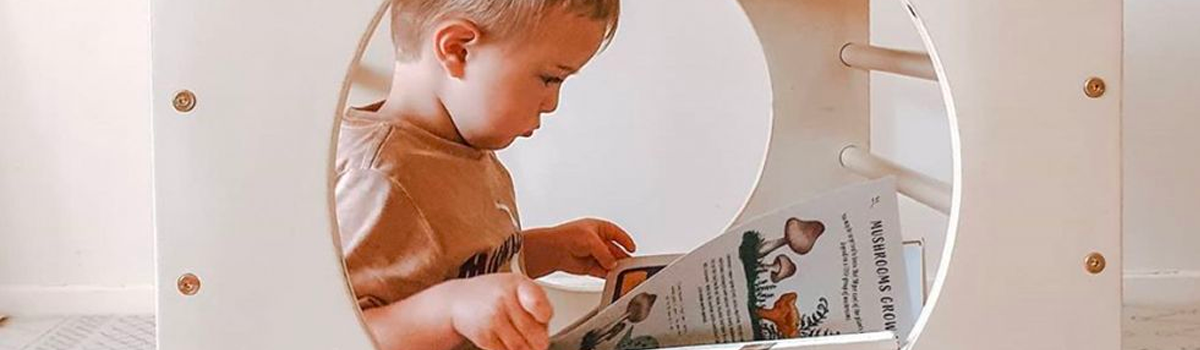
The second year of life is filled with incredible growth. Little ones are learning to move independently, solve simple problems and make sense of the world around them through exploration and repetition. Montessori toys for 1 year olds provide opportunities to support these important milestones through purposeful, hands-on play.

Whether your child is posting objects, stacking blocks, exploring cause and effect or taking their first confident steps, choosing toys that match their current developmental stage can help create more engaging and rewarding play experiences. Montessori-inspired toys encourage little ones to learn through doing, allowing curiosity, confidence and independence to develop naturally over time.

Frequently asked questions
Why do children often repeat the same Montessori activity over and over again?

Repetition is one of the most important ways young children learn. Adults often interpret repeated actions as boredom, but for a 1 year old, repetition is usually a sign that something meaningful is happening. Children repeat activities because they are refining a skill, testing an idea or building confidence through practice.

A child who repeatedly posts objects into a container, stacks blocks or drops balls through a ball run is not simply repeating a task. They are strengthening coordination, developing problem-solving abilities and learning about cause and effect. Each repetition helps reinforce understanding.

Montessori toys often encourage this type of focused repetition because they isolate a specific challenge and allow children to practise it independently. This is one reason Montessori-inspired activities can remain engaging long after adults assume children should have moved on.

How many Montessori toys should a 1 year old have available at once?

Many Montessori-inspired approaches encourage offering fewer toys at one time rather than filling play spaces with endless options. Young children can become overwhelmed when presented with too many choices, making it harder to engage deeply with any single activity.

Offering a small selection of toys that support different developmental needs often works well. For example, one stacking toy, one posting activity and one sensory exploration toy may create more focused play than dozens of toys available simultaneously.

Toy rotation can also help maintain interest. Reintroducing familiar toys after a break often makes them feel new again while allowing children to revisit skills they are still developing.

Are Montessori toys for 1 year olds worth the higher price?

Many parents ask this question because Montessori-inspired toys are often positioned as premium products. The real value comes from longevity, developmental relevance and quality of engagement rather than simply the materials used.

A well-designed Montessori toy is often used repeatedly across multiple developmental stages. Children may return to the same toy as their abilities improve, discovering new ways to interact with it over time. This ongoing usefulness can create greater value than toys that provide only short-term entertainment.

Parents should focus less on whether a toy is labelled Montessori and more on whether it encourages meaningful interaction, independent exploration and age-appropriate challenge. Those qualities are often what make a toy worthwhile.

What are the best Montessori toys for developing fine motor skills in a 1 year old?

Fine motor development at this age often involves learning how to grasp, release, rotate and manipulate objects with increasing control. Montessori toys that encourage posting, stacking, placing and sorting can provide excellent opportunities to practise these emerging skills.

Activities should be challenging enough to encourage concentration but simple enough to allow frequent success. Children often benefit from repeating the same movements many times as they refine coordination and build confidence. A toy that encourages repeated practice can be surprisingly valuable during this stage.

Fine motor development is not about perfection. It is about gradually improving control and confidence through meaningful experiences. Montessori-inspired toys help support this process by encouraging purposeful movement rather than random activity.

Can Montessori toys help support speech and language development at 1 year old?

While Montessori toys are not speech therapy tools, many create opportunities for meaningful interaction and communication. During play, parents naturally introduce vocabulary, describe actions, label objects and respond to their child's interests. These conversations help support language development in a natural and engaging way.

Activities involving sorting, posting, stacking and sensory exploration often encourage joint attention, which is an important foundation for communication. Children become interested in what they are doing, and adults can build language around those experiences through simple, responsive conversation.

The strongest language opportunities often come from interaction rather than the toy itself. Montessori-inspired toys can provide the context for these valuable moments by creating shared experiences that encourage observation, communication and engagement.

What makes a Montessori toy a good first birthday gift?

The best Montessori first birthday gifts are toys that remain useful beyond the initial excitement of opening them. Rather than focusing on novelty, Montessori-inspired gifts often support developmental skills that children continue practising throughout the second year of life.

Stacking toys, posting activities, object permanence toys, shape sorters and sensory resources are popular choices because they offer multiple ways to play as skills develop. A toy that can be used differently at 12 months, 18 months and even 24 months often provides greater long-term value than a toy designed around a single activity.

Parents also appreciate gifts that encourage independent play and meaningful engagement. A well-chosen Montessori toy can become a favourite because it evolves alongside the child's growing abilities and interests.

Are Montessori toys suitable for children who are already walking confidently?

Absolutely. Once children begin walking confidently, their play often becomes even more active and exploratory. They want to carry objects, transport items between locations, climb safely, investigate their surroundings and test physical abilities. Montessori-inspired toys can support this stage beautifully because many encourage purposeful movement and independent exploration.

Movement-based activities, simple climbing challenges, sensory exploration and cause-and-effect toys often become highly engaging during this period. The key is selecting toys that match the child's current interests and abilities rather than assuming all 1 year olds require the same activities.

Confident walkers frequently benefit from toys that allow them to combine movement with problem solving. Carrying objects, sorting materials and completing simple tasks can create satisfying opportunities for both physical and cognitive development.

Why do Montessori toys often look simpler than traditional toys for 1 year olds?

Montessori-inspired toys are designed to highlight a specific skill or concept rather than overwhelm children with multiple distractions. Many traditional toys combine lights, sounds, buttons and moving parts, which can create short bursts of entertainment but sometimes reduce opportunities for focused exploration.

A Montessori toy often appears simpler because it encourages the child to become the active participant. Instead of watching the toy perform, the child is responsible for moving, stacking, sorting, posting or solving a problem independently. This creates opportunities for deeper engagement and more meaningful learning experiences.

For 1 year olds, simplicity can be incredibly powerful. Children are already processing enormous amounts of information about the world around them. Toys that isolate a single skill often make it easier for children to focus, repeat actions and build confidence through success.

How can parents tell if a Montessori toy is appropriate for a 12 month old?

The most important factor is not the age recommendation printed on the box but the skills the toy requires. Around 12 months, many children are learning to stand, walk, carry objects, place items into containers and explore cause-and-effect relationships. Toys that support these emerging abilities are often a good match.

Parents should look for activities that encourage grasping, posting, stacking, sorting and simple problem solving. Toys should feel achievable while still providing opportunities for discovery. If a toy requires multiple steps, advanced coordination or skills a child has not yet developed, it may lead to frustration rather than engagement.

Montessori toys for 12 month olds work best when they allow children to explore independently and repeat activities successfully. Confidence often grows when children can achieve small victories through their own efforts.

What are the best Montessori toys for a 1 year old who loses interest in toys quickly?

Children around 12 to 24 months are often driven by movement, repetition and discovery rather than long periods of focused play. If a 1 year old appears to lose interest quickly, the issue is not always attention span. Sometimes the toy is either too passive or too advanced for their current stage of development.

Many of the best Montessori toys for 1 year olds encourage active participation. Posting toys, object permanence boxes, stacking activities and simple cause-and-effect toys invite children to experiment repeatedly while discovering new outcomes. This type of play often remains engaging because the child is doing something rather than simply observing.

Parents are often surprised by how many times a child will repeat the same activity when it matches a developmental need. Repetition helps children build coordination, confidence and understanding. A toy that looks simple to an adult may provide weeks or months of meaningful learning opportunities for a 1 year old.