
Click & Collect or 24hr Dispatch*

Montessori Fine Motor Play

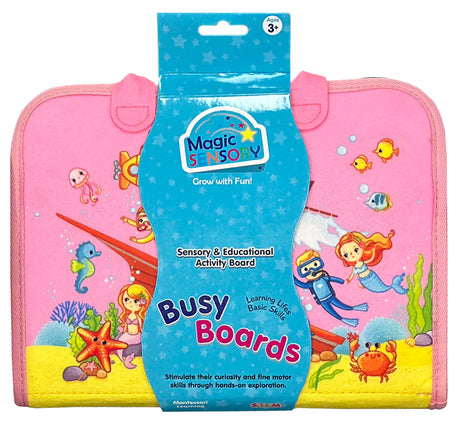
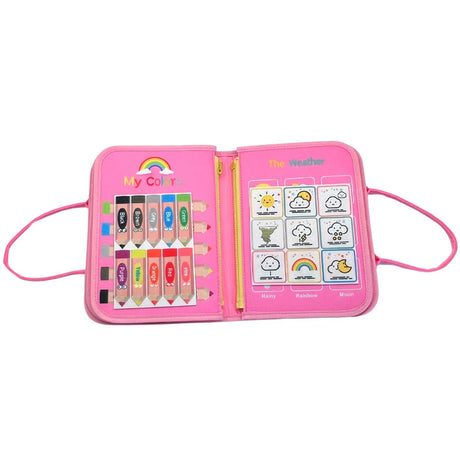
Busy Boards

Toddlers are naturally drawn to the things adults use every day. Zips, buckles, switches, latches, locks and fasteners all seem far more interesting than many traditional toys. Busy boards channel this curiosity into purposeful, screen-free play by giving children safe opportunities to explore real-world style activities independently. Explore busy boards designed to keep little hands engaged while encouraging concentration, persistence and independent discovery.


Busy Boards For Toddlers Who Love Switches, Locks And Latches

Why Toddlers Love Busy Boards

Many toddlers become fascinated by everyday objects long before they fully understand how they work. They want to open, close, twist, zip, slide, latch and explore everything around them. Busy boards tap directly into this natural curiosity by offering age-appropriate challenges that feel meaningful and engaging. Rather than providing a single play outcome, busy boards encourage children to investigate, experiment and practise real-world style actions at their own pace. This combination of independence and discovery is what keeps many children returning to busy boards again and again.

Independent Play Real World Skills Screen Free Toddler Approved

Built Around Natural Curiosity

Busy boards focus on the types of objects toddlers are already interested in, creating a play experience that feels intuitive and rewarding.

Encourages Independent Exploration

Children can experiment with different fasteners, switches and moving parts at their own pace without needing constant adult direction.

Offers Long-Lasting Play Value

As confidence grows, children often discover new ways to interact with the same board, creating fresh challenges through repetition and practice.

Busy Boards For Toddlers Who Love Switches, Locks And Latches

Many parents notice their toddler is far more interested in household objects than traditional toys. Busy boards provide a safe and engaging way for children to explore the types of switches, locks, buckles and fasteners they encounter in everyday life while satisfying their natural desire to investigate how things work.

Can A Travel Busy Board Help With Independent Play Away From Home?


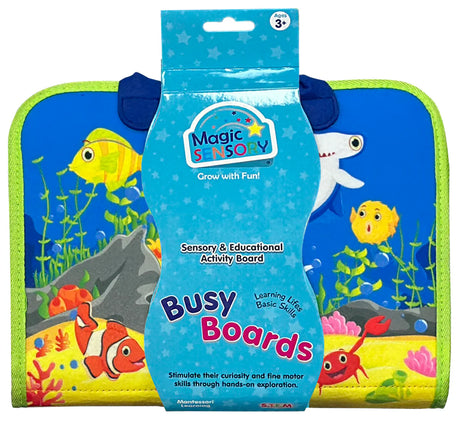
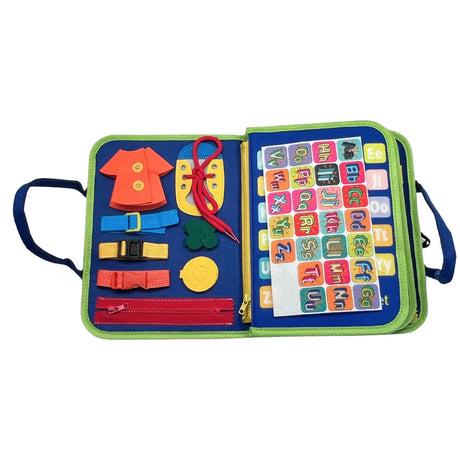
Travel busy boards are popular with families looking for screen-free activities during car trips, flights, waiting rooms and family outings. Compact designs can help keep toddlers engaged while providing familiar activities wherever the day takes them.

Choose Based On Curiosity

The Best Busy Board Depends On What Fascinates Your Child

Some toddlers are just beginning to explore how things open and close. Others are determined to master every latch, buckle and lock they can find. Choosing the right busy board often comes down to your child's current level of curiosity and confidence.

Choose First Busy Boards If:

  • Your child is under 2 years old They're new to busy boards Simple interactions hold their attention You want an easy starting point Independent exploration is the goal

Choose Advanced Busy Boards If:

  • Your child loves solving problems They seek out locks and fasteners Simple activities are mastered quickly They enjoy challenge-based play You want longer-lasting engagement
The best busy board is usually the one that matches your child's current stage while still leaving room for new discoveries as their confidence grows.

Designed For Curious Toddlers

Encourages independent, screen-free play

Trusted by families and educators

Helps channel curiosity into purposeful play

What Makes A Great Busy Board?

The best busy boards combine durability, variety and age-appropriate challenge. Look for boards that offer a mix of activities while remaining intuitive enough for children to explore independently and confidently.

When A Busy Board May Not Be The Best Fit

Busy boards are most appealing to children who enjoy hands-on exploration and figuring out how things work. If your child prefers imaginative role play, construction toys or highly active movement-based play, another toy category may suit them better

Where Curiosity Meets Independent Discovery
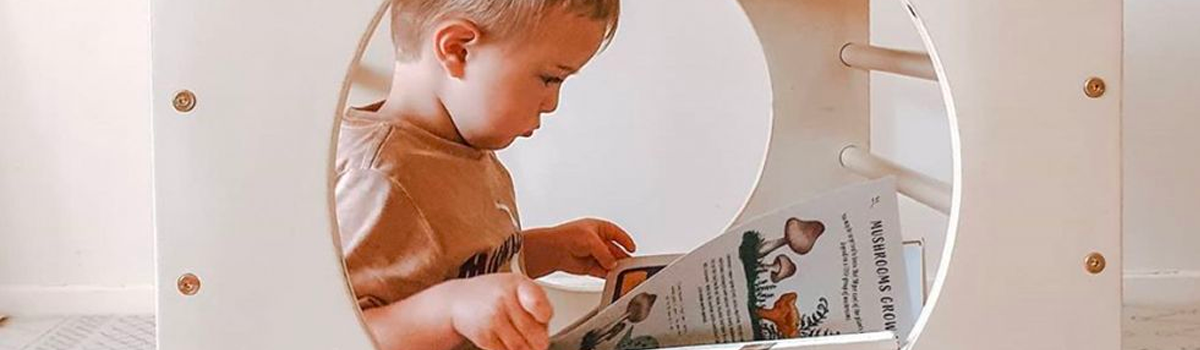
Busy boards transform a toddler's fascination with everyday objects into meaningful, engaging play. By offering safe opportunities to explore switches, zips, locks, buckles and fasteners, they encourage children to investigate the world around them through hands-on discovery. Whether you're looking for a first busy board or a more advanced challenge, these timeless toys continue to earn a place in homes because they align so naturally with how young children learn.

Frequently asked questions
Why do toddlers return to busy boards again and again?

One of the reasons busy boards continue to be popular is that they tap directly into interests many toddlers already have. Young children are naturally curious about how things work and often enjoy repeating the same actions many times as they build confidence and understanding. Busy boards provide endless opportunities for this type of exploration.

Unlike toys that reveal everything immediately, busy boards encourage experimentation and mastery. A toddler may spend days practising a particular buckle, latch or zip before feeling confident enough to move on to something more challenging. This gradual progression helps create a sense of achievement while encouraging persistence and independent problem-solving.

Busy boards also benefit from being open-ended. There is no final objective or single correct way to play. Children can focus on favourite activities, revisit familiar challenges and discover new interactions at their own pace. This freedom often helps maintain engagement longer than toys with a fixed outcome.

For many families, the lasting appeal of busy boards comes from their ability to grow alongside a child's curiosity. As skills develop, children frequently find new ways to interact with the same board, creating fresh opportunities for exploration without needing a completely new toy.

Busy Board vs Activity Cube: Which is better for toddlers?

Busy boards and activity cubes are both popular toddler toys, but they support play in slightly different ways. Understanding the difference can help parents choose the option that best suits their child's interests and play style.

Busy boards are designed around real-world style interactions such as locks, buckles, switches, latches and zips. They appeal strongly to toddlers who are fascinated by everyday objects and enjoy figuring out how things work. Many parents choose busy boards because they encourage independent exploration while satisfying a child's natural curiosity about practical activities.

Activity cubes often provide a broader range of developmental activities. These may include bead mazes, gears, shape sorters, spinning elements and other interactive features. Activity cubes can be ideal for children who enjoy moving quickly between different styles of play within a single toy.

Neither option is universally better. The decision usually comes down to what captures a child's attention. Toddlers who constantly seek out switches, locks and fasteners often gravitate towards busy boards, while children who enjoy a wider variety of interactive features may prefer an activity cube. Many families ultimately choose both because each offers a different type of play experience.

What makes a high-quality wooden busy board?

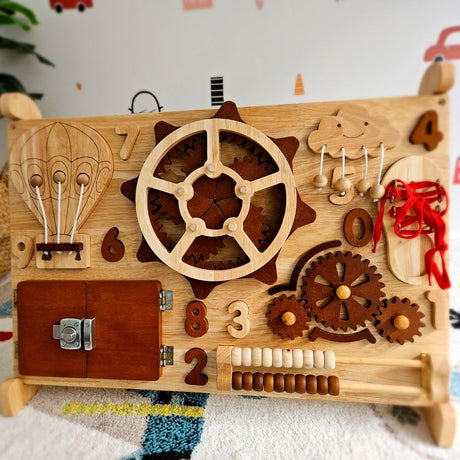
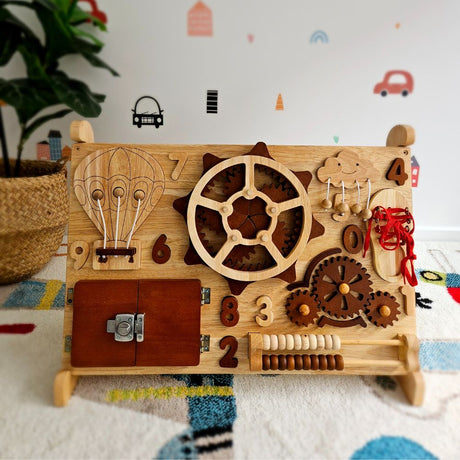
At first glance, many busy boards can appear similar, which is why parents often wonder what separates a high-quality wooden busy board from lower-quality alternatives. The biggest difference is usually found in the details. A well-designed busy board should feel durable, thoughtfully constructed and capable of withstanding repeated exploration from curious toddlers.

Many parents choose wooden busy boards because they appreciate the durability and longevity of natural materials. Quality wooden boards often provide a more stable play experience, allowing children to focus on manipulating locks, switches, zips, buckles and fasteners without the toy shifting excessively during use. Smooth finishes, secure attachments and age-appropriate components are also important considerations when evaluating quality.

Variety matters too. The most engaging busy boards typically include a mix of activities that encourage different types of exploration. Children often enjoy moving between latches, switches, zips and locks as their attention shifts throughout play. This variety helps maintain engagement while creating opportunities for independent discovery.

Ultimately, a high-quality wooden busy board should feel like a toy children return to repeatedly rather than one they master once and abandon. Long-term engagement is often the clearest sign of lasting value.

Do children outgrow busy boards quickly?

One of the most common concerns parents have when considering a busy board is whether their child will lose interest after only a few weeks. While every child is different, many families find that quality busy boards remain relevant far longer than expected because they contain multiple activities that evolve alongside a child's confidence and abilities.

When children first encounter a busy board, they often focus on simple exploration. They may enjoy opening and closing latches, moving zips or experimenting with switches. As they become more familiar with the board, many begin setting their own challenges, attempting more difficult fasteners and developing greater independence in how they interact with different components.

Unlike toys that reveal everything immediately, busy boards reward repeated use. Children frequently return to favourite activities while gradually expanding their skills and confidence. This ability to provide new challenges over time is one reason many parents see strong long-term value in busy boards compared with toys that offer only a single play outcome.

The key is choosing a busy board that matches your child's current stage while still providing opportunities for future exploration, helping ensure the toy remains engaging as their curiosity continues to grow.

Can busy boards be used for travel, flights and family outings?

Travel busy boards have become increasingly popular because they offer families a compact, screen-free activity that can be used almost anywhere. Long car journeys, flights, waiting rooms, cafés and family visits often present situations where toddlers need something engaging to focus on, particularly when movement and exploration opportunities are limited.

Unlike many travel toys that rely on a single activity, busy boards typically provide multiple interactions within one product. Children can open, close, slide, twist, zip and latch different components while remaining seated, making them particularly useful during periods when active play isn't possible. This variety helps many children stay engaged for longer than they might with simpler travel toys.

Parents also appreciate the familiarity busy boards can provide when routines change. A favourite travel busy board can move easily between home, holidays and outings, giving children a consistent activity they already understand and enjoy. Because the play experience remains largely self-directed, busy boards can encourage independent engagement while reducing the need for constant entertainment.

For families looking for practical travel activities for toddlers, busy boards are often considered one of the most versatile and reusable options available.

Are Montessori busy boards worth it for toddlers?

Many parents initially wonder whether a Montessori busy board is simply another activity toy or whether it offers something genuinely different. The reason Montessori busy boards have become so popular is that they focus on activities toddlers are naturally drawn to rather than activities adults think children should enjoy.

Toddlers are often fascinated by real-world objects such as switches, buckles, zips, locks and latches because they see adults using them every day. Montessori busy boards take this natural curiosity and turn it into a safe, age-appropriate play experience. Rather than being entertained passively, children actively explore how things work through hands-on experimentation and repetition.

Many families find that busy boards remain relevant for longer than expected because children return to different activities as their confidence grows. What begins as simple exploration can evolve into more deliberate problem-solving and independent play over time. Unlike toys with a single purpose, a quality busy board often contains multiple challenges that appeal to children at different stages.

For parents seeking screen-free toys that encourage independent exploration, concentration and real-world style learning, Montessori busy boards are often viewed as one of the most versatile toddler toys available.

Can busy boards help keep toddlers occupied without screens?

One of the reasons busy boards have become so popular is that they offer an alternative form of engagement that doesn't rely on screens, batteries or electronic stimulation. Instead of entertaining children through flashing lights or programmed activities, busy boards encourage active participation and hands-on exploration.

Many toddlers become deeply engaged when presented with activities that feel meaningful and purposeful. A latch that opens, a buckle that clicks into place or a zip that moves smoothly can often be more satisfying than adults expect because these actions mirror real-world experiences. Children feel as though they are doing something important rather than simply pressing buttons for entertainment.

Busy boards are also unusual because they reward persistence. Success often requires several attempts, encouraging children to slow down, observe and experiment. This process can create surprisingly long periods of focused engagement compared with toys that provide immediate rewards.

For families seeking screen-free activities that encourage concentration, curiosity and independent exploration, busy boards remain one of the most practical options available for toddlers and preschool-aged children.

What age is best for a busy board?

Busy boards are most commonly used by children between approximately 10 months and 4 years of age, although the ideal timing depends more on a child's interests than their exact age. Many parents begin exploring busy boards when they notice their child becoming fascinated by everyday objects such as zips, buckles, switches, locks and cupboard doors.

For younger toddlers, simple busy boards often provide enough challenge through basic movements and cause-and-effect interactions. As children grow, they typically become more interested in solving problems independently, mastering more complex fasteners and experimenting with multiple activities within the same board.

One reason busy boards remain popular across a relatively wide age range is that they can evolve alongside a child's confidence. What begins as simple exploration often develops into more deliberate problem solving and repeated practice. Children frequently revisit favourite components while gradually attempting activities they previously found difficult.

The best busy board is not necessarily the most complicated. It is the one that matches a child's current stage while still offering opportunities for growth, discovery and independent success over time.

Are busy boards a good toy for toddlers who struggle with independent play?

Many parents searching for independent play toys are looking for activities that can hold a toddler's attention without requiring constant adult involvement. Busy boards are often popular because they provide a series of small, achievable challenges that children can explore at their own pace.

Unlike toys that require instructions or a specific outcome, busy boards invite experimentation. Children can open, close, slide, twist, zip and latch components repeatedly while discovering how each feature works. This sense of control is often appealing to toddlers because they can make decisions independently and immediately see the results of their actions.

Busy boards can be particularly useful for children who seem to move quickly from one activity to another. Rather than offering a single play experience, they provide multiple interactions within the same toy, creating opportunities for longer engagement. Many toddlers naturally return to favourite switches, locks or fasteners while gradually exploring more challenging features as confidence develops.

For families hoping to encourage more independent play, a busy board can provide a bridge between adult-led activities and self-directed exploration, helping children build confidence while satisfying their natural curiosity.

Why are toddlers so fascinated by locks, switches, zips and latches?

Many parents notice the same pattern. A toddler can be surrounded by toys yet remain completely fascinated by a cupboard latch, a light switch, a handbag zip or the buckle on a highchair. This isn't random behaviour. Young children are naturally drawn to objects that appear useful, functional and connected to the world they see adults interacting with every day.

Part of the appeal is that these objects create an immediate result. A switch turns on. A zip opens. A latch moves. Toddlers are constantly experimenting with cause and effect, and everyday fasteners provide endless opportunities for exploration. They also offer an appropriate level of challenge. Children can see what they want to achieve, but success often requires patience, coordination and repeated attempts.

Busy boards capture this fascination by bringing together many of the activities toddlers already seek out naturally. Instead of constantly redirecting children away from household objects, busy boards provide a safe and engaging environment where they can explore locks, buckles, switches and fasteners independently. This alignment with genuine childhood curiosity is one of the reasons busy boards often hold attention far longer than many traditional toys.