Click & Collect or 24hr Dispatch*

Kids arts, craft, messy making and sound play

Creative Craft & Play

Play, create and discover through play

Creative Craft & Play brings together the activities where children get to make a mark, change a material, decorate something, shape something, or create sound. Drawing, craft kits, dough and drums look different, but they all give the child some meaningful influence over what happens next.

Creative Craft & Play is play where children actively change, explore, combine, arrange, represent, make or experiment with materials, marks, colour, texture, objects or sound.

Explore the pathways


Introduction

Creative Craft & Play is broader than art on paper. It can be a child choosing colours, changing a picture, decorating an object, shaping dough, mixing a material, arranging pieces, or trying a rhythm again and again.

The common thread is not whether the result looks impressive. It is whether the child gets to do something to the medium. They might choose, change, copy, repeat, test, combine, follow a step, ignore a step, or decide what something represents.

That means creative play does not have to be completely free-form. A blank page can belong here. So can a colouring activity, a guided craft, a dough session, or a simple sound-making toy. The useful question is not, “Is this open-ended?” It is, “What can my child decide, change or experiment with?”

Why It Matters

The value of Creative Craft & Play is easiest to see when we focus on what the child can actually do during the activity.

They may choose a colour, change a mark, mix two materials, arrange a pattern, repeat a sound, test what happens, copy an example, change the example, or decide what their creation means. They may notice that paint changes when it is mixed, dough changes when it is rolled, paper changes when it is folded, and sound changes when an instrument is played differently.

These are observable opportunities, not promises about who a product will turn a child into. A craft kit does not need to claim big outcomes to be useful. It can simply give the child a real chance to make choices, try something, see or hear what happens, and keep changing it.

Conversation can sit naturally around the activity too. “What did you change?” “Which one comes next?” “Do you want it louder or softer?” “Are you copying the picture or making your own version?” The making gives adults and children something concrete to talk about, without turning the activity into a lesson.

Learning Themes

A blank page is not automatically more creative

A blank page gives some children exactly what they want: space, choice and no required answer. For others, it can feel like too much choice at once.

That does not mean the child is less capable of creative participation. They may simply need a starting point, such as an example, a theme, an outline, a smaller set of materials, or a first mark to begin from.

The better question is not whether the activity is completely free. It is what the child can still decide, change, explore or experiment with.

Instructions do not cancel creativity

Some children enjoy steps, examples, patterns and knowing what comes next. A child who wants their craft to match the picture may be working toward exactly the result they care about.

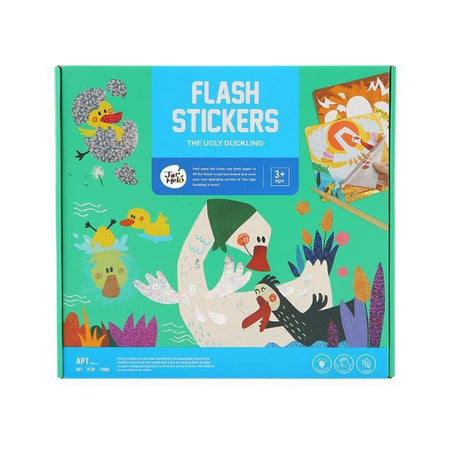
Following instructions can still leave room for choice: colour, order, placement, decoration, timing, repetition or small changes along the way. Other children will use the same kit as a starting point and head in a different direction.

Both approaches belong here. The instructions are not the problem. The useful question is how much structure helps this child take part.

The finished product is not always the point

Sometimes the thing being made matters deeply. The bracelet needs to fit. The card is for someone special. The picture needs to look a certain way. That goal can be an important part of the activity.

Other times, the making is the main event. The dough gets squashed, the picture is painted over, the slime is recombined, or the rhythm disappears as soon as the playing stops.

Neither version has failed. Creative play can be about a finished object, the process of changing a material, or both.
A thoughtful place to begin

The best creative activity is often the one that actually gets used

Some children see a blank page and start before you have found the lid for the marker. Others stare at it like you have handed them an exam.

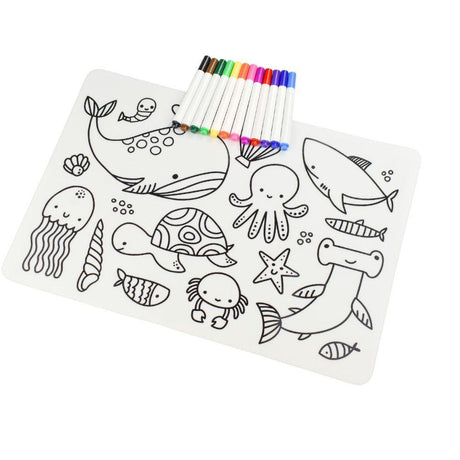
That is why a colouring sheet, a craft kit, a prompt, or a half-started example can be a perfectly sensible entry point. It gives the child somewhere to begin. If they follow the instructions, fine. If they turn the butterfly kit into a dinosaur, also fine.

Creative play is not about raising artists. It is about giving children things they are allowed to change, explore and experiment with.

The same practical thinking applies to parents. The paint activity that needs a table cover, smock, water, drying space and a full cleanup may be right on Saturday. It may not be right at 5:15 on a school night. A lower-mess option is not a lesser option if it is the one you are actually willing to get out.

Real homes need usable creative play: the kind that fits the child, the adult, the space, the cleanup and the day.

Parent Guidance

Creative play at home does not need a perfect setup. It needs a setup that makes the activity possible and tolerable.

If your child prefers instructions, that is fine. Choose activities with a clear starting point, a visible example, or steps they can follow. If they ignore instructions, that can be fine too, as long as the materials are being used safely and the activity still works for your household.

If your child does not like drawing, do not assume they need to be pushed toward drawing first. They may prefer making objects, decorating, shaping materials, arranging pieces, or exploring sound. If they dislike messy play, low-mess creative options still count. Mess is not the measure of value.

Repetition is also normal within this category. A child may make the same shape, choose the same colour, repeat the same drum beat, or build the same craft again because that is the part they enjoy. They do not always need novelty.

Some children care most about the finished result. Others care more about the process. Try to notice which is happening before you step in. “It’s the process that matters” can miss the point for a child who really wants the bracelet to look right. “What are you making?” can miss the point for a child who is mostly enjoying the squashing, spreading or mixing.

Adult help is not automatically a problem. A child may need you to start a knot, hold a piece, demonstrate a step, read the instructions, or draw beside them. The balance is to help the child achieve their goal without taking over the part they can meaningfully do.

Setup and cleanup matter. Keep some activities easy to access where appropriate, and keep other materials for supervised moments. Age, safety, small parts and household context are always product-specific. A smaller setup that gets used often may be more useful than a beautiful craft cupboard nobody wants to open.

Choosing Guidance

A useful buying question is: What would you like to give them the opportunity to change, explore or experiment with next?

If the child is drawn to marks, colour and pictures, look toward visual creative experiences. If they like making, assembling or decorating something, a more project-based activity may suit. If they love the feel and behaviour of materials, consider experiences where they can shape, mix, stretch or transform the material. If they are always tapping, banging, shaking or copying beats, sound and rhythm may be the better next direction.
Then think about structure. Does your child want freedom, a prompt, a model to copy, or step-by-step instructions? More freedom is not automatically better. More structure is not automatically less creative. The right fit is the one that helps the child take part.
Also consider the household reality. How much setup can you manage? How much cleanup is reasonable? Can the activity be repeated, or is it mostly a one-time project? Will it need refills or replacement materials? Does it need adult help every time? Is it practical around younger siblings or shared spaces?

Low-mess options are not educationally inferior. Highly messy options are not automatically better. Choose the experience your child is likely to use, and the one your household can actually support.

Frequently asked questions

Questions parents often ask

What counts as creative play?
Creative play counts when the child has some meaningful influence over what happens. They might make a mark, choose a colour, shape dough, arrange pieces, decorate an object, copy a picture, change a design, mix materials, or create a sound.

The result does not need to be beautiful, original, recognisable, permanent or finished. Sometimes there is nothing to keep at the end, and the activity still counted.
Does creative play have to be open-ended?
No. Open-ended activities are one kind of creative play, but they are not the only kind.

A child can still make choices inside a colouring page, a guided activity, a craft kit, a template or a set of instructions. The amount of freedom changes, but creative participation does not automatically disappear. Ask what the child can still decide, change, explore or experiment with.
Are craft kits still creative if children follow instructions?
Yes, they can be. Some children enjoy steps, examples and a clear finished object. Following instructions can still involve decisions about colour, sequence, placement, decoration, pace or small changes.

A kit does not become uncreative just because it has a goal. Some children find the goal motivating. Others will use the same kit in their own way. Both can belong within creative play.
Does creative play need to be messy?
No. Messy play can be a useful creative pathway when the child is changing, shaping, mixing or exploring the material. But mess is not the measure of creative value.

Drawing, colouring, water-based activities, structured craft, decorating and sound play can all give children something to change or experiment with. Low-mess is not a lesser choice if it is the option that works for your home.
Where do music toys fit?
Music toys and sound play fit when the child can produce, change, repeat or combine sound. The medium is sound rather than paint, paper or dough.

A child might tap, shake, strike, scrape, copy a rhythm, change the volume, repeat a beat, or combine sounds. It does not need to be formal music learning to belong here.
Do play dough and slime count as creative play?
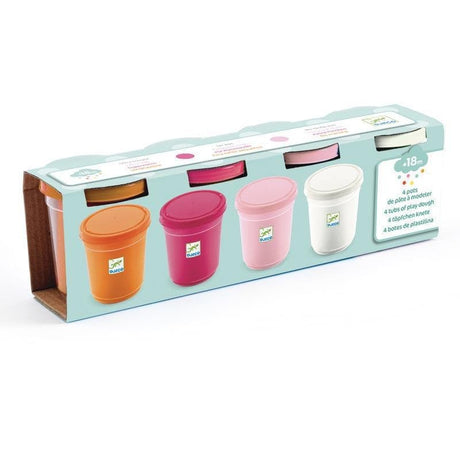
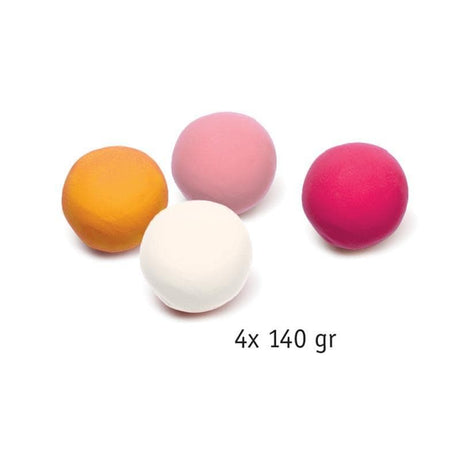
They can. Play dough and slime count as creative play when the child is changing the material: shaping, stretching, squashing, mixing, moulding, combining or experimenting with how it behaves.

They may also sit closely with sensory play because texture and material feel are part of the experience. The useful question is what the child is doing with the material. If they are actively changing or exploring it, it can belong within Creative Craft & Play too.