
Click & Collect  or  24hr Dispatch*

Buy Stepping Stones Bright, Get a Free Roller Kit + 10% Off Sitewide*

Big puzzles for shared floor play

Floor Puzzles for Toddlers & Kids

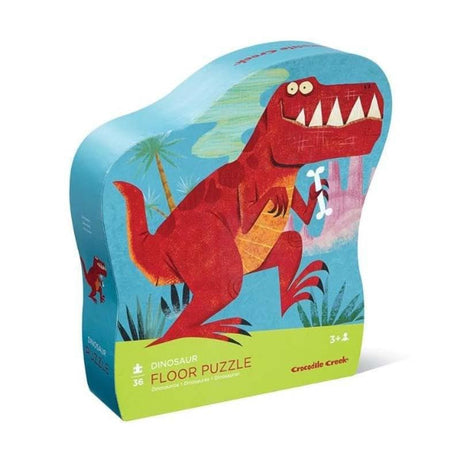
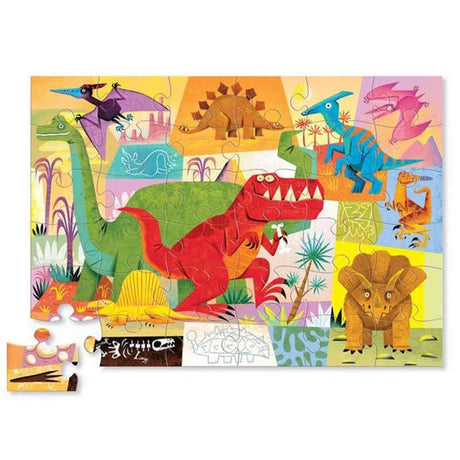
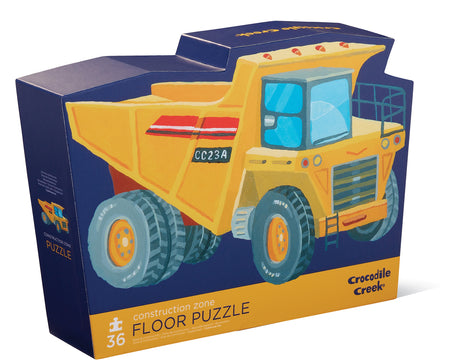
Floor puzzles are for the big picture — large pieces, clear scenes, and enough room on the carpet to crawl around the build. In this collection you’ll find cardboard floor puzzles from about 20 to 100 pieces, with themes like vehicles, dinosaurs, ocean, space and numbers.

Browse the puzzles below. Pick a picture your child already cares about, then use the notes underneath if you’re weighing piece count, floor space, or whether a smaller wooden tray puzzle would suit them better today.

Browse the floor puzzles
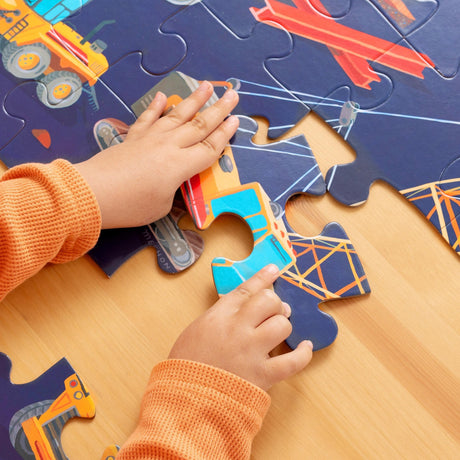
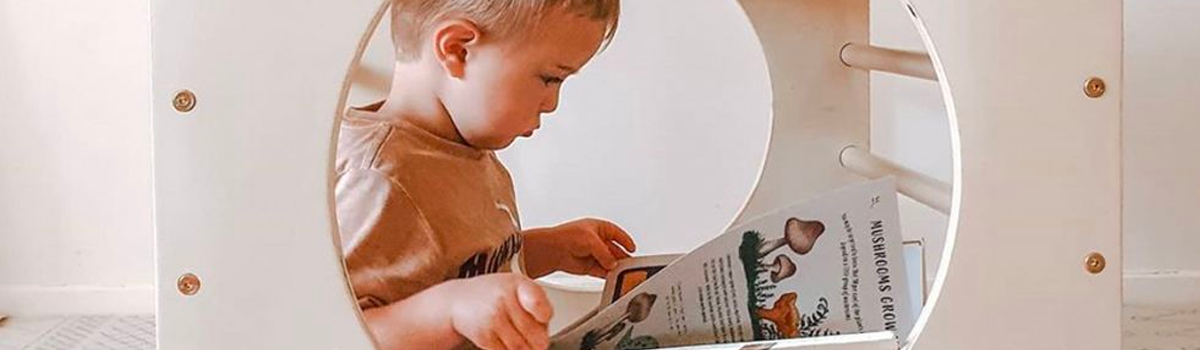
Young child exploring floor puzzles for toddlers & kids

Shop this collection

10 products · filters and sorting below

Buying guide & FAQs ↓

Buying guide

Finding a floor puzzle they’ll finish

The best floor puzzle is rarely the one with the most pieces. In this range, simpler builds start around 20 large pieces; many popular scenes use 36 jumbo pieces; busier pictures sit at 48–60; and one denser dinosaur puzzle reaches 100. Match the picture to something they already love — then choose a piece count they can finish in a sitting or two.

  • First large-piece scenes

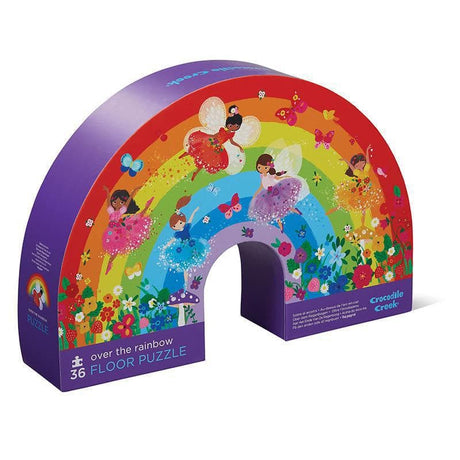
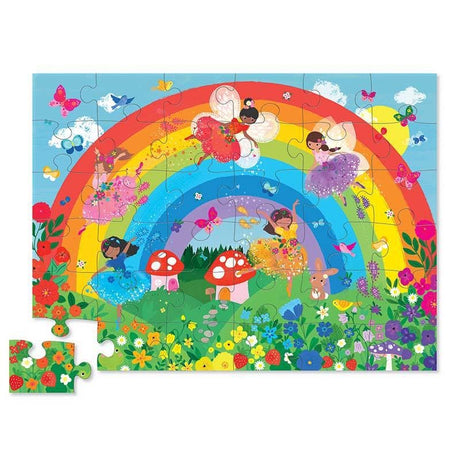
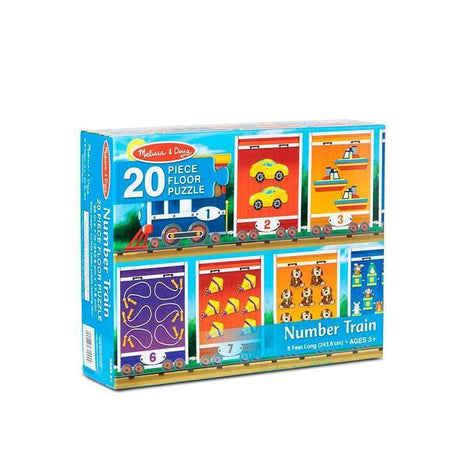
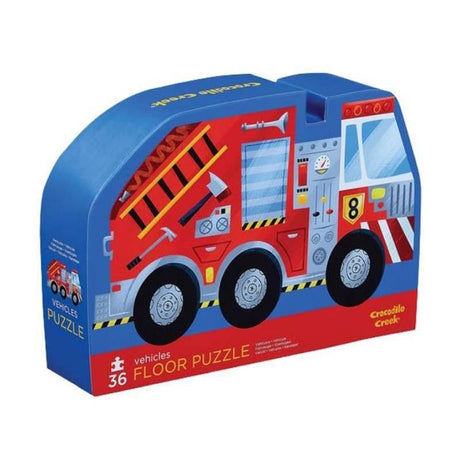
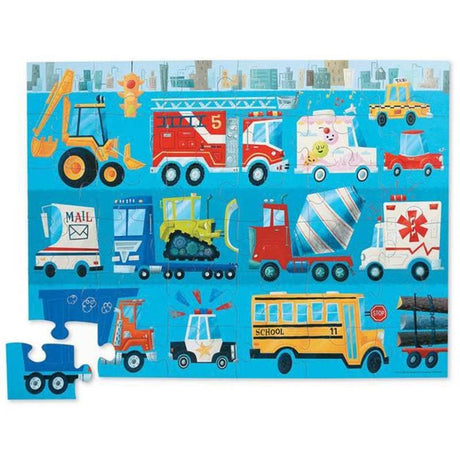
    Fewer, chunkier pieces and a clear picture. The 20-piece number train and the 36-piece classic floor puzzles are a good start when they are new to floor builds or still learning how edges meet. Look for themes they recognise straight away.

  • Busier scenes with more pieces

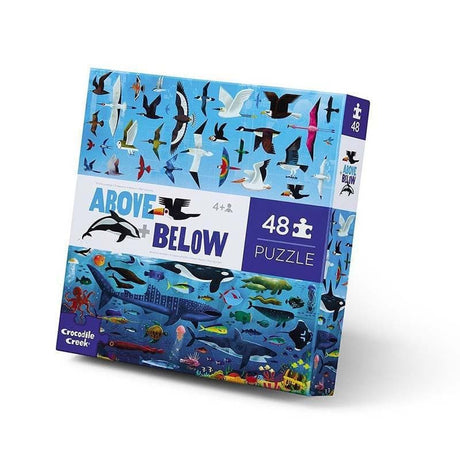
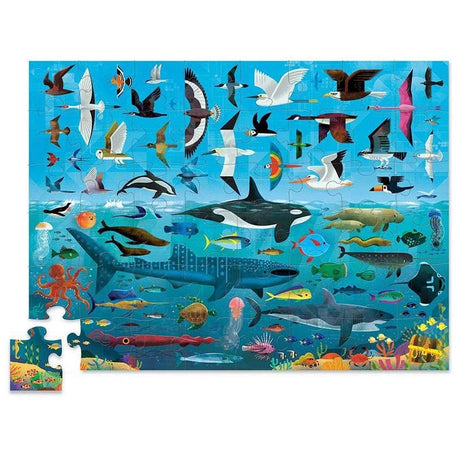
    When 36-piece floors feel easy, step toward 48–60 piece scenes — including Above & Below designs and the solar-system floor puzzle. The picture does more of the work; they’ll need a little more patience and a clear patch of floor.

  • Denser challenges — or wooden tray puzzles

    The 100-piece dinosaur floor puzzle is for children who already enjoy longer builds. If they’d rather fit pieces on a table or tray, continue to Wooden Puzzles — that collection is for smaller tabletop formats, not these large floor scenes.

Practical check: Do you have a clear floor space roughly the size of a coffee table (many 36-piece classics finish around 50×70cm)? Can they finish a simpler puzzle with only a little help? If yes, try a busier scene. If pieces get pushed aside in frustration, step back to fewer, larger pieces or a favourite theme — and always read the age guidance on the product you choose.
Play inspiration

Start with the part of the picture they already love

Spread the pieces on the floor and find the bit they’ll recognise first — the train engine, the brightest dinosaur, the rainbow arc. Build that small island together, then work outward. Stay beside them for the fiddly joins, but let them place the piece when they can see where it goes.

If they stall, tip two matching colours into a small pile and hunt only those — then pause again. The win is finishing the scene, not racing the box.

  • Edge walk

    Walk the outer edge of the picture together first. A finished frame turns a scatter of pieces into somewhere to “come home” to.

  • Little sorted piles

    Make three soft piles — sky/background, main characters, and fiddly leftovers. Sorting is part of the play, not a chore before it.

  • Leave the last handful

    When only a few pieces remain, sit back. Those final clicks are often the ones they want to own.

Questions

Questions parents ask

What’s the difference between a floor puzzle and a wooden puzzle?

Floor puzzles in this collection are larger cardboard scenes meant for the carpet — usually jumbo pieces you spread out to build. Wooden Puzzles is our tabletop destination for tray, knob and smaller jigsaw formats. Same love of fitting pieces; different materials, scale and place to play. Browse the products below for what is currently available in this floor-puzzle range.

How do I choose a suitable floor puzzle?

Start with a theme they already care about, then check piece count and piece size on the product. Fewer, larger pieces suit first floor builds; 48–60 piece scenes ask for more focus; denser 100-piece puzzles suit children who already finish longer builds. Use the recommended age on the product as a guide, not a hard rule.

How much space do floor puzzles need?

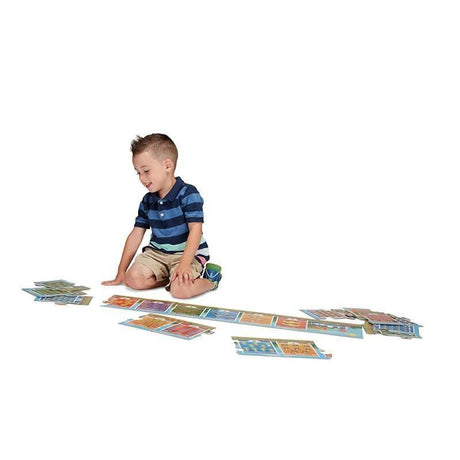
Many 36-piece classic scenes finish around half a metre by seventy centimetres — roughly a clear coffee-table patch on the floor. Some designs are longer (the number train is described as eight feet once built). Check the product page for finished size when space is tight.

What if my child finds a puzzle too difficult?

Step sideways, not only upward. Try fewer pieces, a clearer picture, or build one recognisable section together before leaving them the middle. If tabletop tray puzzles feel kinder right now, browse Wooden Puzzles instead and come back to floor scenes later.

Frequently asked questions

Floor Puzzle Questions Parents Ask

Why are floor puzzles often remembered long after other toys are forgotten?

Why are floor puzzles often remembered long after other toys are forgotten?

Why do some children prefer floor puzzles over other problem-solving toys?

Children engage with challenges in very different ways. Some enjoy memory games, others love construction toys, while many are naturally drawn to puzzles because they provide a clear objective and a satisfying outcome. Floor puzzles are particularly appealing because they combine visual thinking, movement and problem solving in a single activity.

Unlike memory games, which require children to remember information, floor puzzles allow them to work through challenges at their own pace. Unlike shape sorters, which focus on a single skill, floor puzzles involve pattern recognition, observation, spatial reasoning and persistence simultaneously. The process feels open enough to encourage exploration while still providing a clear sense of direction.

Many children also enjoy the physical scale of floor puzzles. The larger format feels immersive and gives children the opportunity to interact with the challenge more actively. This combination of movement, visual discovery and achievable success is often why children return to floor puzzles repeatedly while losing interest in other problem-solving activities more quickly.

Are floor puzzles a good screen-free activity for independent play?

Floor puzzles are one of the most effective screen-free activities because they combine challenge, creativity and independent problem solving in a way that feels genuinely engaging. Unlike some activities that require constant adult involvement, puzzles provide a clear goal while still allowing children to work through challenges at their own pace.

Children often revisit floor puzzles independently because they know what success looks like and understand how to approach the challenge. Even when a puzzle is difficult, there is usually a clear next step available, whether that's finding matching colours, identifying edge pieces or connecting familiar sections of the image.

Many parents appreciate that floor puzzles create calm engagement rather than overstimulation. Children are actively thinking, observing and experimenting, but the activity itself remains predictable and self-directed. For families seeking meaningful alternatives to screens, floor puzzles often become a reliable choice because they encourage concentration, persistence and independent play while remaining enjoyable enough to hold children's attention.

Can floor puzzles help children develop concentration without feeling like learning?

Many parents are searching for activities that encourage focus without creating resistance. Floor puzzles are particularly effective because concentration emerges naturally through the challenge itself. Children are motivated by curiosity and the desire to complete the image, which encourages them to stay engaged without feeling pressured.

Unlike activities that rely on instructions or performance expectations, puzzles provide immediate feedback. Children can see whether pieces fit, recognise progress visually and make adjustments independently. This keeps them actively involved in the problem-solving process rather than passively receiving information.

The large format of floor puzzles often supports concentration even further. Children can spread out, move around the puzzle and interact with it physically, which feels more natural than remaining seated for long periods. Many parents notice that children who struggle to focus on structured activities will happily spend extended periods working on a floor puzzle because the challenge feels purposeful, achievable and rewarding.

What makes a high-quality floor puzzle different from cheaper alternatives?

At first glance, many floor puzzles can appear similar. They may feature colourful artwork, large pieces and familiar themes, but the quality differences often become obvious once children begin using them. A high-quality floor puzzle is designed not only to entertain but to create a satisfying problem-solving experience that children want to revisit.

One of the biggest differences is durability. Young children repeatedly assemble, disassemble, carry and move puzzle pieces around the home. Thick, well-constructed pieces are more likely to maintain their shape and withstand repeated use. Clear artwork also plays a significant role. Strong illustrations help children identify patterns, recognise relationships between pieces and stay motivated as the image gradually emerges.

The best floor puzzles balance challenge and success. Rather than overwhelming children with complexity, they provide achievable problem-solving opportunities that build confidence over time. Many parents find that premium floor puzzles remain favourites for years because they create positive experiences that children continue returning to long after the novelty of other toys has disappeared.

Why do children enjoy repeating the same floor puzzle over and over again?

Parents are often surprised when children repeatedly choose the same floor puzzle despite having other options available. While adults may view repetition as boredom, children frequently experience it very differently. Repetition provides familiarity, confidence and the opportunity to master a challenge that once felt difficult.

Each time a child completes a familiar puzzle, they strengthen pattern recognition, visual memory and problem-solving strategies. They also experience the satisfaction of becoming more capable and efficient. This sense of mastery is deeply rewarding and often motivates children to revisit favourite activities repeatedly.

Repetition can also support emotional regulation. Familiar puzzles create predictable experiences that feel safe and achievable, particularly during periods of change or uncertainty. For many children, rebuilding a favourite floor puzzle is not simply about completing the image. It's about revisiting a challenge they know they can conquer, reinforcing confidence while continuing to strengthen important cognitive skills.

How many puzzle pieces should a floor puzzle have for different ages?

Parents often focus heavily on age recommendations when choosing floor puzzles, but confidence and experience are usually more important indicators than age alone. Some children happily complete larger puzzles at a younger age, while others prefer simpler challenges that allow them to experience success more quickly.

For children new to puzzles, larger pieces and fewer overall sections are often a better starting point. The goal is to create opportunities for achievement rather than overwhelm. As confidence grows, children can gradually move towards floor puzzles with more pieces, more detailed illustrations and greater complexity.

It's also worth considering your child's temperament. Children who enjoy persistence and problem solving may actively seek bigger challenges, while children who become frustrated easily often benefit from smaller successes that build confidence over time. The best floor puzzle is not necessarily the most difficult one. It's the puzzle that encourages your child to stay engaged, enjoy the process and feel proud when they complete it.

What's the difference between floor puzzles and wooden puzzles?

Although both support problem solving, floor puzzles and wooden puzzles create very different play experiences. Wooden puzzles are often focused on fine motor skills, shape recognition and precise piece placement. They are usually completed on a table or flat surface and are particularly popular with younger children who are still developing hand control and visual matching skills.

Floor puzzles shift the experience into a larger, more immersive format. Children use their whole body, move around the puzzle and engage with a challenge that unfolds across a much bigger space. The focus becomes less about manipulating small pieces and more about understanding patterns, images and relationships between different parts of the puzzle.

Many families use both because they complement one another. A child might begin with simple wooden puzzles before progressing to larger floor puzzles that require longer periods of concentration and more complex problem solving. Rather than competing with each other, the two puzzle types support different stages and styles of learning. Choosing between them usually depends on your child's confidence, interests and preferred way of engaging with challenges.

How do floor puzzles encourage independent play?

One of the biggest reasons parents choose floor puzzles is their ability to support independent play. Unlike many activities that require ongoing adult guidance, a well-chosen floor puzzle allows children to take ownership of the challenge and work through problems at their own pace. Children can experiment, make mistakes, adjust their approach and experience success without needing constant intervention.

This sense of ownership is incredibly important. When children feel capable of solving a problem independently, they become more willing to engage with similar challenges in the future. Floor puzzles create opportunities for children to trust their own observations, test ideas and persist through uncertainty.

The larger format is particularly helpful because it reduces frustration and increases accessibility. Children can clearly see the puzzle, move around it freely and interact with pieces in a way that feels natural. Many parents find that floor puzzles become one of the few activities children will revisit independently, returning multiple times to complete a challenge or rebuild a favourite puzzle. These moments of self-directed problem solving often become valuable foundations for later learning and confidence.

Can floor puzzles help children who lose interest in activities quickly?

Many parents search for floor puzzles because they are looking for activities that hold their child's attention for longer periods. While no activity captures every child's interest indefinitely, floor puzzles often succeed because they provide visible progress and a clear sense of purpose. Children can see the image gradually emerging, which creates motivation to continue rather than walk away.

The larger format also helps maintain engagement. Instead of focusing on a tiny section of a puzzle, children can see the bigger picture developing as they work. This constant feedback creates a feeling of achievement that encourages persistence. Many children who lose interest in more open-ended activities respond well to puzzles because there is a clear goal and a satisfying outcome.

For children who struggle with concentration, choosing an age-appropriate floor puzzle is essential. A puzzle that is too difficult can quickly become discouraging, while a puzzle that feels achievable often encourages children to stay engaged longer than parents expect. Over time, these experiences help build patience, resilience and confidence in tackling challenges independently.

Why are giant floor puzzles often easier than smaller tabletop puzzles?

Many parents assume a giant floor puzzle must be more difficult because it takes up more space. In reality, the opposite is often true. The larger format removes several barriers that can make traditional puzzles frustrating for younger children. Bigger pieces are easier to grasp, easier to manipulate and easier to position correctly, allowing children to focus on solving the puzzle rather than struggling with fine motor control.

Giant floor puzzles also provide stronger visual cues. Children can more easily recognise colours, shapes and patterns because the images are larger and more distinct. This helps them understand where pieces belong and builds confidence as sections begin coming together.

Another advantage is movement. Children naturally like to move while they learn, and floor puzzles allow them to walk around the puzzle, view it from different perspectives and physically engage with the challenge. This often makes the experience feel more playful and less demanding. For children who become frustrated with small tabletop puzzles, giant floor puzzles frequently provide a more successful and enjoyable introduction to independent problem solving.

What are the best floor puzzles for toddlers who are just starting with puzzles?

The best floor puzzles for toddlers are not necessarily the simplest puzzles available. Instead, they provide a challenge that feels achievable while still encouraging children to think, observe and experiment. Many young children become discouraged when puzzle pieces are too small, images are overly complex or success feels out of reach. Floor puzzles help solve this problem by creating a larger, more accessible experience that feels inviting from the start.

Large piece floor puzzles are often ideal for beginners because they allow children to focus on recognising images, matching colours and understanding how pieces connect together. The physical size of the puzzle also makes the activity feel more interactive, encouraging movement and exploration rather than requiring children to sit still for long periods.

Parents looking for a first floor puzzle should focus on engagement rather than piece count alone. Themes that align with a child's interests often have a greater impact on success than difficulty level. Whether it's animals, vehicles, dinosaurs or familiar everyday objects, children are more likely to persist when the finished image excites them. A positive first puzzle experience often leads to greater confidence and a stronger interest in problem-solving activities in the future.

Why do some children engage more deeply with floor puzzles than traditional puzzles?

Floor puzzles offer a very different experience from traditional puzzles because they allow children to use their whole body while solving problems. Instead of remaining seated at a table, children can move around the puzzle, examine pieces from different angles and physically interact with the challenge. For many young learners, this creates a more immersive and engaging experience.

Large floor puzzles also provide stronger visual feedback. Children can easily see progress as sections of the image emerge, helping them stay motivated to continue. This is particularly valuable for children who become discouraged when activities feel too complex or when progress is difficult to see.

Many parents notice that children who struggle with smaller puzzles are often surprisingly successful with floor puzzles. The larger pieces, bigger images and more active format help reduce frustration while increasing engagement. For children who enjoy movement-based learning or who find sitting still difficult, floor puzzles often provide a more accessible and rewarding way to develop concentration, observation skills and independent problem-solving confidence.

How can parents tell if their child is ready for their first floor puzzle?

Many children are ready for their first floor puzzle long before they can successfully complete traditional tabletop puzzles. A good indicator is whether your child enjoys matching, sorting, spotting patterns or completing simple problem-solving activities independently. Children who like fitting pieces together, recognising familiar images or talking about how things connect often respond well to floor puzzles.

The advantage of floor puzzles for toddlers is that the larger format reduces many of the frustrations associated with smaller puzzles. Pieces are easier to hold, easier to rotate and easier to position correctly. This allows children to focus on understanding how the puzzle works rather than struggling with fine motor challenges.

Parents often worry about choosing a puzzle that is too difficult, but the more important consideration is confidence. A first floor puzzle should create opportunities for success rather than perfection. When children experience the satisfaction of completing a puzzle independently, they become more willing to persist with future challenges. This confidence often becomes the foundation for stronger problem-solving skills, longer attention spans and a greater willingness to tackle new learning experiences over time.