Click & Collect or 24hr Dispatch*


Baby Sensory Toys For Newborns, Babies & Infants

When people hear 'baby sensory toys', it's easy to picture toys designed to stimulate babies - but we've never thought that was quite right. The world is already incredibly stimulating to a newborn; the remarkable thing isn't that babies need more stimulation, it's that they somehow learn to organise all of it. That's where thoughtfully chosen sensory toys for babies quietly make a difference - they don't add more information, they help a baby notice and make sense of one thing at a time. Our range of baby sensory toys, from newborn high-contrast cards to grasping rattles and crinkle textures, is chosen with exactly that in mind. Below we walk through how babies move from watching to reaching, why less is so often more, how the best toys grow with your baby, and why quality matters more here than anywhere - because babies explore with complete trust, and everything ends up in the mouth.
Newborn Sensory Toys Tummy Time Grasping & Texture Visual Contrast

Before Babies Play With Sensory Toys, They Observe

Adults think of play as something children do; babies show us something different. Long before they reach for toys, babies spend weeks simply watching - studying faces, following shadows, noticing movement, becoming fascinated by the contrast between light and dark. It doesn't look like much from the outside, but underneath, their brain is working incredibly hard, slowly discovering what deserves their attention. That's why the best newborn sensory toys are wonderfully simple: a bold black-and-white pattern, a gentle rattle, a baby-safe mirror, a crinkle fabric. They aren't simple because babies need less - they're simple because babies are learning to notice, and a calm, single-focus toy meets a newborn exactly where they are. As a general guide, high-contrast visual toys suit the early weeks, before a baby is ready to reach and grasp.

Baby Sensory Toys & Every New Skill

One day your baby notices their hand - not just that it's there, but that it belongs to them. They open their fingers, close them, turn their wrist, stare, repeat. Then one day they accidentally brush a hanging toy and it moves; they stop, try again, and this time they were expecting it. That tiny moment is easy to miss, but something extraordinary has happened: for the first time, your baby has discovered that their actions can change the world around them. Every reach, every grasp, every shake of a rattle, every crinkle, every kick that makes something move - they're not simply playing, they're discovering they can make things happen. The right sensory toy at the right moment gives a baby gentle, repeatable chances to make that discovery.
Why Less Is Often More With Baby Sensory Toys

One of the biggest surprises for new parents is how few toys babies actually need. It's easy to assume more colours, more sounds and more flashing lights mean more learning, but we've never found that to be true. Babies can only process so much at once, and when too much is happening they often look away - not because they're bored, but because they're full. That looking-away isn't always disinterest; sometimes it's your baby saying 'I've taken in enough for now.' The best baby sensory toys don't compete for attention with flashing lights and noise - they invite it, gently, one sense at a time. When you're choosing, a few simple, well-made sensory toys almost always serve a baby better than a basket of busy, over-stimulating ones.

Sensory Toys For Newborns & Tummy Time

For the early weeks, newborn sensory toys work with what a baby can already do - see contrast, hear gentle sound, and slowly track movement. High-contrast black-and-white cards and books suit a newborn's developing vision, while soft rattles and a baby-safe mirror give gentle sound and reflection to notice. These are also the toys that make tummy time more inviting: a high-contrast card or mirror placed in front of a baby gives them a reason to lift their head and look. As a general guide, keep it simple and let your baby set the pace - a newborn is taking in far more than it looks.
Grasping & Textured Baby Sensory Toys

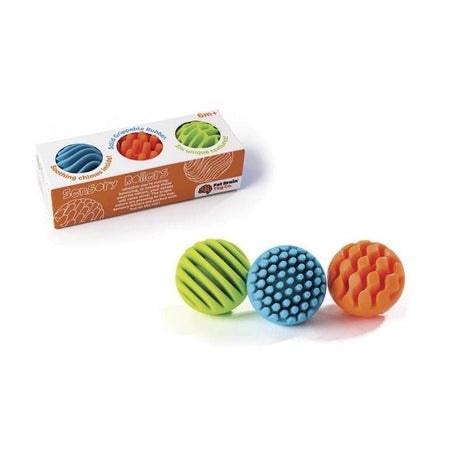
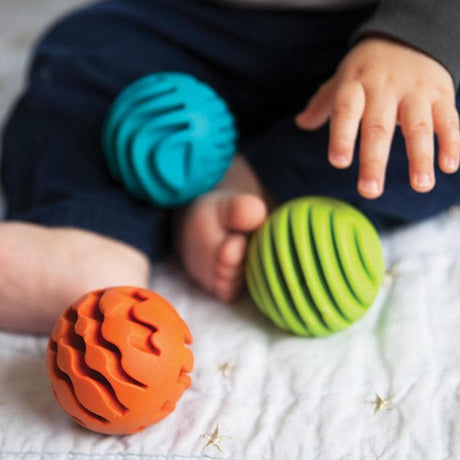
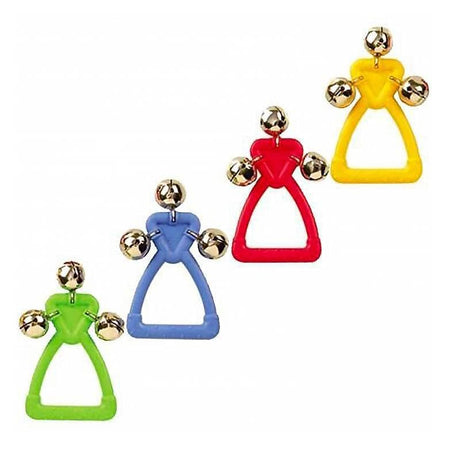
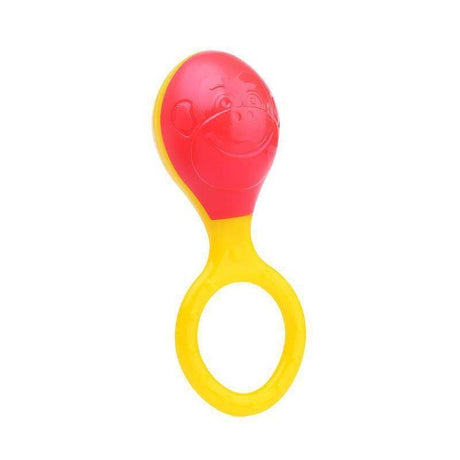
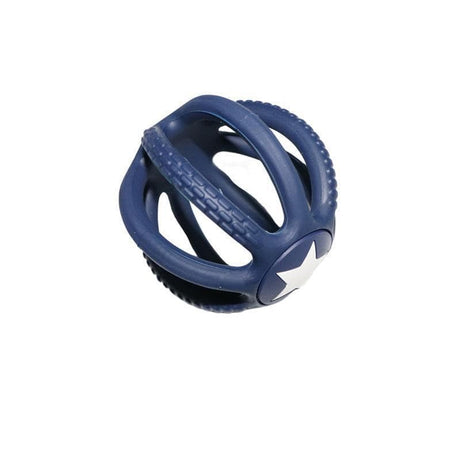
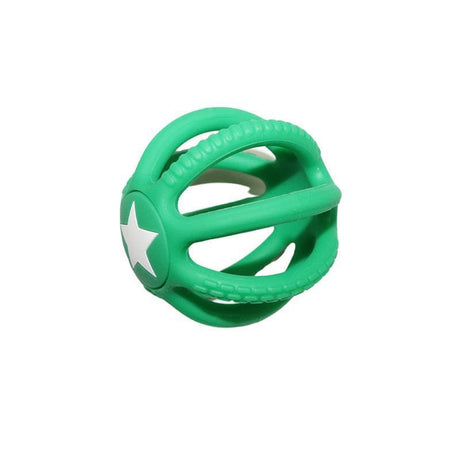
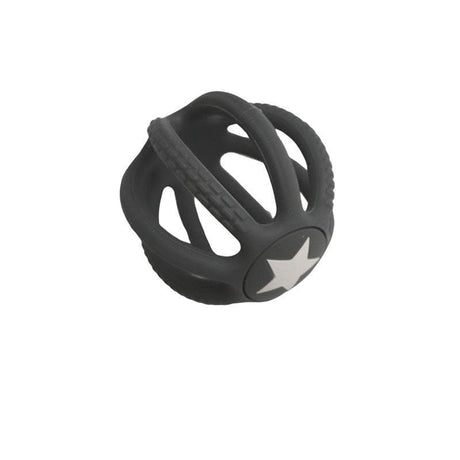
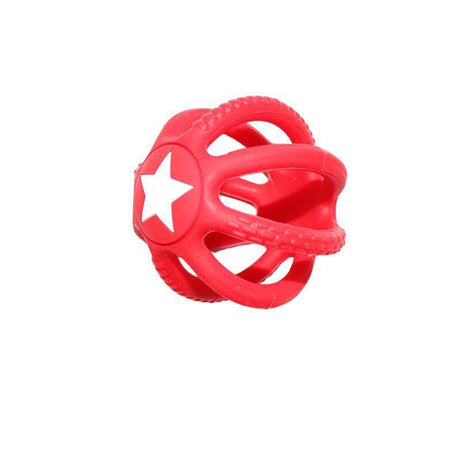
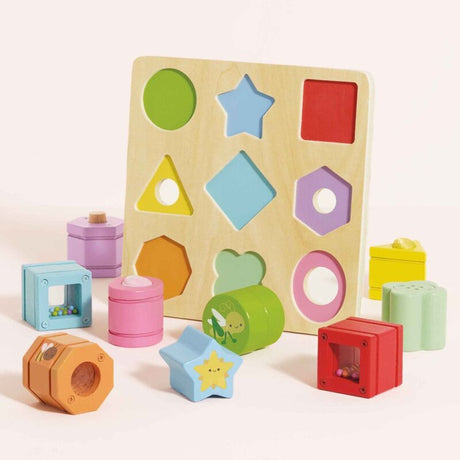
As babies grow into reaching and grasping, textured sensory toys give their hands something new to learn from - crinkle fabrics, soft rattles, varied surfaces and easy-to-hold shapes. Around this stage almost everything also goes to the mouth, which is a baby's most information-rich way of exploring shape, texture and temperature, so safe materials matter enormously. The best grasping toys are light, easy for small hands to hold, and made from baby-safe materials a parent can trust completely - because at this age, exploring with the mouth is exactly how a baby learns.

Find The Right Baby Sensory Toy

Which Baby Sensory Toys Should You Choose?

The best baby sensory toy depends on your baby's stage. Here's the quick way to decide.

Choose Newborn Sensory Toys If Your Baby:

Is a newborn or in the early weeks
Is watching more than reaching
Is doing tummy time
Responds to high contrast and gentle sound

Choose Grasping & Textured Toys If Your Baby:

Is reaching, grasping and holding
Is bringing everything to their mouth
Enjoys crinkle, rattle and texture
Is discovering they can make things happen
If you're unsure, a few simple, safe, well-made sensory toys that grow with your baby suit almost every newborn - start with contrast and sound, and add texture and grasping toys as your baby reaches for them.

Why Families Choose Our Baby Sensory Toys

Safe, Baby-Tested Materials For Mouthing

Simple, Single-Focus Sensory Play

Chosen To Grow With Your Baby

Choosing Baby Sensory Toys That Grow With Your Child

The sensory toys babies return to again and again often share one quality: they change as the baby changes. A high-contrast card that first captures a newborn's attention later becomes something they reach for. A soft rattle that begins as something to watch becomes something to grasp and shake. A mirror that first reflects light eventually becomes a fascinating face, and much later the place a baby begins to recognise themselves. The toy hasn't changed - the baby has. That's what we look for when we choose baby sensory toys: pieces that grow alongside development rather than needing replacing every few weeks. When you're choosing, a toy that works at several stages is far better value, and far less for a baby to take in, than a drawer-full bought for single moments.

Why Baby Sensory Toy Quality Matters From The Start

Babies explore differently from older children - everything is touched, squeezed, dropped, and eventually almost everything is explored with the mouth. That's why quality matters so much here, and why we won't compromise on it: not because babies notice premium materials, but because they explore with complete trust. Materials need to be genuinely safe, textures thoughtfully chosen, and objects comfortable in tiny hands. The simpler a baby toy looks, the more every little detail matters - the weight, the surface, the way it's finished, the safety of every component. A beautiful-looking baby toy that isn't safe to mouth is no use at all, so for this age we choose for safety and material quality first, always.

Choosing Baby Sensory Toys: The Short Version
In short: babies aren't looking to be entertained or stimulated - they're trying to make sense of a brand new world, and good sensory toys simply give them gentle, one-at-a-time opportunities to do it. Start simple with high-contrast and tummy-time toys for a newborn, move to grasping and textured toys as your baby reaches and mouths, choose a few well-made pieces over many busy ones, and put safety and material quality first because everything ends up in the mouth. Best of all, look for toys that grow with your baby. The wonder of the first year already exists - the right sensory toys just give your baby the time and space to explore it, one small discovery at a time.

Frequently asked questions
How do I choose baby sensory toys that last?

Look for toys that grow with your baby rather than ones for a single moment. A high-contrast card a newborn watches becomes something they later reach for; a rattle they watch becomes something they grasp; a mirror becomes a face they recognise. Toys like these stay useful across stages, which is better value and gentler on a baby than constantly replacing toys - and quality, safe construction means they hold up to real baby exploration.

Are baby sensory toys safe for mouthing?

They should be - because babies explore almost everything with their mouth, safe materials are the single most important thing in this category. Choose baby sensory toys made from non-toxic, baby-safe materials with no small parts that could come loose, rated for your baby's age, and always supervise play. Mouthing isn't a problem to stop; it's how a baby learns about shape, texture and temperature, so the toys just need to be safe for it.

How many baby sensory toys does my baby actually need?

Fewer than most people expect. Babies can only process so much at once, and too many busy toys often make them look away because they're full, not bored. A few simple, well-made sensory toys that each do one thing clearly - and that grow with your baby - serve far better than a basket of flashing, noisy ones. With baby sensory toys, less really is more.

What sensory toys are best for tummy time?

High-contrast cards, books and baby-safe mirrors are ideal for tummy time, because placing one in front of your baby gives them a reason to lift their head and look. Soft, textured toys within easy reach also encourage movement. Keep it simple and let your baby set the pace - even a minute or two of engaged tummy time is valuable.

Are sensory toys good for newborns?

Yes, when they're kept simple. Newborns are still learning to notice and organise an overwhelming new world, so the best newborn sensory toys are calm and single-focus - a bold black-and-white pattern, a gentle rattle, a safe mirror. They don't add more stimulation; they give a newborn one clear thing to focus on, which is genuinely helpful at this age.

What age can babies start using sensory toys?

From birth. Newborn sensory toys work with what a baby can already do - see high contrast, hear gentle sound, slowly track movement - so high-contrast cards and soft sounds suit the very early weeks. As your baby grows into reaching and grasping, textured and grasping toys become more useful. The toy simply matches the stage your baby is at.

What are baby sensory toys?

Baby sensory toys are simple toys that gently engage a baby's senses - sight, sound, touch - to help them explore and make sense of the world. Think high-contrast cards, soft rattles, crinkle fabrics, textured grasping toys and baby-safe mirrors. Rather than stimulating a baby, the best ones help them notice one thing at a time, which is exactly what a newborn is learning to do.