Click & Collect or 24hr Dispatch*


Squigz Suction Building & Sensory Toys For Kids

A good suction toy doesn't keep a child inside the toy - it quietly invites the whole room into the play. We curate our Squigz range around exactly that open-ended quality: pieces a child can push, stick, pull and pop on any smooth surface, then connect into chains, creatures and structures. Squigz sit somewhere between a few categories - construction, sensory, bath, travel and fine-motor toys all at once - which is part of what keeps them interesting. Below we walk through why children become so absorbed in them, why that little pop matters more than it looks, what a child is really learning while they play, and how to choose the right Squigz set for your child.

Squigz Suction Toys Build Anywhere Sensory Pop Open-Ended Play

Why Squigz Aren't Really Construction Toys

Most people describe Squigz as suction construction toys, and technically that's true - but it isn't really why children become so absorbed by them. Building blocks ask a child to connect one block to another; magnetic tiles connect piece to piece. Squigz ask a different question: 'what could I build here?' - and the answer changes every time. A window becomes a vertical building board, the side of the bath becomes a marble run, a highchair tray becomes a construction site, a restaurant window turns waiting time into play. The toy travels with the child, but the environment changes constantly, so the play never feels quite the same twice. That's why we think of Squigz less as construction toys and more as exploration toys - they don't ask a child to stay inside the toy; they encourage the child to include the room around them. For a child who's fascinated by what an ordinary surface could become, that's the real magic.

Why The Pop Matters

If you've watched a child remove a Squig, you've probably noticed they don't rush - they pull slowly, they wait, then comes the little pop, and quite often a smile. It's such a small detail that most adults overlook it, but children love feedback: the pop tells them something worked. It's the same reason children enjoy peeling stickers, opening containers or pulling apart building bricks - the action has a satisfying ending, and that tiny moment of success encourages them to try again, and again. If your child loves that press-and-pop feeling, Squigz share it with pop its - but where a pop it is about finishing, Squigz let a child build and stick as well, so the pop becomes part of something they're making rather than the whole activity.

What Children Learn While Playing With Squigz

From the outside it looks wonderfully simple - push, stick, pull, pop, repeat - but underneath those small actions a child is learning far more than they realise. Every time they press a Squig into place, they're adjusting pressure without being told. Every time they pull one away, they discover resistance. Every satisfying pop is immediate feedback that their action made something happen. Then the bigger questions start: will this shape fit here? can I make it taller? why did that one fall? how can I connect these? No instruction book teaches those questions - the toy simply creates the opportunity for a child to ask them, building fine-motor control, problem-solving and cause-and-effect understanding along the way, none of which feels like learning to the child.

Squigz For The Bath, The Window & On The Go

Part of what makes Squigz so useful is that they work wherever there's a smooth surface. They stick to the side of the bath for bath-time building, to windows and mirrors for vertical play, and to a restaurant or car window to turn waiting time into something to do. As a general guide, a smaller set travels brilliantly and suits bath and on-the-go play, while a larger set gives a child more pieces to build bigger structures at home. Either way, the appeal is the same - the toy comes with the child, and every new surface becomes somewhere fresh to play.

Squigz For Building, Chains & Creatures

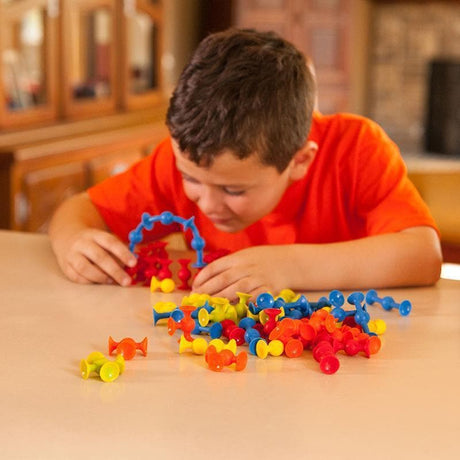
Beyond exploring surfaces, Squigz connect to each other, so a child can build chains, creatures and structures that spread across a window or table. Some children love making long chains, others build funny faces on mirrors, and others create elaborate structures that slowly grow across the house. Because there's no single correct way to build, the play stays open-ended - the pieces simply make building possible in places a child hadn't considered before, which is what keeps them coming back to them long after many toys are forgotten. The same pieces that explore a window become the bricks of whatever they imagine next.

Find The Right Squigz Set

Which Squigz Set Should You Choose?

The best Squigz set depends on your child and where they'll play, not just the number of pieces. Here's the quick way to decide.

Choose A Smaller Squigz Set If Your Child:

Will use them in the bath or on the go
Likes exploring surfaces more than big builds
Is younger or new to Squigz
Needs something compact to travel with

Choose A Larger Squigz Set If Your Child:

Loves building big chains and structures
Plays mostly at home on windows and tables
Wants more pieces to spread out with
Is ready for more complex creations
If you're unsure, a mid-sized starter set suits most children - enough pieces to build with, small enough to travel, and a great way to see how your child likes to play before adding more.

Why Families Choose Our Squigz

Genuine Squigz Quality Suction

Build On Windows, Baths & On The Go

Open-Ended Exploration That Lasts

Why Squigz Quality Makes Such A Difference

At a glance, Squigz look surprisingly simple - a few colourful silicone pieces with suction cups on the ends - but simple toys rely on doing one thing exceptionally well, and that's exactly why we look for genuine quality here. If the suction doesn't hold, the whole idea falls apart. If the silicone feels stiff or brittle, children stop experimenting. If the pieces don't release with that satisfying little pop, much of the sensory experience disappears. Children aren't really testing the toy - they're testing the relationship between the toy and the world around them, and the better that relationship works, the longer their curiosity lasts. It's why well-made Squigz, with suction that grips and silicone that stays soft and poppable, are worth far more than a cheaper lookalike that loses its grip after a few plays.

More Than One Kind Of Toy

Part of what makes Squigz hard to pin down is that they're several toys at once. They're construction toys and sensory toys. They're travel toys and bath toys. They're quiet waiting-room toys and fine-motor toys. But none of those descriptions feels complete on its own - what they really are is exploration toys, the kind that encourage a child to ask questions instead of following instructions, and quietly turn ordinary moments into chances for discovery. For a child who sees invitations everywhere adults see ordinary objects - a stick that becomes a wand, a box that becomes a rocket - Squigz fit beautifully, helping them notice that the world around them was always ready to become part of their play.

Choosing A Squigz Set: The Short Version
In short: Squigz suit the curious, hands-on child who loves to explore, stick, build and pop - the child who's fascinated by what an ordinary window or bath could become. They share the satisfying pop of a pop it but add suction and building, so the play spreads across surfaces and stays open-ended. When you're choosing, think about your child rather than the piece count: a smaller set travels and suits bath and on-the-go play, a larger set gives more to build with at home, and the best set is the one that leaves room for your child's own ideas. Choose quality suction and soft, poppable silicone over the biggest box, and Squigz don't just change what a child builds - they change where a child believes play is possible.

Frequently asked questions
Are Squigz good travel toys?

Many families use Squigz during flights, restaurants, car travel, or quiet outings because the pieces stick to windows, trays, and smooth surfaces while remaining compact, reusable, and highly engaging for independent sensory play.

How are Squigz different from pop its and other fidget toys?

Squigz share the satisfying pop of a pop it, but where a pop it is about quietly finishing bubbles, Squigz let a child stick and build on surfaces and connect pieces together. That makes them more open-ended and constructive than most fidget toys - part sensory toy, part building toy, part exploration toy. A child who likes building as well as the pop tends to love them.

Do I need the biggest Squigz set?

Not necessarily. The best set isn't the one with the most pieces - it's the one that leaves room for your child's ideas. A smaller set travels well and suits bath and on-the-go play, while a larger set gives more pieces for big builds at home. A mid-sized starter set is a great way to see how your child likes to play before adding more.

What age are Squigz suitable for?

As a general guide, Squigz suit children from around preschool age upward, with supervision for younger children. Always check the age rating on the specific set, since some pieces may not suit very young children who still mouth toys. Squigz come in different ranges, so choose a set rated for your child's age and supervise younger children at play.

Can Squigz be used in the bath?

Yes - the bath is one of the best places for them. Squigz stick to the smooth sides of the bath and to tiles, turning bath time into building time, and because they're silicone they handle water well. Rinse and dry them after use so the suction cups stay clean and keep their grip. The bath, windows and mirrors are all ideal smooth surfaces for Squigz play.

Are Squigz good for sensory seekers?

For many children, yes. The press-stick-pull-pop sequence gives satisfying tactile and resistance feedback, and that little pop on release is immediate, rewarding sensory input. Children who enjoy pop its often love Squigz for the same reason, with the added dimension of building and sticking to surfaces. As always it's individual, but they suit a child drawn to hands-on, feedback-rich play.

What do children learn from playing with Squigz?

More than it looks. Pressing and pulling Squigz builds fine-motor control and teaches children to adjust pressure, while sticking, connecting and watching pieces hold or fall builds problem-solving and cause-and-effect understanding. Because there's no instruction book, children set their own challenges - which shape fits, how to make it taller, why one fell - and none of it feels like learning to them.

What are Squigz and how do they work?

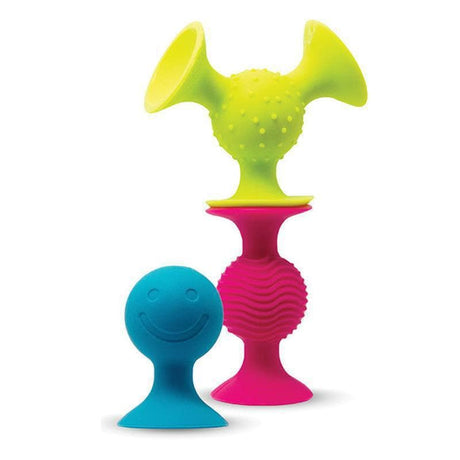
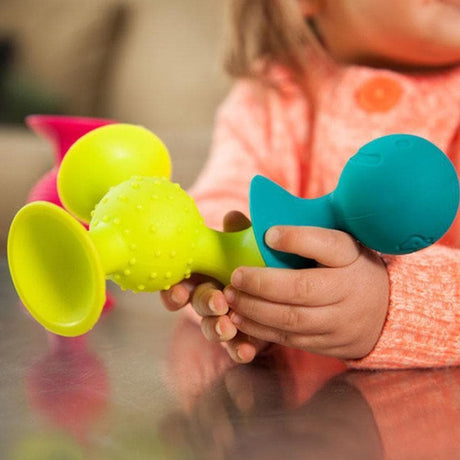
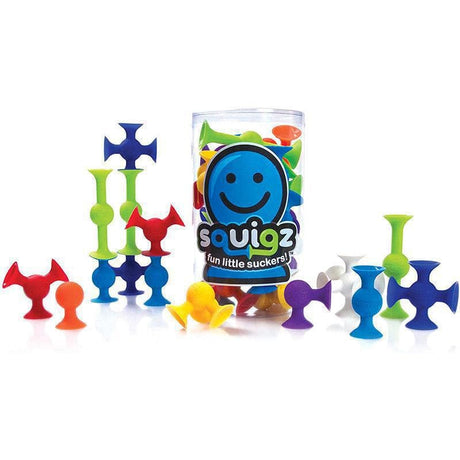
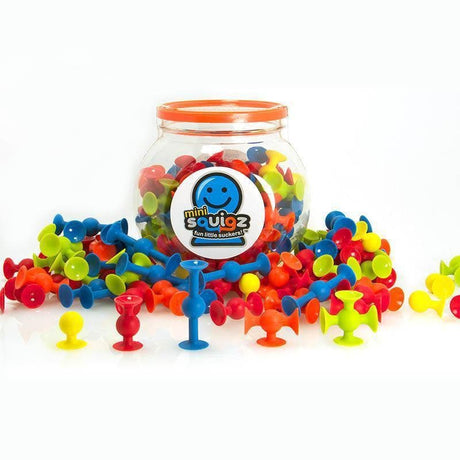
Squigz are silicone suction toys from Fat Brain Toys. Each piece has suction cups that stick to smooth surfaces - windows, mirrors, the bath, the fridge - and to each other, so children can build chains, creatures and structures almost anywhere. They come off with a satisfying pop, which is part of the appeal. They're construction, sensory and exploration play all in one.