
Click & Collect or 24hr Dispatch*

Sensory Toys For Toddlers Who Want To Experiment

Sensory Toys For 1 Year Olds & Toddlers

There comes a point where your child stops being happy to simply watch the world. The baby who spent ten minutes watching sunlight on the wall suddenly wants to touch it; the one content to shake a rattle now wants to know what happens if they throw it. Suddenly they're emptying cupboards, tipping baskets and pulling tissues out one after another. It can feel like everything changed overnight - and it has. It might sound odd coming from somewhere that sells toys, but your toddler hasn't become more mischievous, they've become more curious: the world they spent their first year watching has become a world they want to influence. That's the big shift - babies discover, toddlers experiment. Good sensory toys for 1 year olds give that experimenting somewhere safe to happen. This page is about how toddlers really play, and how to choose toys that match this stage.


Sensory Toys For 1 Year Olds & Toddlers

When people think about sensory toys, they often picture toys that stimulate children, but that's not what toddlers are looking for. A toddler wakes up with questions: what happens if I squeeze this? Pour this? Will it fit? Can I open it? Adults sometimes call it making a mess; toddlers call it collecting answers. The best sensory toys for 1 year olds don't distract from that curiosity - they give it somewhere safe to grow. Our range of toddler sensory toys is chosen around the actions toddlers love most: scooping, pouring, stacking, filling, emptying, twisting and posting. Below we walk through why toddlers repeat things endlessly, why the mess is often the learning, why open-ended toys hold their attention far longer, and how to choose toys built to survive a year of genuine experiments.

Toddler Sensory Toys Scoop & Pour Stack & Fill Open-Ended Play

Why Toddlers Repeat The Same Thing Again And Again

One of the questions we hear most is 'why does my toddler keep doing the same thing?' They pour the blocks out, put them back, pour them out again; drop the spoon, pick it up, drop it again; open the lid, close the lid, repeat. It's easy to assume they do it simply because it's fun, but something more interesting is happening: repetition is how a toddler tests whether the world is reliable. If they drop the ball today, will it still fall tomorrow? If they stack three blocks, will they wobble the same way? They're not repeating because they forgot the answer - they're repeating because certainty builds confidence. The best sensory toys for this age reward that repetition: they do the same satisfying thing every time, so a toddler can test their growing understanding of how the world works, over and over.

Mess Is Often The Learning

It's worth looking at toddler mess a little differently. Adults usually see the floor after the activity; toddlers only see the experiment while it's happening. The spilled water wasn't an accident - it answered a question. The scooping, pouring and transferring wasn't just keeping busy - it was helping them understand volume, gravity and control. Underneath what looks like chaos, a toddler is comparing, testing, predicting and trying again, discovering that wet sand behaves differently to dry, that some things float and others sink, that stacking needs balance - none of it from being told, all of it from doing. That doesn't mean every mess has to happen, but very often the part adults want to avoid is exactly the part a toddler learns the most from, which is worth keeping in mind when you choose sensory toys for a 1 year old.
Why Open-Ended Sensory Toys Keep A Toddler's Attention

Toddlers lose interest surprisingly quickly in toys that always behave the same way - push the button, hear the sound, the experience is finished. Open-ended sensory toys are different: today they're stacking toys, tomorrow they're part of water play, next week they're being filled, emptied, sorted or hidden. The toy hasn't changed - the questions have. That's why open-ended sensory toys stay relevant so much longer: as a toddler's curiosity grows, the toy quietly grows with it. It's also why, when choosing, we look at how many different actions a toy invites - the more ways a toddler can scoop, pour, stack, fill and empty with it, the longer it holds their attention and the better value it is.

Find The Right Toddler Sensory Toy

Which Sensory Toys Suit Your 1 Year Old?

The best sensory toy for a toddler depends on the actions they're drawn to. Here's the quick way to decide.

Choose Scoop & Pour Toys If Your Toddler:

Loves filling, emptying and tipping
Is fascinated by water and sensory play
Repeats pouring and scooping endlessly
Is exploring volume and cause-and-effect

Choose Stacking & Posting Toys If Your Toddler:

Loves stacking until it topples
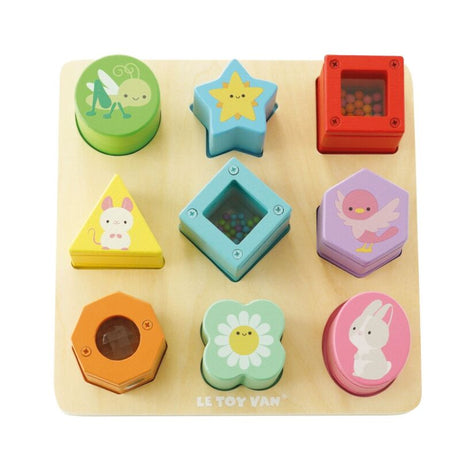
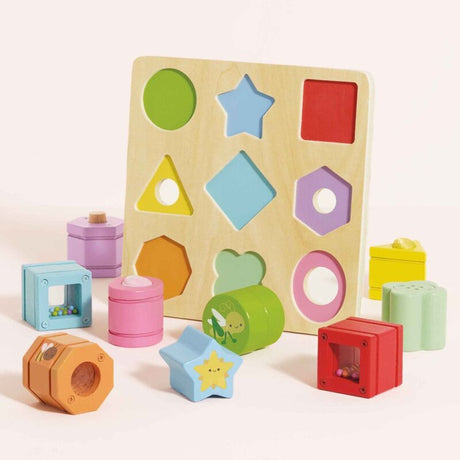
Is posting shapes and testing balance
Enjoys twisting, pushing and pulling
Is building fine-motor control
If you're unsure, a few open-ended sensory toys that invite scooping, pouring, stacking and filling suit almost every toddler - they reward repetition and grow with your child's curiosity.

Why Families Choose Our Toddler Sensory Toys

Open-Ended Toys That Invite Experiments

Built To Survive A Toddler's Year

Safe Materials For Hands & Mouths

Choosing Sensory Toys That Match The Toddler Stage

When parents ask which sensory toy is best for a one-year-old, we find it more useful to think about actions before products. Can your toddler scoop with it? Pour? Twist? Stack? Push? Pull? Fill and empty? The more opportunities a toy gives a toddler to experiment with those actions, the more likely it is to stay interesting - and the more genuine sensory and developmental work it does. The best sensory toys for this age don't ask a toddler to sit still; they invite them to investigate. So when you're choosing, look past what a toy does on its own and toward what your toddler can do with it - an open-ended toy that supports ten different actions will outlast a single-function toy many times over.

Why Quality Matters More Than Features

Toddlers don't use toys gently - they carry them across the house, drop them, stack them, fill them with water, roll them, chew them and use them in ways nobody expected. That's why we care far more about durability than gimmicks. A flashing light might impress for five minutes, but a beautifully made sensory toy that survives hundreds of experiments becomes part of childhood. Quality at this age isn't about appearance; it's about giving a toddler the freedom to explore without the toy giving up before they do - and about safe materials, since plenty still goes to the mouth. When you're choosing sensory toys for a 1 year old, a few well-made, open-ended pieces will always beat a pile of feature-heavy ones that break or bore.

Choosing Toddler Sensory Toys: The Short Version
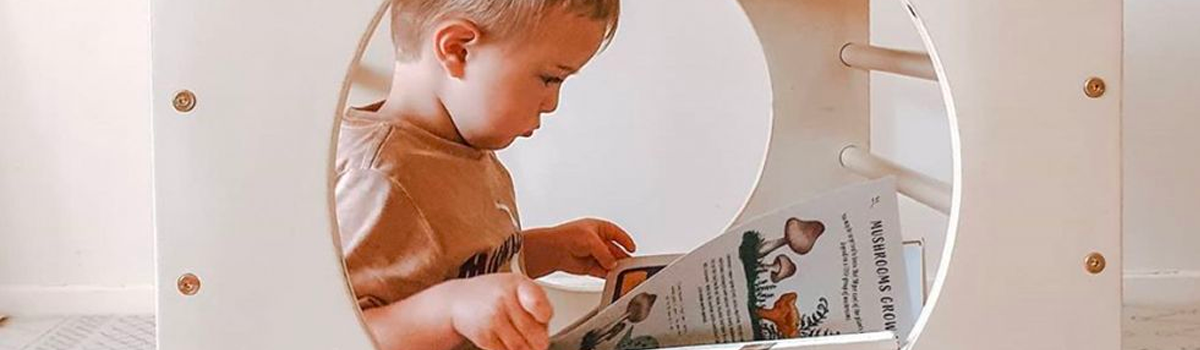
In short: a 1 year old isn't looking to be entertained - they're experimenting, testing what happens when they pour, stack, fill, empty and tip, and gathering evidence with every movement. The best sensory toys for toddlers honour that: open-ended pieces that invite lots of actions, reward the endless repetition that builds their confidence, and survive a year of real experiments. Think about the actions a toy invites rather than its features, choose quality and safe materials over gimmicks, and expect mess - it's often where the learning is. Meet your toddler where they already are, and a good sensory toy simply gives their curiosity somewhere safe to become understanding.

Frequently asked questions
What actions should a good toddler sensory toy support?

Look for toys that let a toddler scoop, pour, stack, fill, empty, twist, push, pull and post - the more of these actions a toy invites, the more your toddler will experiment with it and the longer it holds their attention. The best sensory toys for this stage don't ask a toddler to sit still; they invite them to investigate, which is exactly what a one-year-old wants to do.

Are sensory toys for 1 year olds safe for mouthing?

They should be, because plenty still goes to the mouth at this age. Choose toddler sensory toys made from non-toxic, baby- and toddler-safe materials, with no small parts that could come loose or pose a choking hazard, rated for your child's age, and supervise play - especially with water or sensory materials. Safe materials matter as much as what the toy does.

How do I choose sensory toys that won't be outgrown quickly?

Choose open-ended over single-function. A toy that only does one thing - press, hear a sound - is finished quickly, while an open-ended sensory toy becomes stacking today, water play tomorrow and sorting next week. The toy stays the same; the toddler's questions grow. Open-ended toys keep pace with a fast-changing toddler and last far longer.

Are messy sensory toys actually good for toddlers?

Often the mess is the learning. Spilled water, scattered rice and squashed play dough are usually experiments in volume, gravity, texture and control - a toddler discovering how materials behave by doing rather than being told. That doesn't mean every activity has to be messy, but contained sensory play is genuinely valuable, and the part adults want to avoid is often where toddlers learn the most.

What is the difference between baby and toddler sensory toys?

It comes down to discovering versus experimenting. Babies mostly observe and take the world in, so baby sensory toys are simple and single-focus. Toddlers want to influence the world - to pour, stack, fill and tip and see what happens - so toddler sensory toys are more open-ended and invite action. As your child shifts from watching to doing, the toys shift with them.

Why does my toddler repeat the same thing over and over?

Because repetition is how toddlers test whether the world is reliable. Dropping a spoon, stacking blocks, opening and closing a lid again and again isn't boredom - each repeat confirms that the world responds the same way, and that certainty builds confidence. Sensory toys that do the same satisfying thing every time support exactly this, so expect (and welcome) plenty of repetition.

What are the best sensory toys for a 1 year old?

The best sensory toys for a 1 year old invite the actions toddlers love - scooping, pouring, stacking, filling, emptying and posting. Open-ended toys like stacking cups, simple posting toys and containers for water or sensory play work well because they answer the questions a toddler is already asking. Think about what your toddler can do with a toy rather than what the toy does on its own.