Click & Collect or 24hr Dispatch*

15% Off Sitewide & Clearance*

EOFY15
Timeless Fine Motor Play

Spinning Tops


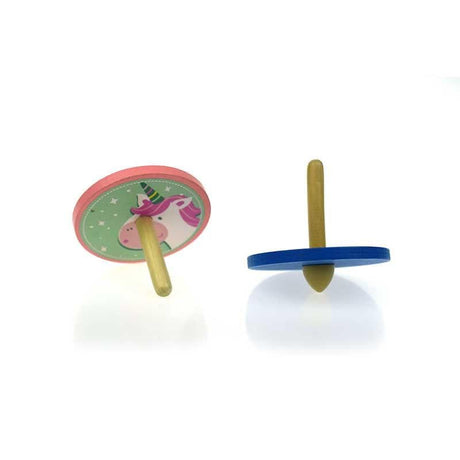
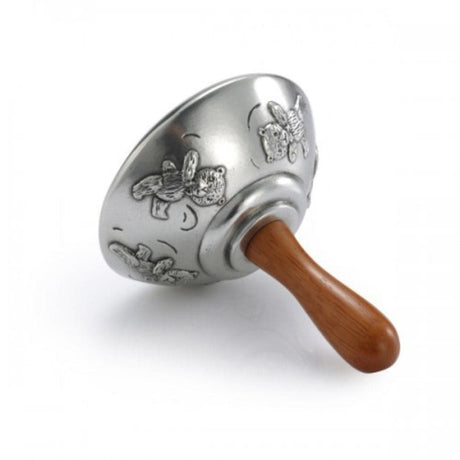
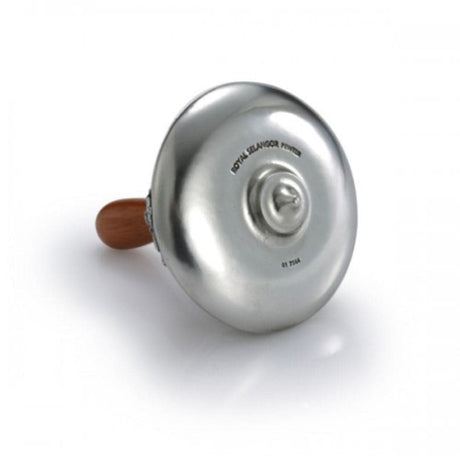
Long before screens, batteries and flashing lights, children were captivated by spinning tops. There's something endlessly fascinating about watching a top spin, wobble, recover and dance across a surface. Today, spinning tops continue to offer children a simple but surprisingly engaging form of play that encourages concentration, patience and repeated experimentation. Explore wooden spinning tops designed to inspire curiosity, independent play and the joy of discovering what happens with every spin.


Why Children Never Seem To Tire Of Spinning Tops


Some toys entertain through complexity. Spinning tops captivate through simplicity. Children quickly discover that every spin feels slightly different, encouraging them to experiment with speed, technique, surfaces and movement. This natural curiosity often leads to repeated play as children challenge themselves to spin longer, smoother and more consistently. Whether you're searching for a first spinning top for a toddler or a beautifully crafted wooden spinning top that encourages independent play, the appeal lies in the simple magic of cause and effect.

Timeless Appeal Independent Discovery Quiet Concentration Screen Free Play

Captures Attention Through Movement


Children are naturally drawn to movement. The spinning motion creates a sense of fascination that encourages children to observe closely and experiment repeatedly.

Encourages Deep Concentration

Many children become surprisingly focused when trying to improve their spinning technique. Small adjustments create visible results, encouraging persistence and repeated practice.

Simple Enough To Learn, Interesting Enough To Master


A spinning top can be enjoyed immediately, yet continues to offer new challenges as children refine control, coordination and consistency.

Why Wooden Spinning Tops Remain Popular Screen-Free Toys For Kids

Many parents searching for screen-free toys are looking for activities that naturally hold a child's attention without relying on flashing lights or electronic stimulation. Wooden spinning tops create engagement through movement, curiosity and experimentation, encouraging children to stay present in the moment while discovering new ways to play.

Are Spinning Tops Good For Children Who Struggle To Focus On Toys?

Some children move quickly between activities because toys reveal everything immediately. Spinning tops work differently. Every spin creates a slightly different outcome, encouraging observation, prediction and repeated attempts that can help maintain engagement for longer periods of time.

Simple Doesn't Mean Boring

The Best Spinning Top Depends On How Your Child Likes To Play

Some children are immediately fascinated by movement and enjoy watching a spinning top dance across a surface. Others enjoy the challenge of improving technique and seeing how long they can keep a top spinning.

Choose First Spinning Tops If:

  • Your child is new to spinning tops Simple cause-and-effect play appeals to them You want an easy introduction They enjoy watching movement Independent exploration is the goal

Choose Wooden Top Sets If:

  • Your child enjoys experimenting They like comparing outcomes They enjoy challenge-based play Repetition doesn't bother them They naturally return to favourite toys
The best spinning tops are often the simplest. Their magic comes from giving children something fascinating to explore rather than telling them exactly how to play.

Built For Timeless Play

Encourages concentration through independent discovery

Suitable for quiet, independent play

Screen-free play with lasting appeal

What Makes A Great Spinning Top?


The most engaging spinning tops balance simplicity with satisfying movement. Consider how easy the top is for your child's current stage, how durable it feels and whether it encourages repeated experimentation rather than offering a single play outcome.

When A Spinning Top May Not Be The Best Fit

If your child prefers highly structured activities, role play or toys with multiple moving parts, a spinning top may initially feel too simple. These toys appeal most strongly to children who enjoy experimenting, observing movement and discovering things for themselves.

A Toy That Has Captivated Children For Generations
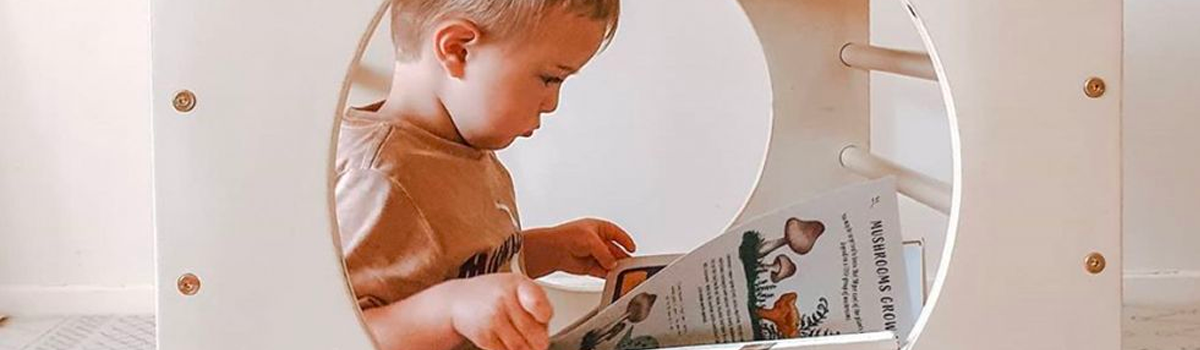
In a world filled with complex toys and constant stimulation, spinning tops remain remarkably effective at capturing a child's attention. Their simplicity invites curiosity, experimentation and concentration in a way few toys can. Whether you're introducing a toddler to their first spinning top or searching for a beautifully crafted wooden spinning top that encourages independent play, these timeless toys continue to prove that sometimes the simplest ideas are the most engaging.

Frequently asked questions
Are spinning tops still relevant in a world of electronic toys and screens?

In many ways, spinning tops may be more relevant today than ever before. Modern children are surrounded by toys that provide instant entertainment through lights, sounds, screens and electronic features. While these products can be engaging, many parents are increasingly searching for simpler alternatives that encourage focus, patience and independent exploration.

Spinning tops offer something different. Rather than entertaining children passively, they invite participation. Children become active participants in the play experience, experimenting with movement, observing outcomes and refining their technique over time. The toy rewards curiosity and persistence rather than delivering instant gratification.

Parents often describe spinning tops as surprisingly effective because they capture attention through fascination rather than stimulation. The movement itself becomes the source of interest, allowing children to engage deeply without relying on technology or complex features. This makes spinning tops particularly appealing for families looking to balance screen time with hands-on, open-ended play.

The fact that spinning tops have remained popular for generations is perhaps the strongest evidence of their lasting appeal. While technology continues to evolve, the simple joy of making something spin has never really gone out of fashion.

What makes a high-quality wooden spinning top?

At first glance, spinning tops can appear deceptively simple, but the quality of a spinning top often becomes obvious once children begin using it. A well-made wooden spinning top should feel balanced, comfortable to hold and capable of spinning smoothly and consistently. Small differences in design and construction can have a significant impact on the overall play experience.

Many parents choose wooden spinning tops because they appreciate the durability and timeless appeal of natural materials. Quality wooden tops are often crafted with smooth finishes, carefully balanced shapes and designs that encourage reliable spinning. These features help children experience the satisfaction of a successful spin while reducing frustration during the learning process.

Durability is another important consideration. Children frequently use spinning tops repeatedly, which means the toy should be capable of withstanding ongoing play. A thoughtfully designed wooden spinning top can remain enjoyable for years, making it a valuable addition to a collection of open-ended and screen-free toys.

Ultimately, the best spinning tops are those that combine simplicity, durability and enjoyable movement, encouraging children to return to them again and again.

Are spinning tops suitable for independent play?

Spinning tops are often considered one of the most effective toys for encouraging independent play because they require very little instruction while still offering plenty of opportunities for exploration. Children can begin interacting with a spinning top almost immediately, yet continue discovering new ways to play as their confidence and coordination develop.

One of the reasons spinning tops work so well for independent play is that there is no single correct outcome. Children can experiment with different spinning techniques, surfaces and challenges without needing constant adult guidance. This freedom encourages self-directed learning and allows children to engage with the toy at their own pace.

Many parents appreciate that spinning tops create a quieter style of play compared with toys that rely heavily on lights, sounds or screens. Children often become absorbed in observing movement, comparing results and refining technique, creating natural opportunities for concentration and sustained engagement.

For families looking to encourage independent play, spinning tops offer a rare combination of simplicity, challenge and long-term replay value, making them a popular choice for both home and educational environments.

Why do some children repeatedly spin objects and become fascinated by movement?

Many children are naturally fascinated by movement because it provides immediate visual feedback and constantly changing outcomes. Spinning objects are particularly interesting because they appear to challenge expectations. A spinning top can stand upright, wobble, speed up, slow down and change direction, all while remaining unpredictable enough to hold a child's attention.

Young children are often drawn to activities that allow them to observe cause and effect in real time. When they spin a top, they can immediately see how their actions influence the outcome. This creates a powerful learning loop where children naturally want to try again, adjust their technique and observe what happens next.

The appeal is not necessarily about achieving a goal. Instead, it is about exploration and discovery. Many children enjoy watching movement simply because it is visually engaging and constantly changing. This helps explain why spinning tops have remained popular for generations despite the introduction of increasingly complex toys.

For many families, spinning tops offer a simple way to support curiosity and independent exploration through a toy that continues to reveal something new with every spin.

Are wooden spinning tops better than plastic spinning tops?

Both wooden and plastic spinning tops can be enjoyable, but many parents choose wooden spinning tops because of their durability, aesthetic appeal and timeless play value. Wooden toys often feel more substantial in a child's hands and are frequently selected by families looking for screen-free toys that can be enjoyed for years rather than weeks.

Wooden spinning tops are particularly popular in Montessori and open-ended play environments because they focus attention on the movement itself rather than additional lights, sounds or electronic features. The natural simplicity encourages children to engage with the toy's core purpose while exploring movement, balance and experimentation through independent play.

Many parents also appreciate the craftsmanship associated with quality wooden spinning tops. Smooth finishes, balanced designs and durable materials can help create a more satisfying spinning experience. Because spinning tops rely on precision and movement, the quality of construction often contributes significantly to how enjoyable the toy feels to use.

Ultimately, the best spinning top is the one a child enjoys returning to repeatedly. For families seeking a timeless toy with lasting appeal, wooden spinning tops continue to be one of the most popular choices available.

Why do spinning tops appeal to Montessori families?

Spinning tops are often popular in Montessori-inspired homes because they align with many of the principles parents value in open-ended play. Rather than directing children through predetermined outcomes, spinning tops encourage independent exploration, experimentation and self-discovery. Children are free to interact with the toy in their own way, learning through observation and repeated practice.

One of the reasons Montessori families are drawn to spinning tops is their simplicity. A spinning top performs a single function, yet children can spend significant time exploring how it works. This creates opportunities for concentration, persistence and hands-on learning without requiring screens, batteries or complex instructions.

Montessori toys are often valued because they allow children to learn through direct experience. Spinning tops naturally demonstrate concepts such as movement, balance, force and cause and effect in a way that is easy for young children to observe. Rather than being told what happens, children can see the results for themselves through play.

For families seeking simple, beautiful toys that encourage independent thinking and sustained engagement, wooden spinning tops remain a timeless choice that fits naturally within Montessori-inspired environments.

Can spinning tops help children develop concentration and patience?

Many parents are surprised by how long children can remain engaged with a spinning top. Unlike toys that provide instant rewards, spinning tops encourage children to slow down, observe carefully and experiment repeatedly. Each spin creates a slightly different outcome, which naturally motivates children to pay attention to small details and make adjustments over time.

Children often begin by simply watching the movement, but as confidence grows they typically start testing different techniques, surfaces and speeds. This process encourages persistence because success is rarely achieved immediately. Instead, children learn through trial, observation and gradual improvement. For many families, this is part of the appeal. The toy doesn't demand concentration; it earns it through curiosity and fascination.

Because spinning tops are simple and free from flashing lights or electronic distractions, children are able to focus on a single activity for longer periods of time. Many parents appreciate that spinning tops encourage calm, independent play while providing opportunities to practise patience, observation and problem-solving in a way that feels enjoyable rather than instructional.

What age are spinning tops suitable for?

The best age for spinning tops often depends less on a child's birthday and more on their interest in movement, observation and hands-on exploration. Many children become interested in spinning tops during the toddler and preschool years when they begin experimenting with cause and effect and enjoy seeing immediate results from their actions.

Younger children are often fascinated by simply watching a spinning top move. They may enjoy observing how the top spins, wobbles and eventually slows down. As coordination develops, children typically become more interested in creating the spin themselves and experimenting with different techniques.

For preschool and early primary-aged children, spinning tops can evolve into a challenge-based activity. Children may compare spinning times, test different surfaces or attempt to improve consistency through repeated practice. This progression helps explain why spinning tops often remain relevant for longer than parents initially expect.

When choosing a spinning top for toddlers or younger children, look for designs that are easy to grasp and simple to use. The most successful spinning tops are usually those that match a child's current confidence level while still offering opportunities to grow through practice and experimentation.

Are spinning tops a good screen-free toy for children who lose interest quickly?

Many parents searching for screen-free toys worry that their child will become bored after only a few minutes. Spinning tops can be surprisingly effective for children who move quickly between activities because they encourage experimentation rather than delivering a single fixed play experience.

Unlike toys that provide the same outcome every time, a spinning top behaves slightly differently with each spin. Children naturally begin adjusting speed, force and technique to see what happens next. This ongoing process of trial and error can help maintain engagement because there is always something new to discover or improve.

Spinning tops are also unusual because they don't overwhelm children with lights, sounds or complicated instructions. The toy itself remains simple while the play experience becomes increasingly interesting as confidence grows. Many children return to spinning tops repeatedly because they enjoy the challenge of making the top spin longer, move differently or perform more consistently.

For families looking to reduce screen time, spinning tops offer a form of independent play that relies on curiosity, observation and concentration rather than external stimulation, making them a timeless option for quiet play at home.

Why are children so fascinated by spinning tops?

There is something uniquely captivating about watching a spinning top in motion. Unlike many modern toys that immediately reveal everything they can do, a spinning top creates a constantly changing experience. Children become fascinated by the movement, balance, speed and unpredictability of each spin, often watching closely to see how long the top will stay upright before eventually slowing and falling.

Many children naturally enjoy activities that combine movement and visual feedback. A spinning top responds instantly to a child's actions, allowing them to see how small changes in technique can create completely different outcomes. This encourages experimentation, observation and repeated play without needing rules, instructions or complicated setups.

For younger children, the appeal often comes from simply watching the movement. Older children frequently become interested in improving their spinning technique, comparing results and setting personal challenges. This ability to grow with a child's curiosity is one reason spinning tops have remained popular for generations. They transform a simple action into an engaging experience that encourages children to slow down, focus and explore cause and effect through independent discovery.