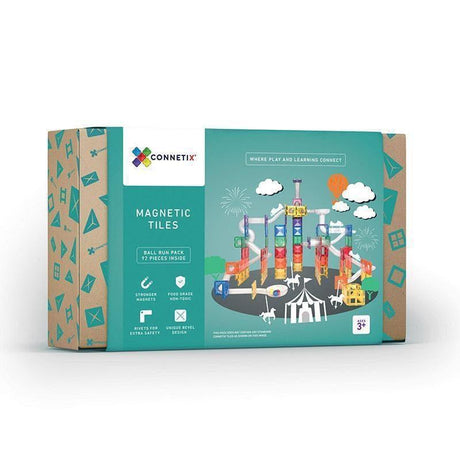
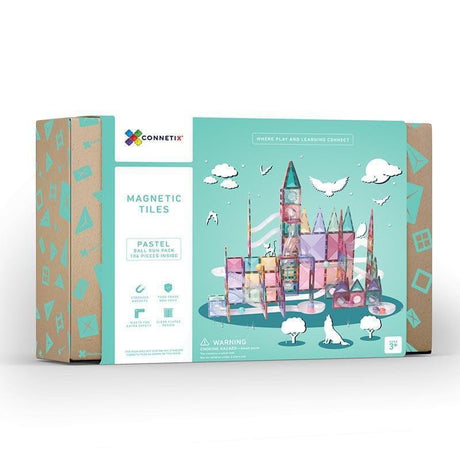
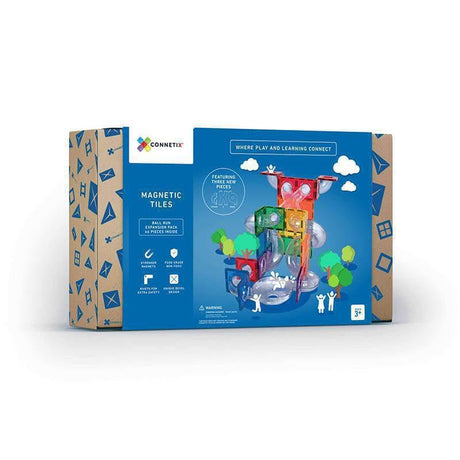
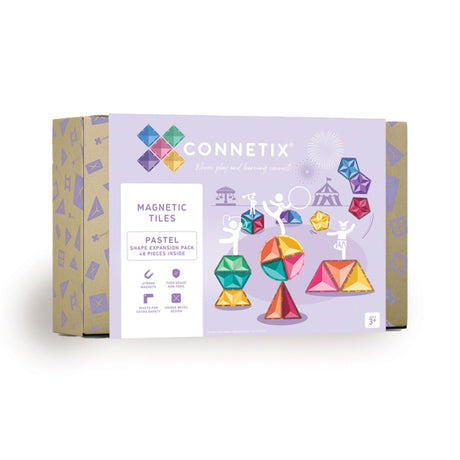
Click & Collect or 24hr Dispatch*

Magnetic Building Systems · Connetix Ball Runs

Connetix Ball Runs

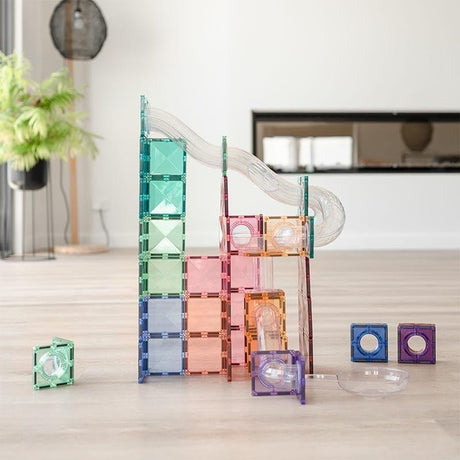
A Connetix ball run is the toy that finally combines building with movement — the construction set where something actually happens when the build is finished. A tower just sits there; a Connetix ball run comes alive. As one parent put it, "my son finally had a reason to keep improving his build instead of knocking it down." That's the real appeal of a magnetic ball run: every change to the track instantly produces a different result, and that immediate feedback is what keeps children building, testing and trying again.


What Parents Are Really Buying in a Connetix Ball Run

Almost every shop sells a Connetix ball run as a STEM toy, but after reading hundreds of reviews, that's rarely why parents buy one. They're not buying tubes — they're buying cause and effect: longer attention spans, repeated problem-solving, a toy the whole family joins in with, and a construction toy children don't "finish" after a single build. The difference from ordinary magnetic building is that a Connetix ball run has a purpose built in. Children stop asking "what should I build?" and start asking "where should the ball go next?" — so every wall, tower and support suddenly exists for a reason.

This is also what sets a Connetix ball run apart from flat magnetic tiles and from magnetic blocks. Tiles build rooms and blocks build objects, but a magnetic ball run builds a journey — and the moment the build is done, the ball brings it to life. Success isn't finishing the structure; success is "the ball made it!" That tiny shift changes everything, because the structure stops being the goal and movement becomes the reward. These are genuine Connetix ball run sets, designed to click together with the wider Connetix range you may already own.

Connetix Ball Runs Magnetic Ball Run Building Meets Movement Build, Test & Improve

In a Connetix Ball Run, the Ball Becomes the Teacher

The strongest thing parents notice about a Connetix ball run is that they no longer have to say "that won't work" — the ball says it for them. If it stops, the child adjusts. If it jumps the track, they redesign. If it gets stuck, they investigate. The ball gives completely honest feedback without anyone feeling criticised, which is exactly why parents describe a magnetic ball run as one of the few toys where a child willingly keeps trying. Every failure creates curiosity rather than upset: the marble stops halfway and the child asks "why? too steep? not steep enough? wrong angle?" — troubleshooting naturally instead of giving up.

That's where the persistence comes from, and it's the biggest emotional driver parents describe. Children who normally abandon a toy after ten minutes will stay with a Connetix ball run because success always feels one adjustment away. One parent wrote, "he rebuilt the same section six times because he knew he was close" — and another said simply, "he wasn't upset when it failed, he was curious." For a construction toy, that's about the highest compliment there is, and it's why a ball run holds attention long after a one-build toy has been abandoned.

The Connetix Ball Run Is Never Finished

Parents describe the same sequence again and again: the ball reaches the bottom, and instead of stopping, the child immediately asks — can we make it longer? can it split into two? can it race another ball? can it go around the table? can it finish in the basket? The challenge constantly evolves, which is why a Connetix ball run behaves like a system rather than a one-off toy. Children also start predicting before they test — "this one will be faster," "I think it'll get stuck," "the red tube is too high" — mentally simulating the run before they ever drop the ball. That's a genuinely sophisticated shift, and it happens through pure play.

Along the way they discover that bigger isn't always better: at first every child builds taller, then they realise a smoother or simpler design often wins. They learn that a ball run isn't really about tubes at all — it's about support, because the tubes get heavier as a build grows, so towers need reinforcing with extra magnetic tiles. Discovering that strong foundations matter is a brilliant, hands-on lesson. And the sound becomes part of the reward, too — children deliberately choose stairs, rattling sections, bowls and spirals purely because they love listening to the ball travel through them.

The Connetix Ball Run the Whole Family Plays With

This one comes up everywhere: parents quietly admit "I think I enjoy it as much as the kids." A Connetix ball run naturally pulls the whole family in, with roles forming on their own — one parent builds the frame, another suggests changes, an older sibling redesigns a section, the toddler happily releases the balls. It creates hundreds of tiny shared moments: everyone holding their breath to see if the ball makes the final jump, the whole family cheering when it travels from the top shelf to the floor without stopping. Those are the memories families talk about years later — not the finished run, but the moment it finally worked.

It rarely stays on the table, either. Children recruit dining chairs, bookshelves, coffee tables, the stairs, even the fridge and a whiteboard — any magnetic surface or extra height — to build room-sized runs (Connetix's own play guides encourage exactly this). And the instruction booklet quietly becomes irrelevant: within weeks children stop copying models and start asking "can the ball cross a bridge? loop around the dinosaur? finish in the truck?" They even invent new games — ball races, target challenges, obstacle courses, mazes for robotic bugs. The Connetix ball run stops being a toy and becomes a whole evolving world.

Shop by need

Do I Need Magnetic Tiles First? (And Is It Too Hard for a 3-Year-Old?)

Two questions come up constantly, and the honest answers help you buy well. First: do you need a standard magnetic tile set before a ball run? The overwhelming answer from experienced parents is yes — a Connetix ball run becomes far more enjoyable when children have enough standard magnetic tiles to build stable towers and taller structures to run the ball down. Many families regretted buying only the ball run, then quickly wanting more basic building pieces. If you're starting fresh, a core tile set plus a ball run pack is the combination people recommend.

Second: is a ball run too hard for a three-year-old? The realistic answer isn't simply "no" — it's that the building and the playing develop at different ages. Parents typically describe an adult or older sibling building the run at first while a younger child happily drops the balls, with older preschoolers gradually taking over construction themselves. That's far more honest than pretending every three-year-old independently builds elaborate runs — and it means a Connetix ball run genuinely grows with your child rather than being outgrown. Always follow the recommended age and supervise younger children, as the balls are a small part.

What Makes a Great Connetix Ball Run Set

After hundreds of reviews, the same qualities separate a great magnetic ball run from a frustrating one. Strong magnetic connections come first — not because taller is better, but because rebuilding the same collapsed section over and over is what frustrates children and stops the play. Genuine Connetix sets are known for exactly this reliable hold, which is a big part of why families recommend the brand. Just as importantly, you need plenty of standard tiles: the tubes are the exciting part, but the ordinary tiles do the real work of building stable, tall structures for the ball to travel down.

Variety of tube styles is where the magic lives — splitters, spirals, stairs, bowls and sound pieces each change the journey, so children keep reinventing the run. And expandability matters most of all: almost every long-term owner describes adding to their collection over birthdays and Christmas, turning a Connetix ball run into a growing system rather than a one-off toy. When people ask whether expansion packs are worth it, the strongest consensus is to add more rectangles, squares and base plates rather than novelty pieces — because those are what let children build taller, stronger and more ambitious runs.

Start here

Choosing the Right Connetix Ball Run

The tubes are exciting, but the ordinary tiles do the real work — a ball run is far more fun when you have enough standard tiles to build tall, stable towers.

Start with a ball run pack if:

You already own a core set of Connetix magnetic tiles
You want to add movement to building you already enjoy
You're ready for build-test-improve play

Start with tiles + a ball run if:

It's your first Connetix — you'll want tiles to build towers
You want enough pieces for tall, stable runs
You'd like one combination that grows over time
When expanding, choose more rectangles, squares and base plates over novelty pieces — they're what let children build taller, stronger and more ambitious runs.

Why Families Choose Our Connetix Ball Runs

Genuine Connetix ball run sets — building that comes alive with movement

Strong magnetic connections — less rebuilding, more experimenting

Clicks together with the wider Connetix range you may already own

Dispatched from Melbourne — NDIS registered provider

Connetix Ball Run Questions Parents Actually Ask

Three questions dominate the forums. "Do I need a normal magnetic tile set first?" — overwhelmingly yes; a ball run is much more enjoyable once children have enough standard tiles to build stable, tall towers, and many parents regretted buying only the ball run. "Is it too hard for a three-year-old?" — the building and the playing develop at different ages: adults or older siblings often build at first while younger children drop the balls, with preschoolers gradually taking over. So it grows with the child rather than being instantly independent.

"Are expansion packs worth it?" — this had the strongest consensus of all: yes, but add more rectangles, squares and base plates rather than novelty pieces, because those are what let children build taller and stronger. The theme throughout is that a Connetix ball run is a system you grow, not a toy you finish. Pair it with a core set of magnetic tiles and the wider Connetix range, and add to it over birthdays and Christmases as your child's runs get more ambitious.

A Connetix Ball Run Is Really an Experimentation Toy

After everything parents describe, we don't really think a Connetix ball run is a construction toy at all — it's an experimentation toy. Every build quietly asks one question: "what do you think will happen?" The child answers by building; the ball answers by rolling. That conversation between a child's prediction and the ball's behaviour is what keeps families coming back. It isn't really about gravity, engineering or STEM — those are wonderful side effects. The real appeal is that every small change produces a visible outcome, so children naturally become curious, persistent and willing to keep refining their ideas.

And that's the story worth remembering when you choose one. Parents don't recall the finished run; they recall "don't touch it, I've almost fixed it!", the twenty minutes spent changing one tiny section until it finally worked, the whole family cheering when the ball made it from the top shelf to the floor. A Connetix ball run isn't memorable because it's impressive — it's memorable because it creates hundreds of tiny moments where persistence, curiosity and celebration happen naturally. If you love the build-test-improve idea, our wooden marble runs share it in timber form.

Connetix Ball Runs: Where Building Finally Comes Alive
A tower sits there; a Connetix ball run comes alive. That's the whole reason this is the toy that finally combines building with movement — the moment the build is finished isn't the end, it's when the ball gives the child a reason to keep improving, testing and celebrating. The run is never really finished, and that's exactly why children keep coming back to it.

Explore the Connetix ball runs above, pair them with a core set of magnetic tiles so there are plenty of pieces for tall, stable towers, and see how they fit the wider Connetix and magnetic building range. Love build-test-improve play? Our wooden marble runs offer the same in timber.

Frequently asked questions
How is a Connetix ball run different from a wooden marble run?

Both share the wonderful build-test-improve mindset — build, watch the ball, adjust, try again — but the materials and play differ. A Connetix ball run is magnetic, clicks together with your existing Connetix tiles, builds vertically and travels well because pieces stay connected. A wooden marble run is timber, freestanding and has its own classic, tactile appeal. They're complementary rather than competing, and plenty of families enjoy both for different moods and settings.

What's the difference between a Connetix ball run and magnetic blocks or tiles?

They build different things. Magnetic tiles build rooms and environments; magnetic blocks build objects like creatures and vehicles; a Connetix ball run builds a journey — and then something happens, because the ball travels through it. Tiles and blocks are about the structure; a ball run is about movement and cause-and-effect. Many families own several, because each encourages a different kind of play, and a ball run pairs especially well with a core magnetic tile set.

What makes a great magnetic ball run?

Strong magnetic connections first — not because taller is better, but because rebuilding the same collapsed section is what frustrates children and stops play; genuine Connetix sets are known for a reliable hold. Then plenty of standard tiles (the tubes are exciting, but ordinary tiles do the real work), a variety of tube styles (splitters, spirals, stairs, bowls, sound pieces — each changes the journey), and expandability so the run grows into a system. These are exactly what we look for in the Connetix ball run sets we stock.

Are Connetix ball run expansion packs worth it?

Yes — and there's strong agreement on what to add. Experienced owners recommend more rectangles, squares and base plates rather than novelty pieces, because those are what let children build taller, stronger and more ambitious runs. A Connetix ball run works best as a system you grow over time (many families add to it over birthdays and Christmas) rather than a one-off toy, so expanding the standard building pieces gives the most lasting play value.

Is a Connetix ball run too hard for a 3-year-old?

Not too hard — but it helps to know the building and the playing develop at different ages. Typically an adult or older sibling builds the run at first while a younger child happily drops the balls, and older preschoolers gradually take over the construction themselves. So a ball run grows with your child rather than being instantly independent. Always follow the recommended age and supervise younger children, since the balls are a small part and a choking hazard.

Do I need magnetic tiles before buying a Connetix ball run?

Overwhelmingly, yes. Experienced parents repeatedly say a Connetix ball run is far more enjoyable once children have enough standard magnetic tiles to build stable, tall towers for the ball to travel down. Many regretted buying only the ball run and then quickly wanting more basic building pieces. If you're starting fresh, the combination people recommend is a core set of Connetix tiles plus a ball run pack — the tubes are the exciting part, but the ordinary tiles do the real building work.

What is a Connetix ball run?

A Connetix ball run is a magnetic ball run made from Connetix tiles and special tube pieces — splitters, spirals, stairs, bowls and more — that let a ball travel through a structure you build. Unlike ordinary magnetic building, where a tower just sits there, a ball run comes alive: when the build is finished, the ball brings it to life. That built-in purpose is what makes children keep improving their construction instead of knocking it down, and it's why a ball run holds attention far longer than a one-off build.