Click & Collect or 24hr Dispatch*

25% Off Euca

EUCA25

Imagination, Role Play & Storytelling

Pretend Play Toys

When the ordinary day becomes the game

The café opens after breakfast. The teddy needs a check-up. A basket of blocks becomes the weekly shop. Pretend Play often begins with the life children see around them, then becomes entirely their own.

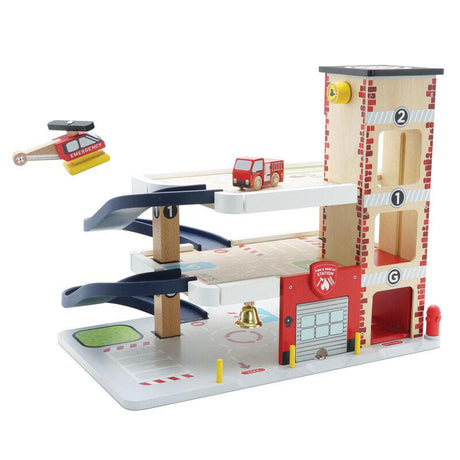
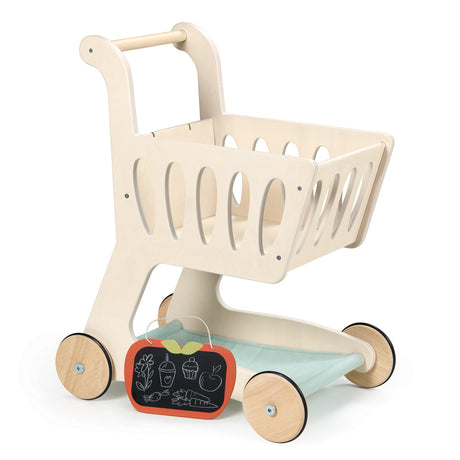
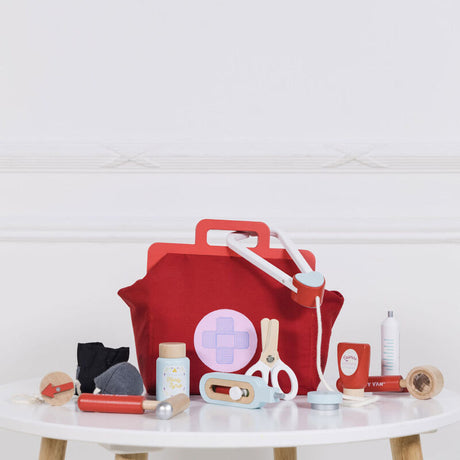
Pretend Play toys give children familiar starting points for imaginative play — from play kitchens, shops and dress-ups to dolls, vehicles and small world play. Rather than prescribing one way to play, they create opportunities for children to explore roles, recreate everyday experiences and invent stories of their own.

Explore the pathways


Introduction

Pretend Play is open-ended play where children use imagination to give people, objects, places or situations a meaning beyond what is literally there. A child might become the cook, the doctor, the shopkeeper or the parent. A block might become a phone. A cushion might become a boat. The important part is not the object itself, but the meaning the child gives it.

This kind of play often moves between real life and invented life. Children may recreate routines they know, such as cooking, caring, shopping or fixing things. They may also invent worlds that are completely their own, or mix familiar experiences with fantasy.

Pretend Play can happen alone, beside other children or as shared play. It may involve pretend play toys, household objects, loose parts or no objects at all. Pretend Play toys can be useful because they make certain roles easy to recognise — a kitchen invites cooking, a doctor kit invites caring, a market stall invites shopping — but they are invitations, not requirements.

We also see pretend play and real participation as belonging together. A child can enjoy serving imaginary coffee and also help with a small real-life task when it is appropriate. The pretend version gives them room to direct the story; the real version lets them be included in the life they are so often trying to understand.

Why It Matters

Pretend Play matters because it gives children a way to explore experiences, ideas and relationships through imagination. Instead of only watching the world happen around them, children can step into it, change it, repeat it, test it and make it their own.

In pretend play, there is no single correct answer. The child decides who they are, what happens next and how the story changes. They might prepare an imaginary meal, care for a doll, run a shop, rescue someone, build a town or turn one idea into another halfway through the game.

That freedom is important. Pretend Play provides opportunities for children to recreate familiar routines, invent new scenarios, make decisions, solve small problems and adapt their ideas as play unfolds. It can happen quietly on their own, alongside another child or as a shared story with siblings, friends or adults.

We are careful not to overclaim what any toy or play category can do. A toy does not create creativity, confidence or understanding simply by being present in a playroom. What matters is what the play allows the child to do: choose, imagine, rearrange, repeat, collaborate, take a role and explore ideas without pressure to produce a perfect result.

Learning Themes

Language & Communication

Pretend Play often creates natural reasons for children to communicate. They may describe what they are doing, speak as a character, ask questions, explain a plan, negotiate roles or tell a story as it unfolds. Some children talk constantly during play, while others use gestures, actions, quiet narration or conversations between toys. All of these can be meaningful ways to take part. Parents can support these moments by listening, joining gently when invited, and asking simple questions that leave room for the child’s own ideas.

Social & Emotional Growth

Pretend Play can give children opportunities to explore roles, relationships and feelings through stories that feel safe and familiar. A child may comfort a toy, care for an animal, welcome a customer or act out a family routine. When play is shared, children may also practise listening to others, adapting ideas and negotiating what happens next. Solitary Pretend Play can be meaningful too, especially when children create their own characters, conversations and emotional stories at their own pace.

Thinking & Learning

Pretend Play invites children to ask, ‘What if?’ They decide who the characters are, what the setting becomes, what problem appears and how the story might continue. A box can become a rocket, a café can run out of cake, or a backyard can become a dinosaur world. These moments allow children to plan, adapt, sequence events and try out solutions without needing one correct answer. Parents can encourage this by leaving space for the child to lead and asking, ‘What do you think should happen next?’
A thoughtful place to begin

Start with the child, not the toy

One of the most helpful shifts is to stop asking, “Which pretend play toy is best?” and start asking, “What does my child already love pretending about?”

Children often show you the doorway in. The child who follows you into the kitchen may be interested in cooking, serving or café play. The child who carries objects from room to room may be exploring transport, shopping or caring routines. The child who lines up soft toys might be creating a family, a classroom, a vet clinic or a bedtime story.

These behaviours are clues, not labels. A child who loves caring play today may become fascinated by vehicles next month. A child who builds tiny animal homes may also love cooking dinner for them later. There is no ideal order and no single pathway that suits every child.

Our view is simple: choose from what your child returns to, then leave space for the play to grow. A small beginning can become many different stories over time. Pretend Play does not need to arrive as a complete world. Often, the strongest play begins when a child recognises something they already care about and is given enough freedom to make it their own.

Parent Guidance

You do not need to teach your child how to pretend. More often, the most helpful thing you can do is make room for their ideas to unfold.

Where you can, give play a little time to develop. Some children move into a pretend story quickly; others circle around an idea before the play takes shape. Follow the interests that are already appearing rather than feeling you need to introduce something new every day.

Keep the setup simple. Everyday objects such as boxes, blankets, cushions, baskets, scarves or spoons can become part of pretend play when children are free to decide what they mean. If the play space feels crowded or ignored, try putting some things away and rotating them later. Sometimes fewer choices make it easier for a child to begin.

If your child is not engaging with a play setup, it does not automatically mean it was the wrong choice. It may be in the wrong room, there may be too much available, or they may need a short shared beginning. Sit down for ten minutes, accept the role they give you and respond without taking over. Then step back when the play has momentum.

It can also help to place pretend play near real family life. A child pretending to cook may enjoy being near the kitchen. A child who loves cleaning may want something real to wipe. Pretend and real participation do not need to compete; when appropriate, they can sit comfortably alongside one another.

Choosing Guidance

Choosing Pretend Play resources is less about finding the biggest set and more about choosing something that gives your child room to create their own stories.

Start by watching your child. What do they naturally pretend? What do they carry, care for, build, sort, cook, rescue or dress up as? Their existing interests are usually a better guide than trends, popularity or a long list of accessories.

A useful approach is to begin with one strong anchor and a small number of well-chosen props. The anchor gives the play somewhere to begin; the props give the child enough detail to act, carry, serve, care, build or arrange. You do not need to buy an entire matching world at once. Leaving space for future additions can help the play grow with your child’s changing ideas.

Look for resources that let the child do the work. The child should be able to decide who they are, what happens next and what the object becomes today. Features can be entertaining, but they do not automatically make better Pretend Play if they leave the child with less to decide.

Practical fit matters too. Consider whether the size works in your home, whether your child can access it independently, whether it feels stable and usable, and whether it can connect with things you already own. A resource that can become more than one thing over time often remains useful for longer.

Most importantly, avoid overbuying. More pieces do not guarantee richer play. A thoughtful, flexible setup that reflects your child’s interests is often far more useful than a crowded play space full of things they do not yet need.

Frequently asked questions

Questions parents often ask

What is pretend play for children at home?
Pretend play is play in which a child gives an object, action or situation a meaning beyond what is literally happening. At home, that might look like feeding an empty spoon to a doll, turning a block into a phone, making a café on the living-room floor or acting out familiar family routines. It often starts with children copying everyday actions, then may grow into roles, stories and made-up worlds over time.
Which pretend play pathways fit my child?
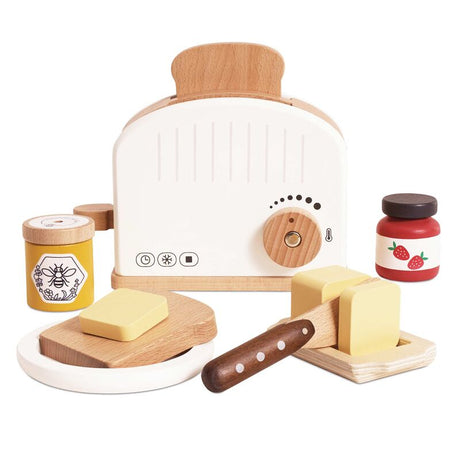
Start with what your child is already drawn to, rather than looking for a single correct pathway. A child who loves helping with meals may enjoy Kitchen Play. A child who likes costumes and characters may be drawn to Dress Up. A child who enjoys caring routines may connect with Looking After Others, while a child who prefers moving figures, animals or vehicles through miniature scenes may enjoy Small World Play. These pathways are not ranked, and children often move between them depending on their mood, interests and the stories they want to create.