Click & Collect or 24hr Dispatch*

Build & Construct · Classic Building

Building Blocks & Classic Building Toys

Building blocks are the oldest toy in the cupboard for a reason: a plain wooden block does almost nothing on its own, which is exactly why a child can make it into everything. There's no screen, no battery, no single right answer — just a child, a pile of blocks, and whatever they decide to build today. That open-endedness is what makes block play one of the most genuinely developmental things a young child can do, and it's why families come back to a good set of blocks for years. This is the home for that play — wooden blocks, stacking blocks and large sets — with a guide to choosing the right blocks for your child's stage.

Start here

Two things guide the choice: roughly what stage of block play your child is at (carrying, stacking, bridging, enclosing or representational building), and whether they want plenty of simple blocks to stack or more variety to build complex, named structures.

If your child gets frustrated when loose blocks topple and wants builds that hold together, magnetic tiles and blocks are the natural companion — many families own both.

View as

What Building Blocks Actually Develop

It's easy to dismiss blocks as basic, but the research on block play is striking. When a child stacks, balances and arranges blocks they're building spatial reasoning — the ability to picture how shapes fit, rotate and relate in three dimensions — which studies link directly to later achievement in maths, geometry and engineering. They're also quietly practising early physics (balance, symmetry, cause and effect), fine motor control and hand-eye coordination through the precise movements of picking up and placing each piece, and problem-solving as they work out why a tower fell and how to stop it next time.

There's a social and emotional side too. Block play is a natural setting for children to build together — negotiating, sharing and planning — and a calming, absorbing solo activity that lets a child work through frustration when a build collapses and the satisfaction when it stands. Crucially, none of this needs instructions or adult direction; it happens on its own when a child has open-ended materials and time. That's the quiet case for blocks: they look simple, but few toys develop so many things at once, and almost none do it for as many years.

Block Play by Age What It Develops Wooden, Stacking & Large Open-Ended Play
Want Pieces That Connect?

When a Child Wants Builds That Hold Together

Classic blocks are loose by design — they stack and balance but don't lock together, which is exactly what makes them open-ended. But some children get frustrated when a build collapses and want pieces that stay put so they can make something taller and more ambitious. If that sounds like your child, the magnetic building range — magnetic tiles and blocks that click together and hold — is the natural companion to classic blocks, and many families happily own both for the different kinds of play they offer.

Building Blocks: The Toy a Child Never Outgrows
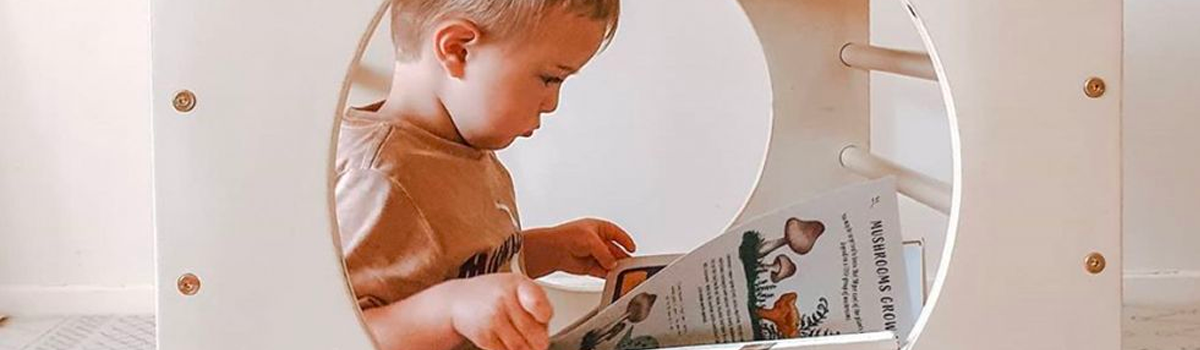
A good set of building blocks is one of the few toys that genuinely grows with a child — from a toddler's first wobbly tower to a five-year-old's elaborate city — while quietly building spatial reasoning, problem-solving and imagination along the way. Simple, open-ended and endlessly reusable, blocks earn their place for years.

Explore the range: wooden blocks, stacking blocks and large block sets — or see the wider Build & Construct range, including magnetic building for builds that hold together.

Frequently asked questions

Questions parents often ask

How many blocks does my child need to start?

More than you'd think — running out of blocks mid-build is the main thing that frustrates a child and ends the play. A generous set of simple blocks serves younger children stacking and lining up, while older children building complex structures benefit from both quantity and variety (arches, cylinders, planks). As a rule of thumb, buy a larger open-ended set rather than a small one; blocks are a toy where having plenty genuinely improves the play and the set lasts for years anyway.

Are wooden blocks worth it, or will my child get bored?

Blocks are one of the few toys children genuinely don't outgrow, which makes a good set excellent value. The same box that a two-year-old stacks into wobbly towers becomes the raw material for a five-year-old's elaborate cities — no upgrade needed, because the child's imagination does the upgrading. That's the opposite of a single-purpose toy that's mastered and abandoned in weeks. It's worth buying a generous, quality set early rather than a small one, since you'll get years from it.

Why choose plain wooden blocks over blocks that lock together?

Plain blocks are open-ended precisely because they don't lock — the same blocks become a tower, a bridge, a garage and back again, with the child doing all the imagining. That open-endedness is what keeps them engaging for years. Blocks that lock together (like magnetic tiles) are wonderful for a different kind of play — taller, more ambitious builds that hold — and suit children who get frustrated when loose blocks topple. They're companions rather than competitors; many families own both.

What's the difference between wooden blocks, stacking blocks and large blocks?

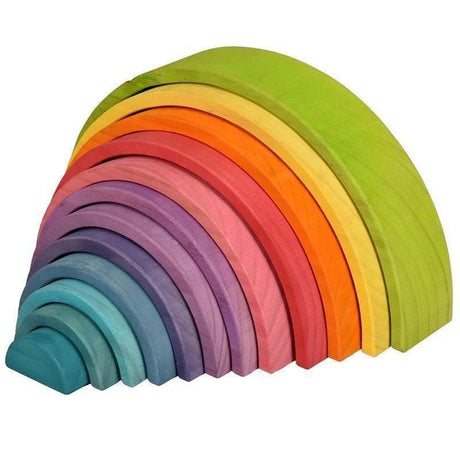
Wooden blocks are the versatile classic — a range of shapes for everything from first towers to complex builds, and usually the longest-lasting choice. Stacking blocks focus on the balance-and-topple play younger children love, where the crash is half the fun and early balance lessons happen naturally. Large block sets are about scale — big blocks for structures a child can climb into or walk around, adding a whole-body, imaginative dimension. Many families end up with a mix; if unsure, start with wooden blocks.

What do building blocks teach or develop?

More than almost any other toy. Block play builds spatial reasoning (linked in research to later maths and engineering ability), early physics through balance, symmetry and cause-and-effect, fine motor skills and hand-eye coordination, and problem-solving as children work out why a structure fell. There's a social-emotional side too: building together develops negotiation and sharing, while solo block play is calming and absorbing. Best of all it needs no instructions — the learning happens naturally through open-ended play.

What age are building blocks for?

Blocks suit a remarkably wide age range because play evolves through stages. Around 1-2 years children mostly carry, fill and empty rather than build; around 2-3 they stack towers and lay rows; around 3 they start bridging (a block across two others); around 3-4 they build enclosures; and from around 4-5 they build representational structures — castles, cities, garages — with elaborate stories. Children move at their own pace and revisit earlier stages, so a good set stays useful for years.