Click & Collect or 24hr Dispatch*

Open-Ended Play Guide

How To Build An Open-Ended Play Collection On A Budget

One of the biggest misconceptions about open-ended play is that it requires a huge investment. Spend a few minutes scrolling social media and it's easy to believe every child needs shelves filled with rainbows, block sets, loose parts, building boards and beautifully curated collections before meaningful play can begin.

We understand why parents feel this way. The images are inspiring. The toys are beautiful. The collections look complete.

But after years of helping families build open-ended play spaces, we've learned something interesting. The most successful collections rarely start with a complete playroom.

They start with a single toy. Then they grow alongside the child.

If you're interested in open-ended play but don't want to spend hundreds or thousands of dollars all at once, this is the approach we'd recommend.

10 minute read Updated 2026 By My Happy Helpers
toddler playing with wooden building blocks during open ended play
"The goal isn't to build the biggest collection.

The goal is to build the most useful one."

The Collection Parents Build Is Often Different To The Collection Children Need

One of the most interesting things we've observed at My Happy Helpers is that adults and children often approach toy collections very differently. Adults naturally think in terms of completeness.

We like sets. Categories. Systems. We want the matching accessories. The next piece. The upgraded version. The collection feels like it should be finished.

Children rarely think this way. Children are surprisingly content with possibility. Give a child a rainbow and they'll spend weeks discovering new ways to use it. Add a block set and suddenly both toys become more valuable. Not because the collection is larger. Because the possibilities have expanded.

This is one of the biggest mindset shifts we encourage families to make. The goal isn't to build the biggest collection. The goal is to build the most useful one. Those are not always the same thing.

Rule #1: Buy For Possibilities, Not Pieces

One of the most useful questions we encourage parents to ask is:

"How many different ways can this toy be used?"

The answer often reveals more about its value than the price tag. A toy that can only be used one way may provide a wonderful experience, but that experience eventually reaches an endpoint. Open-ended toys work differently. A single toy can become something new every time it is picked up. A bridge. A tunnel. A road. A castle. A cave. A mountain. A shop. A zoo.

The possibilities continue changing because the child continues changing.

When building a collection on a budget, versatility should always come before quantity.

Stage One: Start With A Rainbow

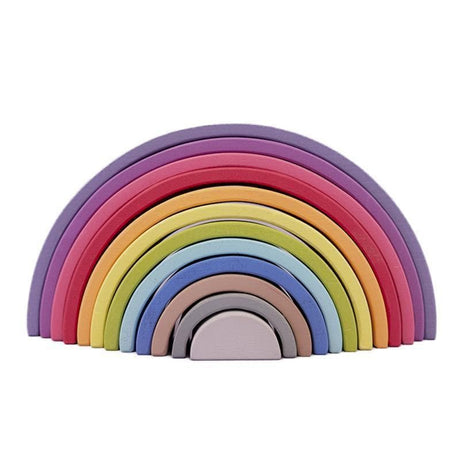
If we were building an open-ended collection from scratch today, we would begin with a rainbow stacker. There is a reason rainbow stackers have become one of the most recognisable open-ended toys in the world. They are remarkably versatile.

Children use them for:

  • Stacking
  • Balancing
  • Construction
  • Small world play
  • Sorting
  • Imaginative storytelling

A rainbow can become a bridge one day and a mountain range the next. It can support toddlers who are learning basic coordination and older children creating elaborate imaginary worlds. Most importantly, a rainbow leaves room for growth.

It doesn't tell a child how to play. It asks what they would like it to become.

For many families, a rainbow offers one of the best returns on investment in the entire open-ended play category.

Stage Two: Add A Block Set

Once a rainbow becomes part of everyday play, the next addition we recommend is a quality block set. Blocks are often underestimated because they seem simple. Yet they remain one of the most enduring play materials ever created. The reason is straightforward. Blocks multiply possibilities.

Children can build:

  • Towers
  • Cities
  • Roads
  • Bridges
  • Animal habitats
  • Shops
  • Castles
  • Vehicles

And when blocks are combined with a rainbow, entirely new forms of play begin to emerge. The collection becomes more than the individual pieces. It becomes a system.

This is where open-ended play starts becoming truly powerful.

Stage Three: Add Building Boards

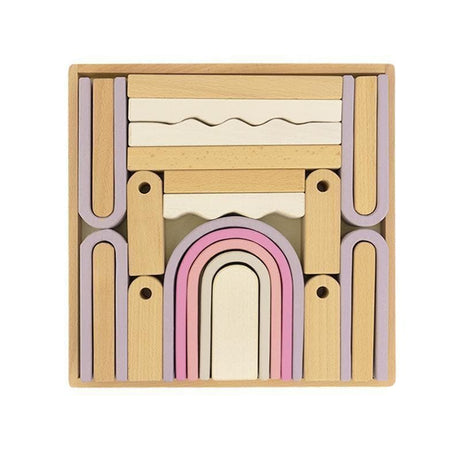
Building boards are often the next step because they dramatically expand construction possibilities. Suddenly children can create:

  • Multi-level structures
  • Roofs
  • Bridges
  • Platforms
  • Ramps
  • Roads

The rainbow and blocks gain new purpose. The collection becomes more interconnected. This is one of the key principles we encourage families to think about. Every new toy should increase the value of the toys already owned. The best collections are not built from individual purchases.

They are built from products that work together.

Stage Four: Introduce Loose Parts

Loose parts often generate a great deal of excitement among parents. And for good reason. They are incredibly versatile. However, we generally recommend introducing loose parts after the foundation pieces are already established. The reason is simple.

Loose parts tend to shine brightest when children already have structures, landscapes and environments to incorporate them into. Once blocks, rainbows and building boards are in place, loose parts can become:

  • Treasure
  • Food
  • Currency
  • Building materials
  • Characters
  • Decorative elements

They add depth and storytelling opportunities to existing play. Rather than being the starting point, they often become the finishing layer.

The Most Valuable Toy Is Often The One You Already Own

When families begin exploring open-ended play, there is often a temptation to focus on what comes next. The next rainbow. The next block set. The next loose parts collection. The next purchase.

But some of the richest play we've seen has happened immediately after a new piece is added to an existing collection.

Not because the new toy was extraordinary. Because it changed the way the existing toys were used. A building board can transform a block set. A handful of loose parts can completely change a rainbow. A simple addition can unlock dozens of new possibilities. This is why we encourage parents to think less about individual toys and more about relationships between toys.

The most successful collections behave like ecosystems.

Every new piece increases the value of the pieces that came before it.

natural wooden building blocks toy set

What We'd Skip Initially

This may be controversial. But if you're building a collection on a budget, there are several things we would usually avoid purchasing early.

These include:

  • Large themed accessory packs
  • Decorative additions
  • Highly specialised pieces
  • Extensive storage systems
  • Trend-driven purchases

Many of these products can be wonderful additions later. But they rarely provide the same play value as foundational pieces. Before expanding outward, focus on building a strong core collection. The accessories will always be there later.

Example Collections By Budget

If we were advising a family starting from scratch, here's how we would think about different budgets.

Around $100

  • Rainbow stacker

Focus on versatility and learning how your child naturally engages with open-ended play.

Around $300

  • Rainbow stacker
  • Smaller wooden block set

This combination creates an enormous range of construction and imaginative play opportunities.

Around $500

  • Rainbow stacker
  • Larger wooden block set
  • Building boards

At this stage, the collection begins functioning as a complete open-ended play system.

Around $1,000

  • Rainbow stacker
  • Large wooden block set
  • Building boards
  • Loose parts collection
  • Additional construction elements

This creates a rich ecosystem where toys continually interact and evolve together.

The Most Expensive Mistake Families Make

Interestingly, the biggest mistake is not usually buying the wrong toy. It's buying toys that don't work together. A toy may be wonderful on its own.

But if it doesn't expand the possibilities of the rest of the collection, its long-term value is often limited.

We've seen families spend hundreds of dollars on products that quickly lose relevance because they remain isolated from the rest of the play environment. Meanwhile, a relatively small addition can sometimes transform the way an entire collection is used. The goal isn't to own more toys. The goal is to create more possibilities.

What We've Learned After Helping Families Build Thousands Of Collections

If there is one thing we've learned through years of helping families choose open-ended toys, it's that meaningful play is rarely created by buying everything at once. The families who seem happiest with their collections tend to move slowly. They watch. They observe. They notice what their child returns to. They pay attention to what sparks curiosity. Then they build from there.

Their collections evolve alongside the child.

And perhaps that's why those collections continue getting used long after the excitement of a new purchase has faded. Because the best open-ended play collections aren't really built around toys. They're built around children. The toys simply follow.

Building A Collection That Grows With Childhood

One of the reasons we love open-ended play is that it doesn't have a clear endpoint. The same rainbow that helps a toddler learn balance and coordination may later become part of an elaborate fantasy world. The same blocks that begin as simple towers may eventually become cities, bridges, castles and engineering projects.

As children grow, the toys remain the same. But the play evolves.

That is why we encourage families to think long term. Not in terms of collecting more products. But in terms of creating more opportunities. Because the most successful open-ended play collections are not measured by the number of toys on the shelf. They are measured by the possibilities those toys create. And the best collections are rarely built in a weekend.

They are built gradually, thoughtfully and one meaningful addition at a time.

Explore

Open-Ended Play

}