Click & Collect or 24hr Dispatch*

Build & Construct · Advanced Building & STEM

STEM Building Toys & Engineering Toys for Kids

The best STEM building toys aren't really about raising an engineer. They're about giving a child that one quietly powerful moment — "I didn't think that would work… but it did." These are the construction and engineering toys we've chosen because they reward experimenting over getting it right, and keep a child returning to make their build just a little bit better.


What STEM Building Toys Really Give Children

Most shops define STEM building toys by the acronym — science, technology, engineering, maths — but that's rarely how parents actually think. Parents ask: will this keep my child busy, will they make something themselves, will it challenge them without frustrating them, will they feel proud when it works? The educational outcomes are almost a bonus; the emotional ones are what parents are really shopping for. We think the industry has accidentally made STEM sound like school — words like robotics, mechanics and structural design feel intimidating — when parents are really after something much simpler: a toy that lets their child discover "I can work this out."

That's the lens we use to choose the STEM building toys and engineering toys here. We look for sets that reward experimentation over correctness, that a child can gradually master without constant adult help, and that grow with them rather than being outgrown. Some children create stories; these are the toys for the children who create systems — who'd rather ask "how does that work?" than "who lives here?" If your child constantly asks why, how and what-if, STEM construction gives that curiosity somewhere to go. New to choosing them? Our guide to the best build & construct toys for kids is a good place to start.

STEM Building Toys Engineering Toys Ages 5–7 & Up Build, Test & Improve

STEM Building Toys for the Child Who Asks "What If?"

STEM building toys aren't always the best fit for children who love following instructions — they're often perfect for the children who can't stop asking why, how and what-if. Those children don't want to be told the answer; they want to find it. Give them an engineering toy and they naturally start experimenting rather than reproducing the picture on the box. You'll notice the shift in their language: less "is this right?" and more "what if I try…" — which is a completely different, and far more durable, way of thinking.

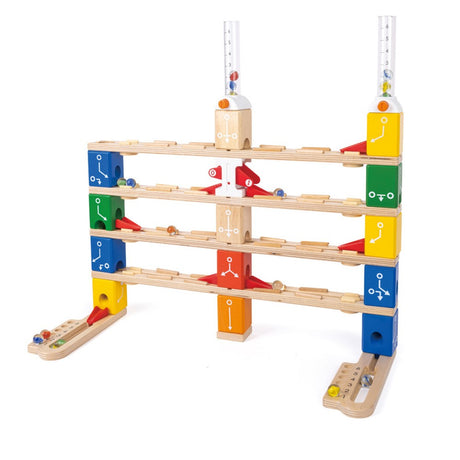
It's also why these toys suit the child who loves systems over stories. Some children imagine through pretend play; others imagine through patterns, mechanisms, movement and connections. For a systems child, building a STEM set is imaginative play — they're imagining how things work instead of who lives where. Neither kind of imagination is better, but if you have a child who'd rather figure something out than act something out, STEM building toys are often the toy that finally "clicks." Pair them with wooden marble runs and science kits and that same curiosity has even more to explore.

When the Instructions Get Ignored (and STEM Building Gets Good)

Parents usually buy a STEM building toy expecting their child to build the models in the booklet — and they will, at first. But the moment most parents describe as the toy truly coming alive is when the instruction booklet disappears. Now the questions change: can I combine two models? can I make it taller? can I add wheels? can I make it move differently? That's when an engineering toy stops being a kit and becomes genuinely open-ended construction — the child is no longer copying a design, they're inventing one.

And with that comes a subtle but important shift in how a child thinks. They stop saying "I'm making a crane" and start saying "I need something that can lift this." The goal changes from building an object to solving a problem — which is exactly how professional designers and engineers actually work. Success changes too: instead of "I finished it," you hear "I fixed it," "I made it stronger," "it finally balanced," "the wheels turn now." The improvements become more satisfying than the completion, and that's the engine that keeps STEM building toys interesting for years.

The Real Lesson STEM Building Toys Teach: Iteration

If there's a single biggest lesson these toys teach, it's iteration — though no child would call it that. A child builds something, then immediately improves it, not because an adult asked, but because they notice it leans, it's unstable, the wheel rubs, it falls apart. So they redesign. Engineers call this iteration; children call it "making it better." Practised over and over through play, it quietly teaches the most useful idea there is: you don't have to get it right the first time, and changing your mind is part of working it out.

That's really the heart of why we stock STEM building toys at all. The magic isn't that they teach engineering concepts — it's that they make a child comfortable with unfinished ideas. Adults often feel uneasy when something isn't complete; children happily build, test, undo, rebuild and try again. That willingness to iterate is exactly what inventors, architects and scientists do every day, and children arrive at it naturally through play — no curriculum, no pressure, just the satisfaction of solving a problem they set for themselves.

STEM Building Toys That Replace the Screen (Without a Fight)

One hope comes up more than almost any other when parents shop for STEM building toys, and it's rarely about education. It's about engagement — parents miss watching their child become genuinely absorbed in something. As one parent put it, "it was the first time in weeks I'd seen him so focused that he forgot to ask for the iPad." That sentence, in different forms, appears again and again. Parents aren't chasing test scores; they're chasing the kind of deep, self-directed focus that a good engineering toy can produce and a screen can't.

And STEM building doesn't always mean quiet concentration, either. Just as often the room fills with "no way!", "look!", "it worked!", "it almost worked!", "try yours now!" — the sound of experimentation rather than silence. With siblings, friendly competition appears without any adult setting it up: can mine hold more, can mine be taller, can mine move faster? It's active, noisy, social engagement — and it's why so many families leave a STEM build assembled on the shelf for days, because the child keeps coming back to tweak, improve and expand it. The project isn't finished; it's evolving.

Which Children Love STEM Building Toys?

If you're wondering whether a STEM building toy will land with your child, a few patterns come up consistently. These toys particularly appeal to children who love figuring things out — who ask "how does that work?" more than "who lives here?" — and who don't mind repeating things, often happily rebuilding the same model five times. They're frequently the detail-noticers, the children who spot that "this wheel is crooked" or "that side is stronger," because in STEM construction those small observations actually matter.

Most of all, they suit the child who's intrigued rather than defeated when something doesn't work — the one who treats a wobble or a collapse as a puzzle rather than a failure. If that sounds like your child, engineering and STEM building toys are often where they thrive. And if it doesn't quite — if yours is more of a storyteller — that's simply a different kind of imagining, and the wider open-ended play range may suit better. There's no better or worse here, just different ways of building a world: some children build stories, others build systems.
Start here

Choosing the Right STEM Building Toy

The best STEM building toy isn't the most advanced — it's the one that challenges your child without frustrating them, then keeps offering the next idea.

Start simpler if:

It's a first construction or engineering set
Your child is newer to building independently
You want models they can succeed at, then build beyond

Step up the challenge if:

They already invent their own builds and combine sets
They love mechanisms, gears and moving parts
You want an expandable system to add to over time
Look for strong connections (pieces that stay together), multiple ways to build, and room for original ideas — that's what keeps a STEM building toy relevant for years rather than weeks.

Why Families Choose Our STEM Building Toys

Chosen to reward experimenting, not just following instructions

Sets a child can gradually master without constant adult help

Expandable systems that grow with your child over years

Dispatched from Melbourne — NDIS registered provider

What Makes a Great STEM Building Toy?

After reading hundreds of parent reviews, the same themes matter far more than the STEM label. First, multiple ways to build — parents lose interest fast when every model looks the same, so the best sets actively encourage experimentation rather than one fixed outcome. Second, strong connections: nothing frustrates a child more than pieces falling apart because of poor design rather than their own choices, so sets that stay together during play are consistently praised.

Third, challenge without constant adult help — parents love toys a child can master progressively and independently, not immediately. Fourth, expandability: many families add to a favourite building system over birthdays and Christmas, so it grows with the child instead of being replaced. And finally, room for original ideas — the best STEM building toys don't just include models, they leave a child asking "what else could I make?" That question is what keeps an engineering toy relevant for years. These are exactly the criteria we use when deciding what to stock.

STEM Building Toys vs Traditional Construction Toys

It's worth being clear about this, because the difference isn't "educational versus fun." Many traditional construction toys focus on reproducing a known object — you build the model on the box, and success means completing it. Many STEM building toys instead encourage a child to solve a design problem, where success means making their own idea actually work. The emphasis shifts from "what am I building?" to "what am I trying to achieve?" — and that small shift changes the entire experience.

Neither is better, and plenty of children love both. A child who wants to step into a familiar, finished build is well served by traditional construction; a child who wants to invent, test and redesign thrives with open-ended STEM building. If you're not sure which yours is, that's genuinely fine — most children move between the two, and our broader Build & Construct range and Advanced Building & STEM sub-hub cover the whole spectrum, from classic blocks to advanced engineering.

STEM Building Toys: Confidence, Not Curriculum
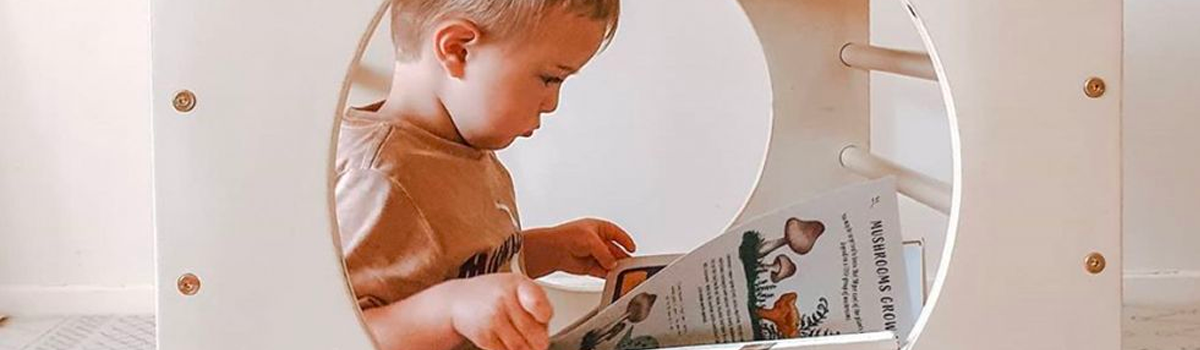
Parents don't really buy STEM building toys hoping their five-year-old becomes an engineer. They hope their child learns something simpler and more lasting: I can work this out, I don't have to get it right first time, my ideas matter, I built that. Those feelings outlast any engineering concept — and they're what a good STEM building toy quietly delivers, one "I didn't think that would work… but it did" at a time.

Explore the range above, and pair it with wooden marble runs, science kits and building boards so your child's curiosity has room to grow. For the full picture, our Advanced Building & STEM sub-hub brings the whole range together.

Frequently asked questions
Do you make your own STEM building toys?

Our STEM building and engineering toys are carefully chosen third-party brands rather than our own-brand range. We curate them against the criteria parents tell us matter most — strong connections, multiple ways to build, the right level of challenge, expandability and room for original ideas — so you're choosing from sets we genuinely rate for open-ended, experiment-led play. Specific brand and warranty details are listed on each product page.

Will STEM building toys actually hold my child's attention?

For many children, yes — and engagement, not education, is what parents most often hope for. Because there's always another improvement to make, STEM building toys can produce deep, self-directed focus; parents frequently describe a child so absorbed they 'forgot to ask for the iPad'. It won't suit every child, but for those who love to tinker, the project becomes something they return to over days, leaving it assembled to tweak and expand rather than packing it away.

How are STEM building toys different from regular construction toys?

The difference isn't 'educational versus fun' — it's the question the toy asks. Many traditional construction toys focus on reproducing a known object: build the model, and you're done. STEM building toys encourage a child to solve a design problem, where success means making their own idea work. The emphasis shifts from 'what am I building?' to 'what am I trying to achieve?' Neither is better, and most children enjoy both at different times.

What makes a good STEM building toy?

Five things come up again and again in parent reviews: multiple ways to build (not one fixed model), strong connections so pieces don't fall apart through poor design, a challenge a child can master gradually without constant adult help, expandability so the system grows over birthdays and Christmases, and room for original ideas. The best sets don't just include models — they leave a child asking 'what else could I make?', which is what keeps them relevant for years.

What kind of child loves STEM building toys?

They especially suit children who love figuring things out — who ask 'how does that work?' more than 'who lives here?' — who don't mind rebuilding something several times, who notice small details (a crooked wheel, a weaker side), and who are intrigued rather than defeated when something doesn't work. If your child creates systems rather than stories, STEM building is often the toy that finally clicks. If they're more of a storyteller, that's simply a different kind of imagining.

Are STEM building toys only for 'STEM kids' or future engineers?

Not at all — and we'd gently steer you away from that framing. Parents don't need to be raising an engineer for these toys to be worthwhile. What STEM building toys really teach is confidence and persistence: 'I can work this out,' 'I don't have to get it right first time,' 'my ideas matter.' Those feelings benefit any child. The engineering concepts are a bonus; the comfort with trying, failing and improving is the real gift.

What age are STEM building toys for?

There are STEM building and engineering toys for a wide range of ages, from simple first construction sets through to advanced mechanism-and-gear builds. A popular bracket is engineering toys for kids around 5–7, when children begin moving from copying models to inventing their own — but the right set depends more on your child's building experience than their exact age. Look for one that challenges them without frustrating them, then lets them build beyond the instructions.

What are STEM building toys?

STEM building toys are construction and engineering sets that encourage children to build, test and improve their own ideas, rather than simply assemble a fixed model. The STEM label refers to science, technology, engineering and maths concepts they touch on — gravity, balance, mechanisms, structure — but what makes them valuable is that they reward experimenting over getting it 'right'. The best ones leave a child asking 'what else could I make?' and keep being interesting for years.