Click & Collect or 24hr Dispatch*

15% Off Sitewide & Clearance*

EOFY15
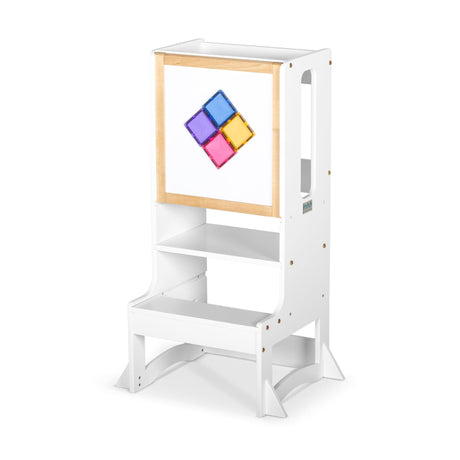
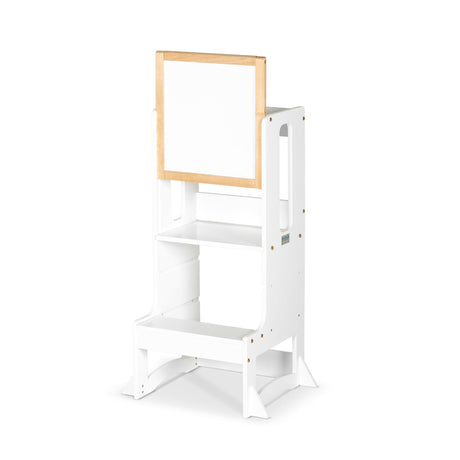
Learning Towers & Toddler Towers For Independent Toddlers

Learning Towers

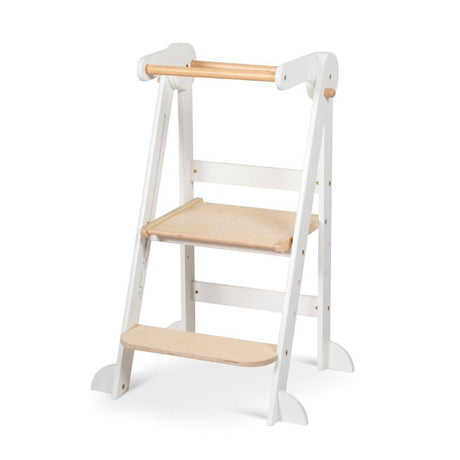
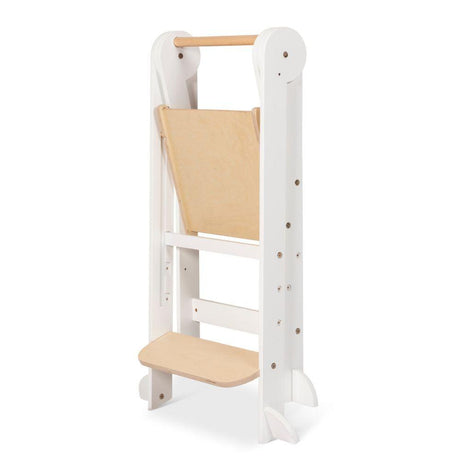
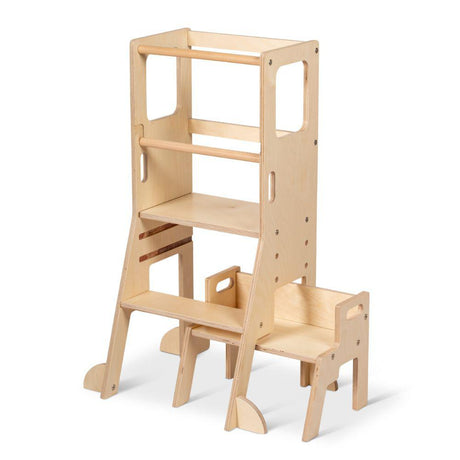
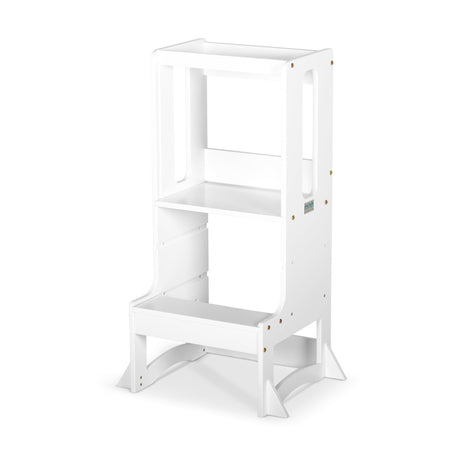
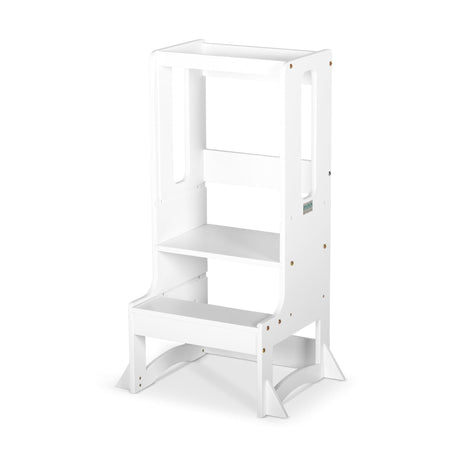
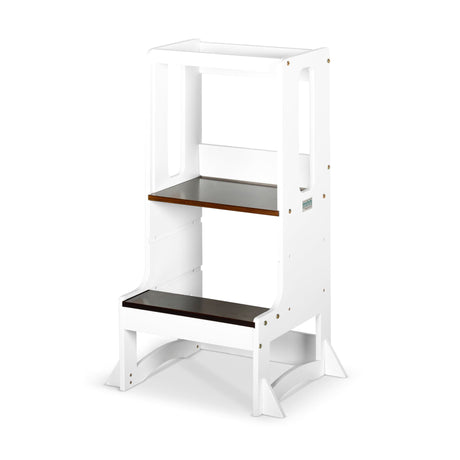
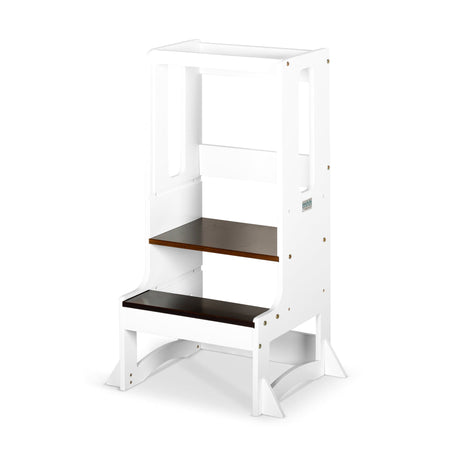
Learning towers help toddlers participate more actively in everyday family life. Often referred to as toddler towers, these elevated platforms support growing independence while helping children build confidence, capability and connection through everyday experiences. This page explores the different learning tower pathways available so families can choose the product that best aligns with their child's needs, home environment and stage of development.

Start here

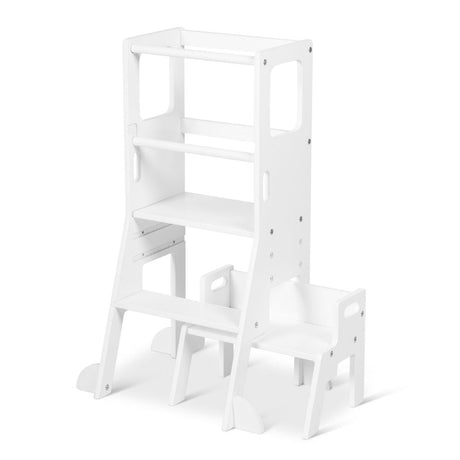
Not all learning towers are designed for the same family. Some prioritise flexibility, others save space, while some are designed for siblings or children transitioning beyond the toddler years.

Understanding the different learning tower pathways can help families choose a solution that supports participation, independence and long-term practicality.

View as

Understanding Learning Towers, Toddler Towers And Everyday Participation

Learning towers are height-adjustable platforms that let toddlers safely stand at bench height and join in everyday family life — from helping cook in the kitchen to washing hands, baking and creative play. Sometimes called toddler towers or kitchen helpers, they give curious children a secure way to reach activities that would otherwise be out of sight, building confidence, independence and practical skills at the stage where simply watching is no longer enough.

At My Happy Helpers we stock one of Australia's largest learning tower ranges — including adjustable, foldable, convertible and twin towers, plus Montessori-inspired designs — all built to meet Australian safety standards. Whether you need a compact folding tower for a small kitchen or a convertible model that grows with your child, our collection helps you find the right learning tower for your family, space and budget.

Growing Independence Everyday Participation Family Connection Practical Life Skills
Learning Tower Safety

Understanding Learning Tower Safety Before You Choose

Safety is one of the most important considerations when choosing a learning tower. Understanding supervision requirements, stability considerations, testing standards and safe usage recommendations can help families make more informed decisions and confidently select the right tower for their child. Explore our dedicated Learning Tower Safety Guide to learn more about what to look for before making your decision.

Why Learning Towers Have Become A Favourite Among Families
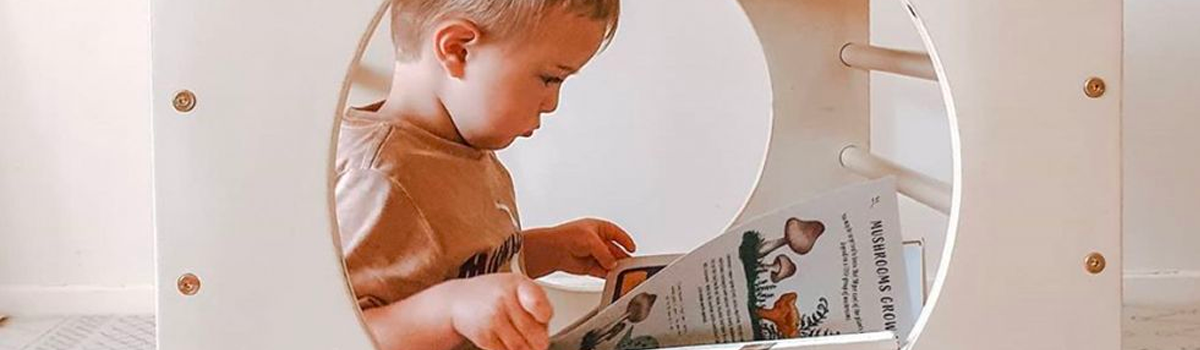
Learning towers have become one of the most popular pieces of children's furniture because they help solve a challenge many families experience during the toddler years. Young children are naturally curious and eager to participate in everyday life, yet much of the world around them exists beyond their physical reach. Kitchen benches, bathroom sinks, creative workspaces and household activities often take place at heights that require constant lifting, carrying or adult assistance.

A learning tower helps bridge this gap by providing a stable and supportive platform that allows children to participate more actively while remaining appropriately supervised. For many families, this shift transforms everyday routines into meaningful opportunities for connection, learning and independence. Rather than watching from the sidelines, children can help prepare meals, wash fruit and vegetables, engage in sensory activities, participate in baking projects or simply observe what is happening from a more accessible perspective.

Parents often use the terms learning tower and toddler tower interchangeably. While the terminology may differ, the purpose remains the same. Both are designed to help children engage more confidently with the world around them by creating opportunities for participation rather than observation.

For many families, the value of a learning tower extends far beyond a single activity or room within the home. Learning towers are frequently used in kitchens, bathrooms, playrooms and creative spaces, supporting a wide variety of experiences throughout early childhood. As children grow, their needs may evolve towards folding towers, convertible towers, twin towers or eventually step stools, but the underlying goal remains consistent: helping children build confidence through meaningful participation.

When choosing a learning tower, families often consider factors such as available space, long-term flexibility, safety, sibling participation and developmental readiness. Understanding these different pathways can help ensure the chosen solution aligns not only with the child's current needs but also with how those needs may change over time.

Ultimately, learning towers are not simply about helping children reach higher surfaces. They are about creating opportunities for independence, confidence, responsibility and connection during some of the most important developmental years of childhood.

Frequently asked questions

Questions parents often ask

How Do Learning Towers Support Independence?

Learning towers are often associated with independence because they help remove physical barriers that prevent children from participating in everyday activities. Many experiences that adults take for granted occur at a height that is inaccessible to toddlers. Without assistance, children often have no choice but to watch from a distance.

A learning tower changes this dynamic by allowing children to safely access activities taking place around them. Whether helping prepare meals, washing hands, exploring creative projects or observing family routines, children are given opportunities to participate rather than simply observe.

Independence is not about leaving children to do things alone. Instead, it develops through supported participation. Learning towers create opportunities for children to practise skills, make choices, contribute to family life and build confidence through real experiences. These moments often feel meaningful because children are engaging in genuine activities rather than simulations designed purely for entertainment.

Over time, repeated participation can help children develop greater confidence, responsibility and self-belief. For many families, this is one of the most valuable benefits a learning tower provides.

When Should A Child Move From A Learning Tower To A Step Stool?

One of the most common questions parents ask is when a child is ready to move beyond a learning tower and begin using a step stool. The answer depends less on age and more on a child's confidence, body awareness, balance and ability to follow safety instructions consistently.

A learning tower provides enclosed support that helps younger children participate safely at bench height while developing confidence and coordination. As children grow, many become increasingly capable of climbing independently, maintaining balance and understanding boundaries around elevated surfaces. At this point, families may begin considering a transition towards a step stool.

The transition is rarely immediate. Many children continue using a learning tower for some activities while using a step stool for others. The decision often depends on the environment, the child's maturity and the level of supervision available. Some children may be ready earlier, while others benefit from the additional support of a tower for longer.

Rather than focusing on a specific age, parents should observe how their child uses the tower. When they consistently demonstrate safe movement, strong balance and an understanding of household expectations, it may be time to explore the next stage of independence.

Why Do Montessori Families Use Learning Towers?

Learning towers are commonly associated with Montessori-inspired environments because they align closely with one of Montessori's core principles: helping children participate meaningfully in real life rather than simply observing it.

Montessori education places significant emphasis on practical life experiences. Activities such as food preparation, cleaning, washing hands and helping around the home are viewed as valuable learning opportunities. Learning towers help make these experiences more accessible by bringing children to an appropriate working height while allowing them to remain actively involved.

Importantly, Montessori families do not use learning towers because they are fashionable pieces of furniture. They use them because they support independence, responsibility and participation. A child standing comfortably at bench height can observe, imitate, practise and contribute in ways that are often difficult from floor level.

Even families who do not follow Montessori principles often appreciate these benefits. The tower becomes a tool that supports confidence and capability by helping children engage more actively with the world around them. In this way, learning towers often fit naturally into a wide range of parenting philosophies and household routines.

Are Learning Towers Worth It?

Whether a learning tower is worth the investment depends largely on how a family intends to use it. For many parents, the value comes from the frequency of use rather than any single activity. Unlike toys that may be used occasionally, learning towers often become part of everyday routines.

Many families discover that a toddler tower quickly becomes one of the most frequently used pieces of children's furniture in the home. Children use them to help prepare meals, wash hands, participate in baking, complete creative activities, engage in sensory play and observe what is happening around them. Because the tower supports participation rather than a specific activity, it can remain relevant across a wide range of daily experiences.

The greatest benefit is often not the tower itself but the opportunities it creates. Many parents report that children become more engaged, confident and interested in helping when they are able to participate alongside adults. Rather than constantly asking to be picked up, children have a dedicated space where they can engage more independently.

For families seeking ways to involve children in everyday life, a learning tower often delivers value through repeated use over an extended period of time.

Are Toddler Towers Safe?

Safety is often the first question parents ask when researching toddler towers, and understandably so. Learning towers are elevated pieces of children's furniture designed to bring toddlers closer to everyday activities, which means safety considerations should always be part of the decision-making process.

When used correctly and under appropriate adult supervision, a well-designed learning tower can provide a safer alternative to children standing on dining chairs, unstable stools or makeshift platforms. However, not all towers are created equally. Stability, construction quality, testing standards, weight ratings and appropriate usage guidelines all play an important role in overall safety.

Parents should look beyond marketing claims and understand how a tower has been designed and tested. Factors such as platform height, stability features, materials and supervision requirements are all important considerations. Families should also ensure that children are developmentally ready and using the tower according to manufacturer recommendations.

Because safety is such an important topic, families are encouraged to review dedicated learning tower safety information before purchasing. Understanding safe usage, testing standards and supervision expectations can help parents make more informed decisions while using their tower with greater confidence.

What Age Should A Child Start Using A Learning Tower?

The appropriate age for a learning tower depends less on a specific birthday and more on a child's physical development and confidence. Most learning towers are introduced once a child can stand steadily and climb with support while remaining under close adult supervision.

Many families begin using a toddler tower somewhere between 12 and 18 months, although readiness varies considerably from child to child. The most important consideration is whether the child demonstrates sufficient balance, stability and body awareness to safely enter and exit the platform according to the manufacturer's recommendations.

Parents are often surprised by how quickly toddlers become interested in participating in household activities. Once children begin seeking opportunities to help, observe and interact with the world at bench height, a learning tower can provide a safer alternative to constantly lifting them or balancing them on adult furniture.

Regardless of age, supervision remains essential. Learning towers are designed to support participation, not independent access to potentially hazardous areas. Families should always follow manufacturer guidance and ensure the tower is used appropriately within its intended environment.

What Is The Difference Between A Learning Tower And A Toddler Tower?

In most cases, there is no meaningful difference between a learning tower and a toddler tower. The terms are often used interchangeably by parents, retailers and educators to describe the same category of elevated children's furniture designed to support participation and independence.

The term "learning tower" originated from Montessori-inspired approaches that emphasise children's involvement in everyday activities and practical life experiences. The term "toddler tower" has become increasingly popular because it more clearly describes who the product is designed for. As a result, many families searching online may use either phrase depending on their familiarity with Montessori terminology.

While the names differ, the purpose remains the same. Both learning towers and toddler towers are designed to help children safely access activities that would otherwise be beyond their reach. Whether a family is baking, preparing meals, completing creative projects or encouraging independent hand washing, the goal is to support participation rather than observation.

When researching products, parents should focus less on the name and more on factors such as safety, stability, adjustability, age suitability and how the tower will fit into everyday family routines.

What Is A Toddler Tower?

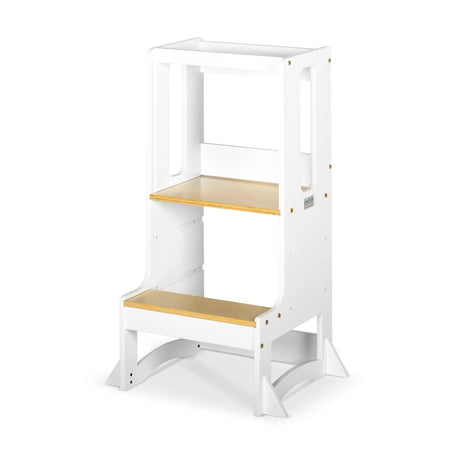
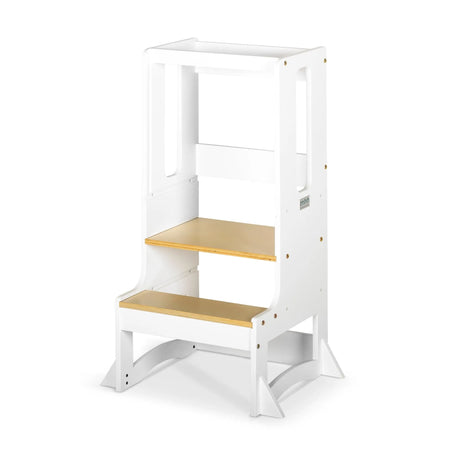
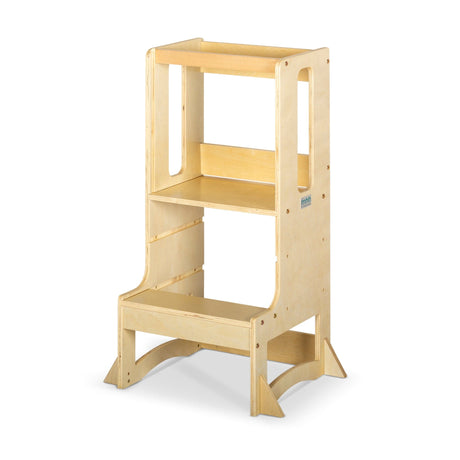
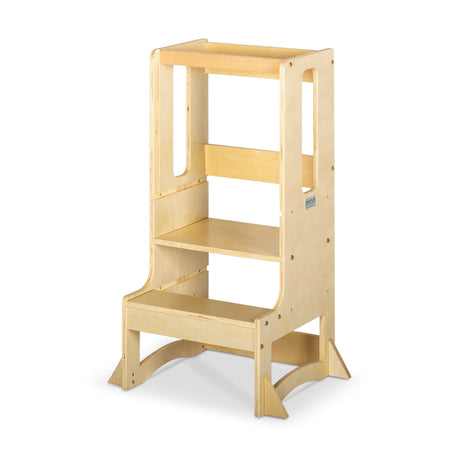
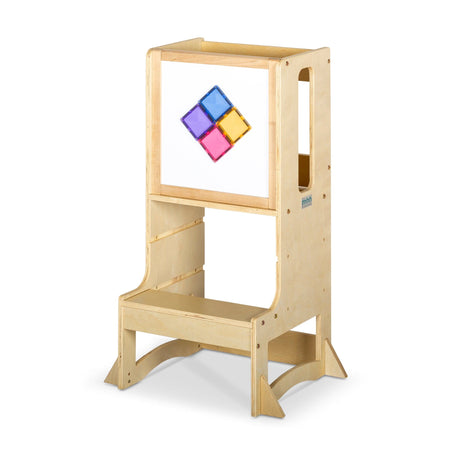
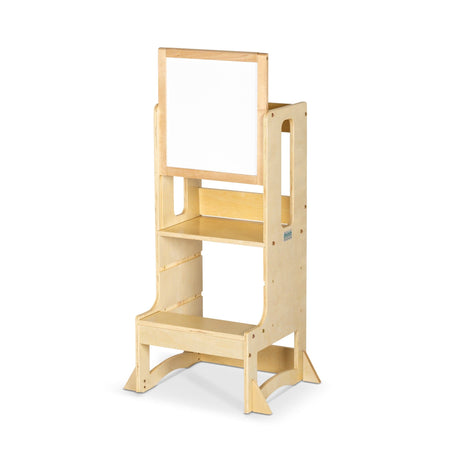
A toddler tower is a child-sized platform designed to help young children safely reach bench-height activities while remaining within arm's reach of a supervising adult. Toddler towers are often referred to as learning towers, and most parents use the two terms interchangeably when researching products online.

The purpose of a toddler tower is not simply to make a child taller. It is to help them participate more actively in everyday family life. During the toddler years, many children become increasingly curious about what adults are doing. They want to help prepare meals, wash their hands independently, explore sensory activities and participate in routines taking place around them. Without a tower, these experiences often require parents to constantly lift, carry or hold their child.

A toddler tower creates a stable elevated platform that allows children to engage more comfortably in these experiences while remaining appropriately supervised. For many families, the value extends well beyond the kitchen. Learning towers are frequently used for baking, craft activities, sensory play, water play and practical life experiences that encourage confidence and participation. Rather than watching from the sidelines, children are given opportunities to become active participants in everyday life.