Click & Collect or 24hr Dispatch*

15% Off Sitewide & Clearance*

EOFY15
Learning To Tell The Time

Learning Clocks & Telling Time Toys For Kids


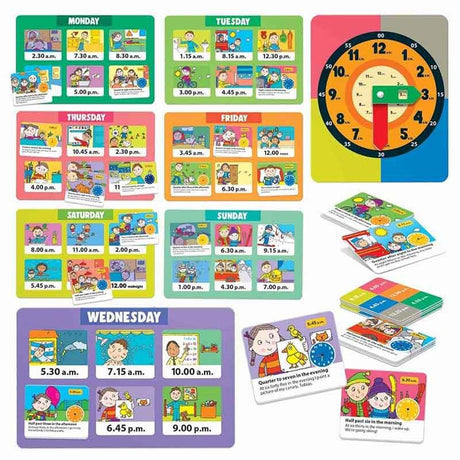
Learning to tell the time is one of the biggest milestones in early maths. From understanding daily routines to reading analogue clocks, children need more than number recognition alone. Explore learning clocks, educational clock toys and telling time activities designed to help little ones build confidence with hours, minutes and real-world time concepts through hands-on play.


How To Teach Telling Time Through Everyday Routines

Why Learning To Tell The Time Feels So Challenging For Children

Many children can confidently count, recognise numbers and complete simple maths activities long before they can tell the time. That's because reading a clock requires several skills working together at once. Children need to understand number order, sequencing, counting intervals and the relationship between clock hands and passing time.

Learning clocks help make these abstract concepts visible. Instead of simply memorising times, children can physically move clock hands, explore routines and begin understanding how time works in everyday life. Whether your little one is learning o'clock times, practising half past or beginning to understand minutes, educational clock toys provide a hands-on pathway to greater confidence.

Learning Clocks Daily Routines School Readiness Telling Time

Time Becomes Visible


Time is difficult for young children because it cannot be touched or seen. Learning clocks help children visualise passing time by connecting clock hands, numbers and routines in a way that feels concrete and understandable.

Build Real-World Independence

Understanding time helps children navigate daily life more confidently. From knowing when it's time for school to understanding bedtime routines, telling time supports independence and decision-making.

Develop Skills Beyond Maths


Learning to tell the time encourages sequencing, logical thinking, attention to detail and pattern recognition. These skills support learning across many areas beyond mathematics.

Choosing The Right Time Learning Resource

Is Your Child Learning About Time Or Learning To Read A Clock?

One of the biggest mistakes parents make is assuming that understanding daily routines automatically means a child is ready to tell the time. Time awareness and clock reading are different stages of learning. Choosing the right educational clock depends on where your child currently sits in that journey.

Choose Beginner Learning Clocks If Your Child

  • Understands routines but cannot read a clock Is learning the difference between morning and afternoon Recognises numbers but struggles to apply them to time Has never used a teaching clock before Is beginning to ask questions about time Needs a simple introduction to clocks and clock hands

Choose Advanced Time Learning Resources If Your Child

  • Understands o'clock times consistently Can identify clock numbers confidently Is ready to learn half past and quarter past Wants to tell the time independently Is preparing for school-based time activities Understands how routines connect to specific times
The best learning clock is one that matches your child's current understanding. Children build confidence fastest when new concepts feel achievable. Starting with age-appropriate time learning activities often leads to greater long-term success than introducing complex clock concepts too early.

Why Families Choose Learning Clocks

Encourages problem solving and logical thinking

Makes abstract time concepts easier to understand

Encourages school readiness through hands-on learning

What Should Parents Look For In A Learning Clock?

A quality learning clock should do more than simply display numbers. The most effective educational clocks allow children to physically manipulate clock hands, explore different times and connect time concepts to everyday experiences. Hands-on interaction helps children understand relationships between hours, minutes and routines in a way that static diagrams often cannot achieve.

Look for resources that grow alongside your child. Beginner learners may benefit from simple teaching clocks that focus on hours and basic time awareness, while more advanced learners may be ready to explore half past, quarter past and minute intervals. A well-designed learning clock can remain useful across multiple stages of development, making it a valuable educational resource that supports long-term learning.

When A Learning Clock May Not Be The Right Next Step

Learning clocks are most effective when children already have a basic understanding of numbers and counting. If your child is still learning to recognise numbers consistently, it may be worth focusing on number recognition toys before introducing clock-reading activities. Time learning relies heavily on a child's ability to identify numbers quickly and understand sequencing.

Similarly, children who are still developing one-to-one counting skills may benefit from counting frames, abacuses or early maths resources before moving into more advanced time concepts. Telling the time combines several foundational maths skills, and children often learn more confidently when these foundations are already established.

The goal is not to rush time learning. The goal is to introduce it when children are ready. Educational clocks work best when they build upon existing skills rather than replacing them. Matching the resource to your child's current stage often leads to greater confidence, stronger engagement and more successful long-term learning outcomes.

Helping Little Ones Understand Time With Confidence
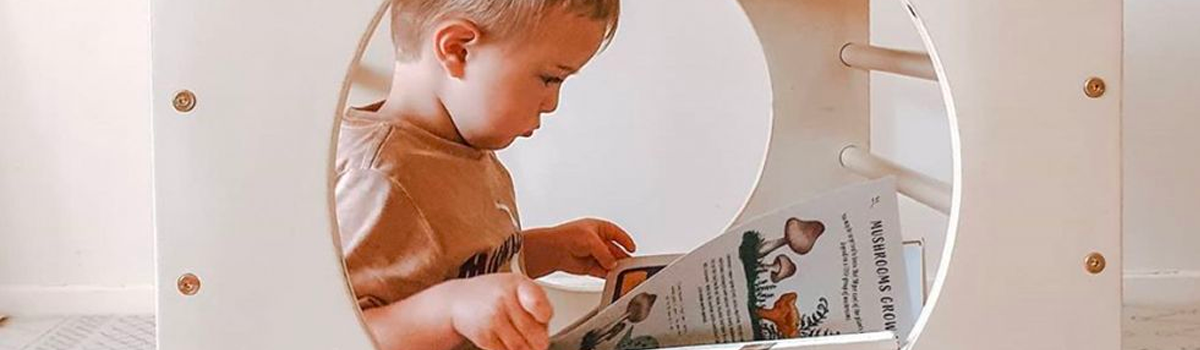
Learning to tell the time is an important milestone that supports independence, confidence and everyday problem solving. While clocks can feel complicated at first, children often learn best when time concepts are introduced through play, exploration and hands-on experiences rather than memorisation alone.

Educational clocks and telling time activities help transform an abstract concept into something children can see, touch and understand. By connecting clock faces with daily routines, hours, minutes and real-life experiences, children gradually develop the confidence needed to read clocks independently.

Whether your little one is just beginning to explore o'clock times or is ready to understand more advanced time concepts, learning clocks provide a supportive pathway towards stronger mathematical understanding and greater everyday independence.

Frequently asked questions
Can learning to tell the time help children become more independent?

Yes. Learning to tell the time is closely connected to independence because it helps children understand and manage their daily routines more confidently. When children begin recognising specific times associated with familiar events, they develop a stronger sense of responsibility and predictability throughout the day. Instead of relying entirely on adults for reminders, they can start understanding what comes next and when activities are expected to happen.

Educational clocks support this process by helping children connect time with real-world situations. Understanding when it is time to get ready for school, begin homework, tidy up toys or prepare for bed encourages greater self-awareness and confidence. These skills often become increasingly valuable as children move through preschool and into primary school.

Beyond clock reading itself, learning to tell the time helps children develop organisational skills, planning abilities and routine awareness. These broader life skills often contribute to greater independence, making time learning an important part of early childhood development as well as mathematical learning.

What should I look for in a quality learning clock?

A quality learning clock should make time concepts easier to understand rather than adding unnecessary complexity. Look for clocks with clearly marked numbers, easy-to-move hands and visual designs that allow children to see relationships between hours and minutes. Simplicity is often more effective than overly complicated designs, particularly for beginners.

The best educational clocks also encourage active participation. Children learn more effectively when they can manipulate clock hands themselves and experiment with different times. Hands-on interaction helps build understanding while encouraging independent problem solving and exploration.

Durability is another important consideration. Learning clocks are often used repeatedly across multiple stages of development, from simple o'clock times through to more advanced concepts involving minutes and elapsed time. A well-designed educational clock can remain useful for several years, providing ongoing value while supporting children's growing confidence and understanding of time.

How do daily routines help children learn to tell the time?

Daily routines provide children with meaningful reference points that make time easier to understand. Rather than viewing clocks as abstract objects, children begin to see them as tools that help explain what happens throughout the day. When a child learns that breakfast happens at a certain time or that bedtime follows a predictable schedule, clock reading starts to feel relevant and useful.

Learning clocks can strengthen this connection by allowing children to recreate familiar events using clock hands. For example, setting a teaching clock to represent school drop-off time or dinner time helps children associate numbers and clock positions with real experiences. This approach often creates stronger understanding than isolated time exercises because it links learning directly to everyday life.

Children are generally more motivated to learn when concepts feel meaningful. By connecting educational clocks to routines they already understand, parents can make telling time more engaging while helping children develop practical skills that support independence and confidence.

What is the difference between understanding time and telling the time?

Many parents assume these are the same skill, but they actually develop separately. Understanding time refers to a child's awareness of routines, sequences and the passing of time throughout the day. A child may understand that breakfast comes before lunch and that bedtime happens after dinner, even if they cannot read a clock. Telling the time, however, requires children to interpret clock faces, understand hours and minutes and connect those symbols to specific points in the day.

This distinction is important because many children develop strong time awareness long before they can accurately read clocks. Learning clocks help bridge the gap between these two skills. By connecting familiar routines to specific times, children gradually learn how clocks communicate information about their day.

Educational clock toys are particularly valuable because they make this connection visible. Children can see how clock hands move, explore different times and understand how routines fit into a daily schedule. Over time, this helps transform general time awareness into genuine clock-reading confidence.

Why do learning clocks work better than worksheets?

Learning clocks provide children with a hands-on experience that worksheets simply cannot replicate. Time is an abstract concept, and many children struggle to understand it when it is presented only through pictures or written exercises. Educational clocks allow children to physically move clock hands, explore different times and observe how changes affect the relationship between hours and minutes.

Hands-on learning often improves engagement because children become active participants rather than passive observers. Instead of memorising answers, they can experiment, make mistakes and discover patterns independently. This type of exploration encourages deeper understanding and often leads to greater confidence over time.

Worksheets can still play a role in reinforcing learning, but many children benefit from first developing practical understanding through educational clock toys and telling time activities. When children understand how clocks work physically, worksheet-based learning often becomes easier and more meaningful.

How can I teach telling time at home?

One of the most effective ways to teach telling time at home is to connect clocks with daily routines that already matter to your child. Rather than focusing only on clock reading exercises, talk about specific times throughout the day. You might point out when breakfast starts, when it's time to leave for school or when bedtime approaches. These conversations help children understand that clocks provide useful information about their everyday lives.

Learning clocks can further strengthen this understanding by allowing children to physically set times and explore routines. For example, you might ask your child to move the clock hands to show lunchtime or bedtime. This type of active participation often leads to stronger learning than simply reading times from a worksheet.

Short, consistent practice sessions are usually more effective than long lessons. By making clocks a natural part of everyday life, children gradually develop confidence while building meaningful connections between time and real-world experiences.

Should children learn analogue or digital clocks first?

Most educational experts recommend introducing analogue clocks before focusing heavily on digital time displays. While digital clocks are often easier to read initially, they do little to explain why time works the way it does. Analogue clocks provide a visual model that helps children understand relationships between hours, minutes and the passing of time.

Learning clocks allow children to physically move the hands and observe how time changes. This helps develop conceptual understanding rather than simple memorisation. Once children understand how clock hands move and how time progresses, digital clocks become much easier to interpret because the underlying concepts are already familiar.

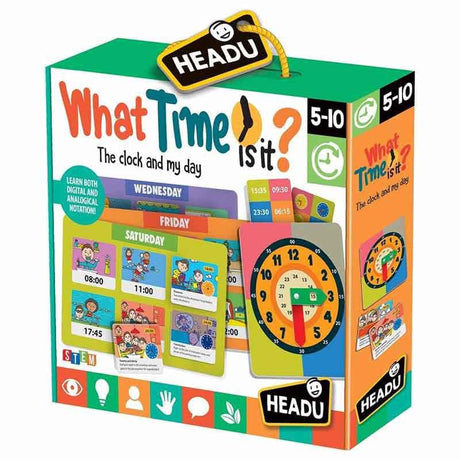
That said, both formats can work together. Many children benefit from seeing analogue and digital times side by side, allowing them to connect visual clock reading with real-world time displays. Educational clocks that support both approaches can provide valuable learning opportunities while helping children build confidence across different formats.

Is it still important for children to learn analogue clocks?

Yes. Although digital clocks are common in everyday life, analogue clocks continue to play an important role in helping children understand how time works. Digital clocks display a specific time, but analogue clocks help children visualise the relationship between hours, minutes and the passage of time itself. This visual understanding often supports deeper learning and helps children develop stronger time awareness.

When children use learning clocks, they can see how clock hands move, how hours progress and how smaller units of time fit within larger periods. This understanding is difficult to achieve through digital displays alone. Analogue clocks also remain a core part of many school curriculums, making familiarity with clock faces an important school readiness skill.

For many children, learning analogue clocks first creates a stronger foundation for understanding time generally. Once children understand how time works visually, digital clocks often become easier to interpret and apply in everyday situations.

What's the best way to teach a child to tell the time?

The most effective way to teach telling time is to begin with simple concepts and gradually build complexity. Children usually learn best by starting with o'clock times before progressing to half past, quarter past and quarter to. Once these foundations are secure, more detailed concepts involving minutes can be introduced.

Learning clocks provide a valuable hands-on resource because children can physically move the hands while exploring different times. This active participation helps create stronger understanding than simply reading times from a worksheet or screen. Linking time learning to everyday routines can also be helpful. For example, showing children what time breakfast begins or when they leave for school helps make time meaningful.

Consistency is important. Short, frequent interactions with educational clocks and telling time activities often lead to better results than occasional formal lessons. Over time, repeated exposure helps children develop confidence and familiarity with clocks.

Why is learning to tell the time difficult for children?

Telling the time is one of the more complex skills children encounter during early learning because it combines several different concepts at once. Children need to recognise numbers, understand sequencing, count in increments and learn that clock hands represent changing units of time. Unlike counting objects, time cannot be touched or seen directly, making it more abstract for young learners.

Many children understand routines before they understand clocks. They know when breakfast happens or when it is bedtime, but they do not yet understand how these events connect to specific times. Learning clocks help make these connections clearer by providing a visual representation of time passing.

Educational clocks and time learning toys allow children to manipulate clock hands, identify numbers and explore time concepts through play. This hands-on approach often makes telling the time easier to understand because children can see relationships developing rather than relying solely on verbal explanations.

What age should children start learning to tell the time?

Most children begin developing an awareness of time between the ages of four and seven, although readiness varies significantly from child to child. Before learning to tell the time, children usually need to recognise numbers, count confidently and understand simple concepts such as before, after, morning and afternoon. This is why many children can identify numbers on a clock long before they can actually read the time.

Learning clocks and telling time activities help bridge this gap by making time visible and interactive. Instead of trying to understand an abstract concept, children can physically move clock hands, explore daily routines and begin recognising how hours and minutes work together. These experiences help create meaningful connections that support long-term understanding.

Parents often worry if their child cannot tell the time as quickly as their peers, but this is a skill that develops gradually through repeated exposure and practice. Educational clocks provide a hands-on way to build confidence while making learning feel enjoyable rather than overwhelming.