
Click & Collect or 24hr Dispatch*

Build & Construct · Advanced Building & STEM

Advanced Building & STEM Toys

STEM toys get a lot of hype, and most of it misses the point. The goal isn't to turn a child into a scientist — it's to protect an instinct they're already born with: the urge to ask why something happens, and to keep poking at it until they find out. The best advanced building and STEM toys simply give that instinct somewhere to go. This is the home for the toys that reward experimenting over following instructions — building and engineering sets, motion play, and hands-on experiments — and a guide to choosing the right one for your child's stage.

Start here

Two questions cover most of it: what stage is your child at (use the age guide above), and what kind of play are they drawn to — movement and marble runs, designing and engineering, or asking why and experimenting?

Not sure if your child is ready for the STEM end? The foundations are laid in simple open-ended building — start with classic building toys and grow into marble runs, engineering and science.

View as

What Makes a Good STEM Toy (and What Doesn't)

Almost any toy can be labelled "STEM," so the label itself tells you very little — which is exactly why we curate this range on one test rather than the marketing: does the toy let a child test an idea and learn from what happens? The single most useful thing to look for is open-ended versus single-outcome. A toy with one right answer (slot piece A into slot B, done) entertains briefly; a toy that can be built and rebuilt a hundred different ways is where real thinking happens. The best STEM toys make the result of a child's choice visible and immediate — the ball reaches the end or it doesn't, the structure stands or it falls — so a child naturally forms a hunch, tries it, and adjusts.

Two other things separate a genuine STEM toy from a gimmick. First, it should be developmentally appropriate — pitched so a child can succeed with effort, not so easy it bores them or so hard they give up. Second, it should let them get things wrong cheaply and safely, because a child only keeps experimenting if a mistake costs nothing. A toy that punishes an error quietly teaches a child to stop taking risks; a good one makes the wrong turn part of the fun. It's the standard we hold everything in this range to.

STEM by Age Open-Ended vs One-Outcome Engineering & Motion Science & Experiments
Younger or Just Starting Out?

Where STEM Play Begins

If your child is younger, or you're not sure they're ready for the engineering and science end yet, the foundations of STEM are laid in simple open-ended building — stacking and balancing, then knocking it down to build again. The classic building toys range is where that starts, and it's the natural step before the hands-on building and experiment play in this range. There's no rush: a child who's spent a year happily building and toppling towers arrives at advanced STEM play with exactly the right instincts.

Advanced Building & STEM: Protecting Curiosity
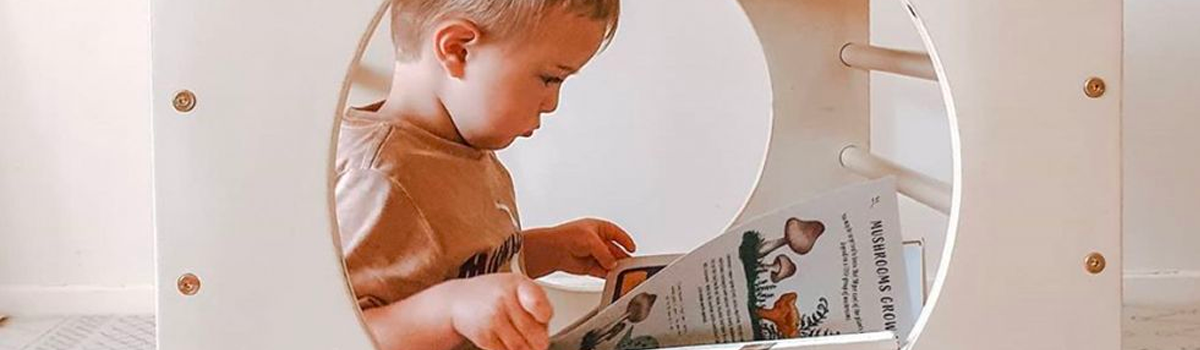
The best advanced building and STEM toy is the one that matches your child's stage and the kind of play they're drawn to — and that lets them get something wrong and have another go without it ever feeling like a lesson. Get that right and you're not teaching STEM; you're protecting the curiosity that was already there.

Explore the range: STEM building toys, marble runs, science kits and Air Toobz — or see the wider Build & Construct range, including classic building for younger builders.

Frequently asked questions

Questions parents often ask

Which STEM toy should I choose for my child?

Start with what they're drawn to. The child who loves movement and cause-and-effect tends to love marble runs and Air Toobz; the one who likes to design and build, STEM building and construction sets; the one always asking 'why', science kits. Most children are a mix and the categories overlap, so you don't need to pick a single type — choose what excites them now, because a child who loves one of these usually grows into the others.

How is this different from the classic building range?

Classic building toys (wooden blocks and similar) are about open-ended construction from scratch — the foundation. The advanced building and STEM range is the next step: marble runs, engineering sets, motion toys like Air Toobz, and science kits, where children move from free building toward testing ideas, planning designs and working to a goal. Many children use both at once, and a younger child building towers today is laying exactly the right groundwork for this range.

Is my child too young / not 'sciencey' enough for STEM toys?

Almost certainly not. STEM play isn't only for children who love science — the child obsessed with cars, marble runs, building or 'why' questions is already doing it. And the foundations start with the simplest open-ended building: stacking and toppling towers is genuine early engineering. If your child seems young for the engineering and science end, start with classic building toys and grow into marble runs, motion play and science kits from there.

Do STEM toys actually help my child learn?

Yes, though not in the way the marketing implies. Research consistently links open-ended, structured construction play with stronger spatial reasoning and problem-solving — skills that underpin later science and maths. But the everyday benefit parents notice is simpler and more important: a child who's comfortable trying something, having it not work, and trying again. That resilience and curiosity matter more than any specific fact, and they only develop if the play stays fun rather than becoming a test.

What makes a good STEM toy?

The best test is open-ended versus single-outcome. A toy with one right answer entertains briefly; one that can be built, tested, changed and rebuilt endlessly is where real thinking happens. Look for toys that make the result of a choice visible and immediate (the ball arrives or it doesn't), that are pitched so a child can succeed with effort, and that let them fail cheaply and safely — because testing, failing and trying again is exactly how STEM thinking develops. The brand or the 'STEM' label matters far less.

What age should a child start with STEM toys?

There's no "too young" — it's about matching the toy to the stage. Ages 1-3 focus on cause and effect and stability (stacking, posting, pouring); ages 3-5 on shapes, balance and simple marble runs; ages 5-7 on real engineering sets, motion play and planning a build; and 7+ on robotics, science kits and structured challenges. The principle at every age is the same: pick something open-ended, pitched just past what your child can already do, and let them work it out.