Click & Collect or 24hr Dispatch*

Giving Children The Freedom To Create, Draw, Paint And Express Their Ideas Their Own Way

Arts & Creative Expression

Some children create because they have something to say. They fill pages with drawings, cover every available surface with artwork and constantly reach for pencils, markers and paint. Arts and creative expression is about open-ended creativity where there is no right answer, no finished outcome to achieve and no instructions to follow. The focus is simply creating.

Start here

Not all creative children express themselves in the same way. Some prefer drawing, others need larger creative spaces, while many thrive when creativity can happen independently without constant setup or supervision.

Understanding how your child naturally creates can help you choose the type of creative experiences they are most likely to return to again and again.

View as

Creative Expression Looks Different For Every Child

Some children communicate through pictures before they can fully explain their ideas with words. Others draw stories, create characters, experiment with colour or simply enjoy the process of making marks and watching their ideas appear on paper. Creative expression is less about producing artwork and more about giving children opportunities to share thoughts, ideas and imagination in ways that feel natural to them.

Parents often assume all art activities are the same, but children approach creativity very differently. Some need freedom and open space. Others prefer colouring, drawing or experimenting with different materials. Understanding these differences helps reduce overwhelm and makes choosing the right creative pathway much easier.

Open-Ended Creativity Drawing & Art Creative Confidence Independent Expression
Sometimes Children Want A Project Rather Than A Blank Page

Creative Expression And Making Activities Solve Different Problems


Some children thrive with complete creative freedom, while others feel more confident when they have a project, goal or finished creation to work towards. Understanding the difference can make choosing creative activities much easier.

There Is No Right Way To Be Creative

Some children draw constantly. Others prefer painting, colouring or experimenting with different creative materials. What matters most is not what they create, but having opportunities to express ideas, explore imagination and build confidence through the creative process.

Children do not need to produce perfect artwork to benefit from creative experiences. A page full of scribbles, a colourful painting or a simple drawing can all represent important moments of self-expression and exploration.

If your child is drawn to creating, trust that instinct. Creative expression often grows naturally when children are given space, materials and freedom to follow their own ideas without worrying about the outcome.

Frequently asked questions

Questions parents often ask

Why Do Some Children Prefer Large-Scale Creative Activities?

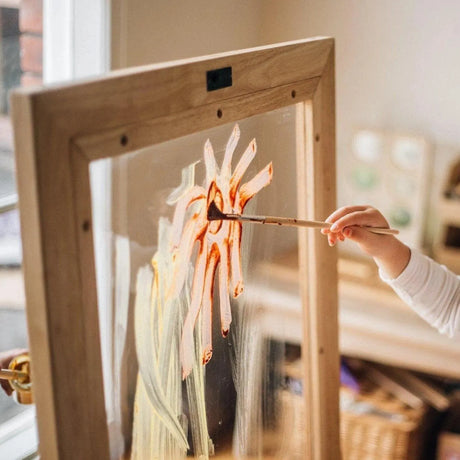
Some children quickly outgrow small pieces of paper and begin seeking larger spaces to create. Parents often notice drawings expanding across multiple pages, artwork covering large surfaces or a preference for standing while creating rather than sitting at a table.

Large-scale creativity allows children to use bigger movements and engage their whole body during the creative process. Instead of focusing only on finger movements, they can reach, stretch, move and interact with their artwork more physically. Many children find this approach more engaging and expressive.

Large creative spaces can also encourage bigger ideas. Children often feel less restricted when they have room to experiment, tell stories and develop artwork without worrying about running out of space.

Recognising when a child is seeking larger creative experiences can help parents better understand how they naturally approach creativity and what environments support their most engaged and confident creative work.

Can Art Activities Support Independent Play?

Creative activities are often one of the most effective ways to encourage independent play because they place control directly in the child's hands. Unlike activities with fixed rules or outcomes, open-ended art allows children to make decisions, solve problems and direct their own experience.

Many parents find that drawing, colouring and creative expression naturally create longer periods of focused engagement because children are working with their own ideas rather than responding to external instructions. A child may begin with a simple drawing and gradually expand it into a larger story or creative project without adult involvement.

Independent creative play also allows children to build confidence in their own thinking. They learn that they can generate ideas, make choices and create something meaningful without needing constant guidance or approval.

While every child differs, creative activities often become valuable opportunities for independent engagement because there is no single correct outcome. Children are free to follow their own interests, imagination and creative instincts.

Why Does My Child Start Creative Activities But Rarely Finish Them?

Parents are often surprised when a child eagerly begins a drawing, painting or creative project only to abandon it halfway through. While adults tend to focus on completing tasks, children frequently approach creative activities very differently.

For many children, the value lies in the process rather than the finished product. They may become fascinated by experimenting with colours, testing materials or exploring an idea. Once that curiosity has been satisfied, they naturally move on to something else.

This behaviour does not necessarily indicate a short attention span or lack of persistence. Children often return to creative ideas later or carry concepts into new activities. The learning and creative thinking frequently continue even after the artwork itself has been set aside.

Parents can sometimes reduce pressure by viewing creative activities as opportunities for exploration rather than projects that must be completed. When the emphasis shifts away from finishing, children often feel more comfortable engaging creatively and following their own interests.

How Much Mess Is Normal During Creative Play?

Mess is often one of the biggest concerns parents have about art and creative activities. While some mess is a natural part of creativity, the amount varies significantly depending on the child, the materials and the type of creative experience.

Many young children learn through experimentation. They mix colours, test tools, explore materials and investigate what happens when different elements interact. These experiments can sometimes look messy from an adult perspective, but they are often valuable parts of the learning process.

Importantly, creative play does not always have to involve significant cleanup. Some children prefer drawing, colouring, water painting or mess-free creative activities that provide opportunities for expression without extensive preparation or tidying.

Rather than focusing solely on preventing mess, it can be helpful to identify the level of preparation and cleanup that feels realistic for your family. Creative experiences are often most successful when they fit comfortably into everyday life rather than becoming a source of stress for parents.

Why Does My Child Refuse To Follow Art Instructions?

Some children happily follow step-by-step creative activities, while others become frustrated the moment instructions are introduced. Parents often interpret this as defiance or a lack of cooperation, but it is frequently a reflection of how a child prefers to create.

Children who are strongly drawn to open-ended creativity often enjoy making their own decisions about colours, subjects, materials and outcomes. When every step is predetermined, they may feel that the creative part of the activity has already been decided for them.

This does not mean they dislike art. In fact, many highly creative children prefer activities that allow them complete ownership over the process. They are often more interested in generating ideas than reproducing someone else's vision.

Understanding the difference between open-ended and guided creativity can help parents choose activities that better align with their child's natural creative style. Some children genuinely thrive when given a blank page and the freedom to decide what happens next.

My Child Draws The Same Thing Over And Over Again. Should I Be Concerned?

Many parents become curious when their child repeatedly draws the same character, animal, vehicle or scene. While adults often expect children to constantly produce new ideas, repetition is actually a very common part of creative development.

When children draw the same subject repeatedly, they are often refining skills, experimenting with details and building confidence. Each drawing allows them to practise shapes, proportions and creative decisions while exploring something that feels familiar and meaningful. What looks repetitive to an adult may feel completely different to the child.

Repeated drawing can also reflect strong interests. A child fascinated by dinosaurs, trucks, animals or family life may naturally return to those subjects because they are important within their world. This type of repetition often helps children deepen understanding and develop greater confidence in their creative abilities.

Rather than encouraging children to move on to something new, it is often more helpful to observe how their drawings evolve over time. Small changes frequently reveal significant growth in creativity, observation and self-expression.