Click & Collect or 24hr Dispatch*

25% Off Euca

EUCA25

Independence, Practical Skills & Purposeful Learning

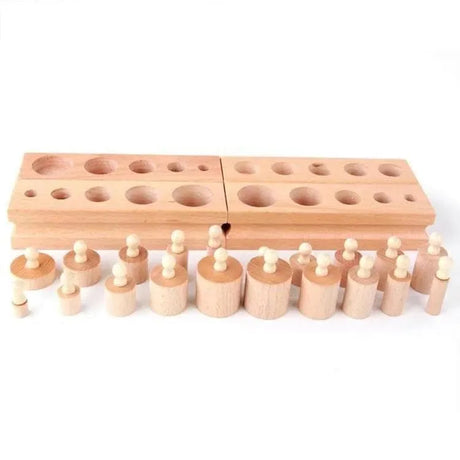
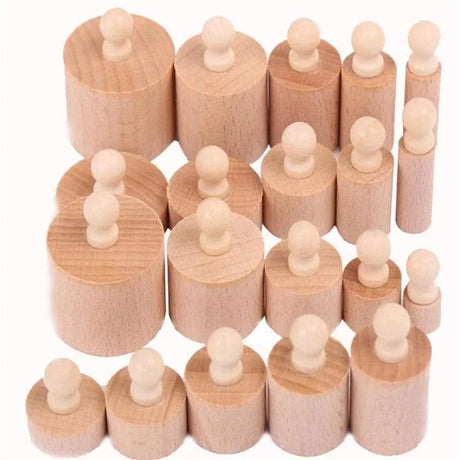
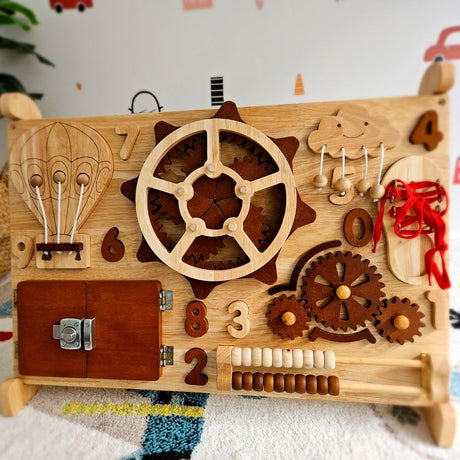
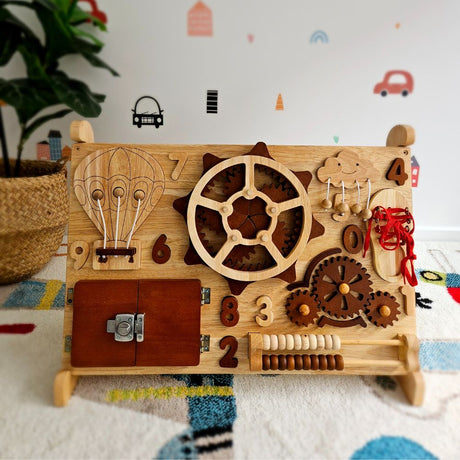
Montessori Toys

Montessori starts with what they are already trying to do

A cup they can reach. A spill cloth nearby. A job that takes longer because they are doing part of it themselves. Montessori at home is often smaller, plainer and more ordinary than it looks online.

Montessori-inspired toys and activities are designed to encourage independence, hands-on learning and purposeful participation, giving children opportunities to practise real skills, solve problems and explore concepts at their own pace.

Explore the pathways

Practical Life

Practical Life

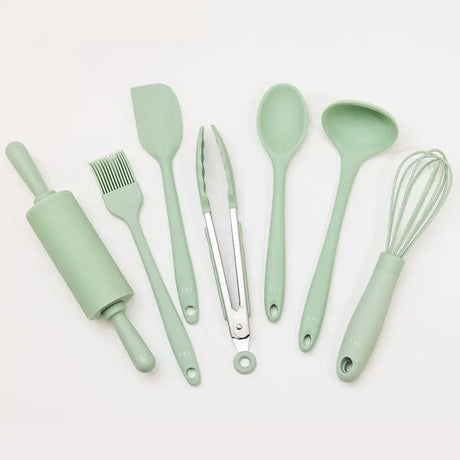
Explore this when your child wants to join real everyday activity: carrying, pouring, dressing, caring for their space, helping with food, or doing small jobs that actually need doing. The focus here is real participation in everyday life rather than pretend role-play, and it is not limited to one room.

Problem Solving & Logic

Problem Solving & Logic

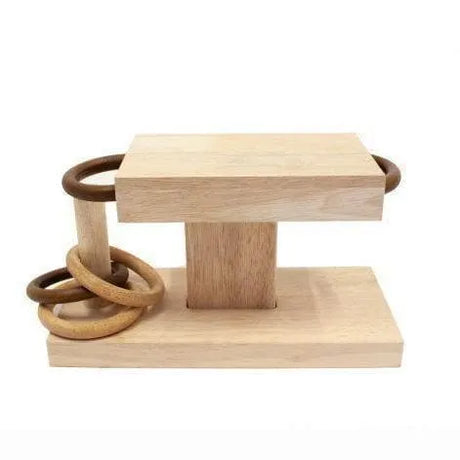
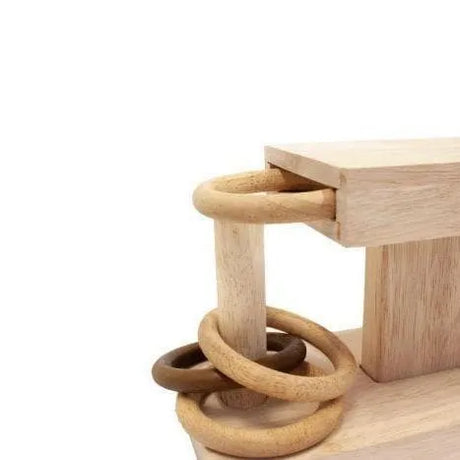
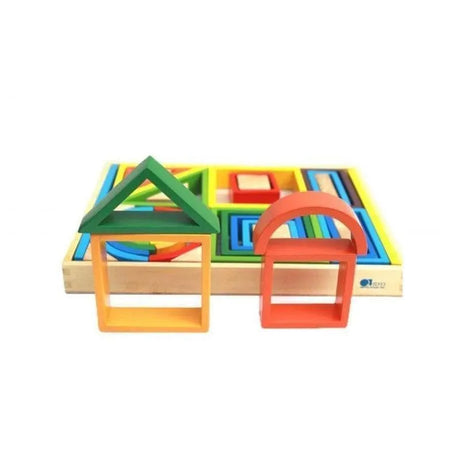
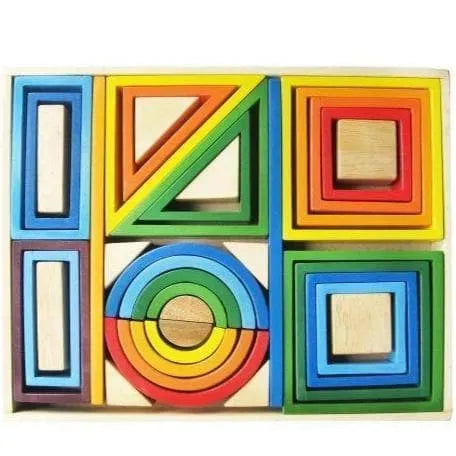
A useful route for children who keep trying to fit, match, sort, sequence or work out how something goes together. The focus is the thinking work of figuring out a manageable difficulty.

Early Maths & Concepts

Early Maths & Concepts

For children drawn to quantity, comparison, pattern, number and early concepts. In Montessori practice, concrete materials often come before abstract symbols, but this is a teaching sequence rather than a promise of maths achievement.

Fine Motor Skills

Fine Motor Skills

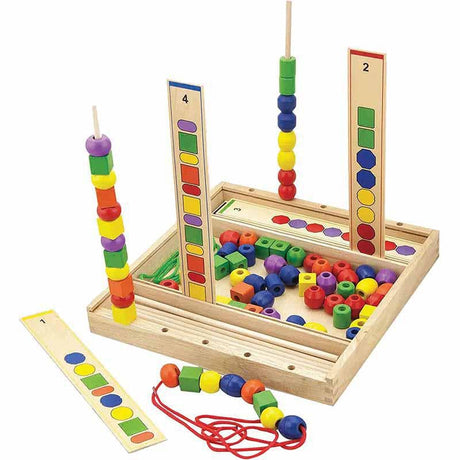
Choose this pathway when the main work is careful hand control: posting, threading, gripping, placing, turning, coordinating and repeating small movements with purpose.

Language Development

Language Development

A good place to explore when your child is naming things, listening closely, playing with sounds, noticing letters or showing interest in words. It supports the language family of activity without claiming that a toy teaches reading.

Montessori by Age

Montessori by Age

Use this when you want a stage-based place to begin. Age can be a helpful starting point, but it is not a timetable; readiness still comes from what your child is already trying and how much help they need.


Introduction

Montessori is an educational approach developed by Dr Maria Montessori. It is organised around close observation of children, a prepared environment, and materials or activities that a child can choose and repeat independently.

At home, Montessori is best understood as a way of arranging access, tools and adult support so a child can take part in real activity and focused practice. That might mean something within reach, one clear difficulty to work through, or a material the child can use and return without constant adult management.

The word “Montessori” on a retail toy is not proof that it is an authentic classroom material, and it does not promise a developmental result. At My Happy Helpers, we use Montessori-inspired principles to help parents shop more thoughtfully: less about the label, more about what the child can actually do with it.

Pretend play still has a place in childhood. Traditional Montessori practice in the early years places strong emphasis on real, hands-on experiences, but that is an emphasis, not a ban on pretend play. We see real participation and imaginative play as complementary, while keeping Pretend Play as its own world rather than a Montessori pathway.

Why It Matters

The value of Montessori-aligned activity at home is best kept honest and observable.

Montessori education in schools is a whole setting: trained adults, mixed-age groups, long stretches of chosen work and sequenced materials. Research into Montessori education describes those school programmes, not the effect of a single toy on a home shelf.

So we do not treat a toy as something that creates independence, concentration, intelligence or school success. What we can take seriously are the small, visible changes in activity: a child who can reach a cup may pour; a child who can repeat a posting activity may stay with it; a child who can see that something does not fit may try again without being told.

In this context, independence means a growing ability to do parts of ordinary life without needing an adult for every step. Participation means being included in real work, not only watching or imitating it. Repetition is part of focused practice. None of that requires a perfect Montessori room, and none of it needs to be turned into a guarantee.

Learning Themes

Thinking, order and working something out

Matching, sorting, fitting, comparing and noticing an error are all ways a child may practise thinking through a difficulty they can manage. The adult does not need to turn every moment into a lesson; often the thinking is already happening in the child’s hands.

Language through real things

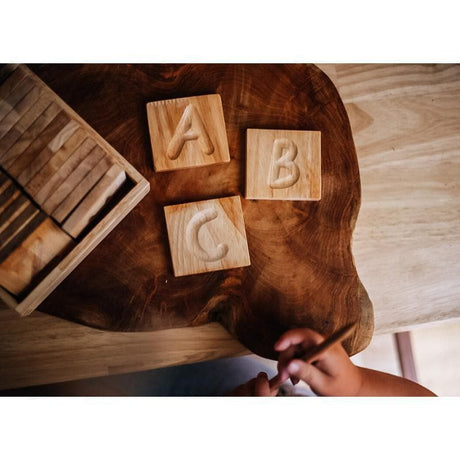
Montessori language work includes spoken language, vocabulary, sound play and later written language. At home, that can begin very simply: naming real objects, listening carefully, and offering letter or word materials when they fit the child’s interest. This is not a promise that a toy teaches reading.

Participation & Everyday Contribution

Real contribution can involve patience, frustration, pride and a sense of being included. Carrying, pouring, putting away or waiting for a shared tool are ordinary human moments, not proof that a product builds character. Adults still hold the safety, comfort and fairness around the activity.
A thoughtful place to begin

The hardest part is often not buying the toy

The part parents rarely get warned about is how much restraint this approach asks from the adult.

A child is lining something up slightly crooked. Pouring too slowly. Trying the same piece for the fifth time. Your whole body wants to fix it, explain it, praise it or move things along.

In Montessori practice, adults try not to interrupt sustained concentration, even with well-meant praise, because the attention can shift back to the adult instead of staying with the work. That is a practice principle, not a rule that praise is harmful or that every interruption ruins focus.

Still, it changes the way you look at the shelf. The resource matters, but so does the pause before you step in. Sometimes the most Montessori-aligned thing in the room is not the material at all. It is the adult doing a little less than they would like to.

Parent Guidance

You do not need to remake your home to begin.

Start by watching. For ten minutes, notice what your child is already trying to do without helping or suggesting. Are they following you to the sink? Trying to carry things? Wanting to dress themselves? Returning to the same small task again and again? Those are clues.

Then change one thing. Put a cup where they can reach it. Place a cloth near spills. Offer a real tool that fits their hand. Reduce the number of things competing for attention. Let them repeat the same action longer than seems interesting to you.

Helpful adult support is quiet and practical: prepare access, supervise where safety requires it, and step in when help is genuinely needed. Less helpful is hovering, correcting every grip, interrupting focused effort, or buying a whole sequence before you know what your child actually uses.

Pretend play does not need to disappear. A child can help wipe a real table and later run a pretend café. Real participation and pretend play can sit beside each other; they simply belong to different kinds of play.

Choosing Guidance

Choose from the child in front of you, not from the shelf you feel you should have.

A Montessori-inspired home resource is usually worth considering when the child can get it out, use it and put it back with reasonable independence. It helps if there is one clear thing to work out rather than many competing distractions, and if the material gives the child some way to notice an error without the adult supplying every correction.

Wooden materials and muted colours are not the test. A retail Montessori label is not proof of classroom authenticity or educational effect. Better questions are: What have I actually watched my child trying to do? Is the challenge skill, or is it access? Do we already own something that offers the same kind of practice? Who is directing the activity — the child, the adult, or the toy?

Age guidance can help you begin, but it is not what makes something educational. Buy one useful next step, leave space for repetition, and watch before adding more. You don’t need to do all of Montessori for these ideas to be useful at home.

Frequently asked questions

Questions parents often ask

What should I look for in a Montessori-inspired toy?
Look beyond the label. Useful signs of Montessori alignment include child-accessible design, one reasonably clear difficulty, the chance for the child to notice or correct an error where the material allows it, and enough simplicity that the child can use and return it without constant adult management.
Where do I start with Montessori at home?
Start with one reachable everyday job. Watch what your child is already trying, then adjust one part of the environment: a low drawer, a reachable cup, a cloth for spills, hooks at their height, or a tool that fits their hand. You do not need a complete Montessori room.
What age are Montessori toys for?
Age can be a useful starting point, but it is not a timetable. A better guide is readiness: what your child is already attempting, how much help they need, and whether the difficulty is reachable without constant adult intervention.
Isn't Montessori against pretend play?
No. In the early years, traditional Montessori philosophy places strong emphasis on helping children explore the real world through hands-on practical experience. That is an emphasis, not a prohibition. At My Happy Helpers, we value Montessori principles around independence and real participation while also believing pretend play has an important place in childhood.
What's the difference between Montessori Toys and Educational Toys?
Educational Toys is a broader way to shop for learning-focused toys. Montessori Toys is a more specialised journey shaped by Montessori-inspired principles: prepared access, child-chosen repeatable activity, real participation and focused practice. The same item may appear in both contexts, but the category idea is different.