Thoughtful safety, clearer standards, more confident choices.
Learning towers should support independence in the kitchen — but they should also make parents feel confident about what has actually been considered, tested and designed into the product.

Not more products. Better ones.
Parents are not looking for more things. They are looking for products that work — that feel safe in the home, support independence, and make everyday life easier.
That’s why we don’t treat safety as a claim. We treat it as part of the design.
Broad claims can sound reassuring — but relevance is what matters.
Especially in categories like learning towers, where there is no single mandatory Australian standard written specifically for the product.
“Meets standards”
Can sound strong, but often gives little detail about what was actually considered or how relevant that standard is to the product itself.
Relevant safety thinking
For elevated children’s furniture, the more meaningful question is whether the right safety principles have been considered for real use in real homes.
Clarity over broad reassurance
We focus on explaining the safety areas that matter most, rather than relying on a generic statement to do all the work.

A more thoughtful safety standard
There is no dedicated mandatory Australian standard written specifically for learning towers.
So rather than relying on broad or generalised claims, we take a more thoughtful, safety-led approach — looking at the principles that are actually relevant to how these products are used in real homes.
Because statements like “meets standards” can sound reassuring — but don’t always explain what has actually been considered, or whether those standards are even relevant to this type of product.

Designed to bring children in — not leave safety to chance
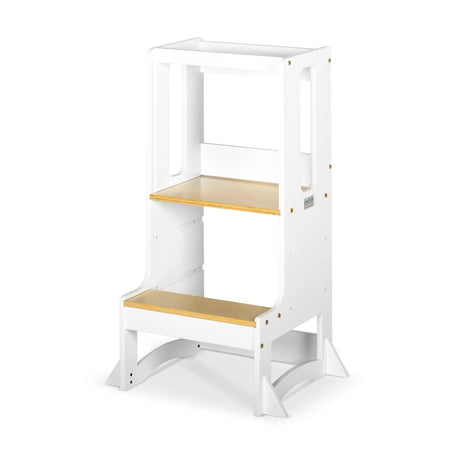
A learning tower raises a child to bench height so they can take part in everyday family routines — cooking, preparing, washing and observing.
That inclusion is where the value sits. And it’s also where thoughtful design matters most.

What our testing considers
My Happy Helpers products are independently assessed through SGS Global Testing Laboratories, with a focus on the areas families expect responsible children’s products to address.
This approach draws on relevant elements of the Australian and New Zealand safety framework, such as AU/NZ 8124, alongside additional considerations appropriate for elevated children’s furniture.
Entrapment risks — including head, neck and finger openings — are considered as part of broader mechanical safety principles, alongside recognised safety guidance used in children’s environments such as playground design.

Professionally weight certified to 100kg
Beyond core testing, our MHH sinlge learning towers are professionally weight certified to 100kg.
Because stability and strength are not abstract — they are felt in everyday use.
What parents usually want to know quickly
Independently assessed
Our products are tested beyond broad safety claims.
Relevant considerations
We focus on the safety principles that actually apply to how the product is used.
Supervision required
No elevated product replaces active adult supervision.
100kg certified
Strength and stability are supported through professional testing.
Thoughtful design goes beyond a broad claim
The My Happy Helpers approach
We believe families deserve more than vague reassurance. They deserve clarity around how a product is designed, tested and intended to be used.
- Clearer safety thinking
- Testing-led trust
- Designed for real family routines
- Independence supported with supervision
What to look for
When choosing a learning tower, broad statements can sound reassuring — but the detail is what builds confidence.
- Clear explanation of what has been considered
- Relevant safety thinking, not generic claims
- Guidance on how the product should be used
- Confidence built through clarity, not assumption
Shop and learn with confidence
Keep browsing the collections and resources most closely connected to this page.
Frequently asked questions
Short, clear answers to the questions parents usually ask before choosing a learning tower.
Are My Happy Helpers learning towers independently tested?
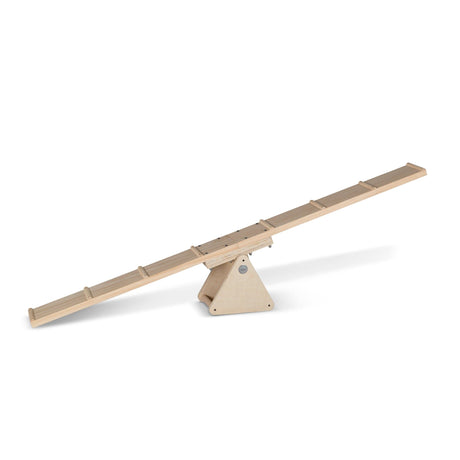
Yes. Our learning towers and piklers are independently assessed through SGS Global Testing Laboratories.
Is there a dedicated Australian standard specifically for learning towers?
No. There is not currently a dedicated mandatory Australian standard written specifically for learning towers, which is why relevance matters when assessing safety claims.
What does “meets standards” really tell me?
It can sound reassuring, but on its own it may not explain what was actually considered, tested, or whether those standards were even relevant to learning towers.
What safety areas does the testing consider?
Testing considers key areas such as mechanical and structural safety, flammability requirements, and chemical and material safety considerations.
Why do stability and entrapment matter?
They are important considerations for elevated furniture used by children, especially where there is no single product-specific standard written for learning towers.
Are learning towers safe to use without supervision?
No. A learning tower should always be used with active adult supervision nearby.
What does 100kg weight certification mean?
It means our learning towers have also been professionally weight certified to 100kg, helping support confidence in their strength and everyday practicality.
Let customers speak for us
Browse our Best Selling Collections